
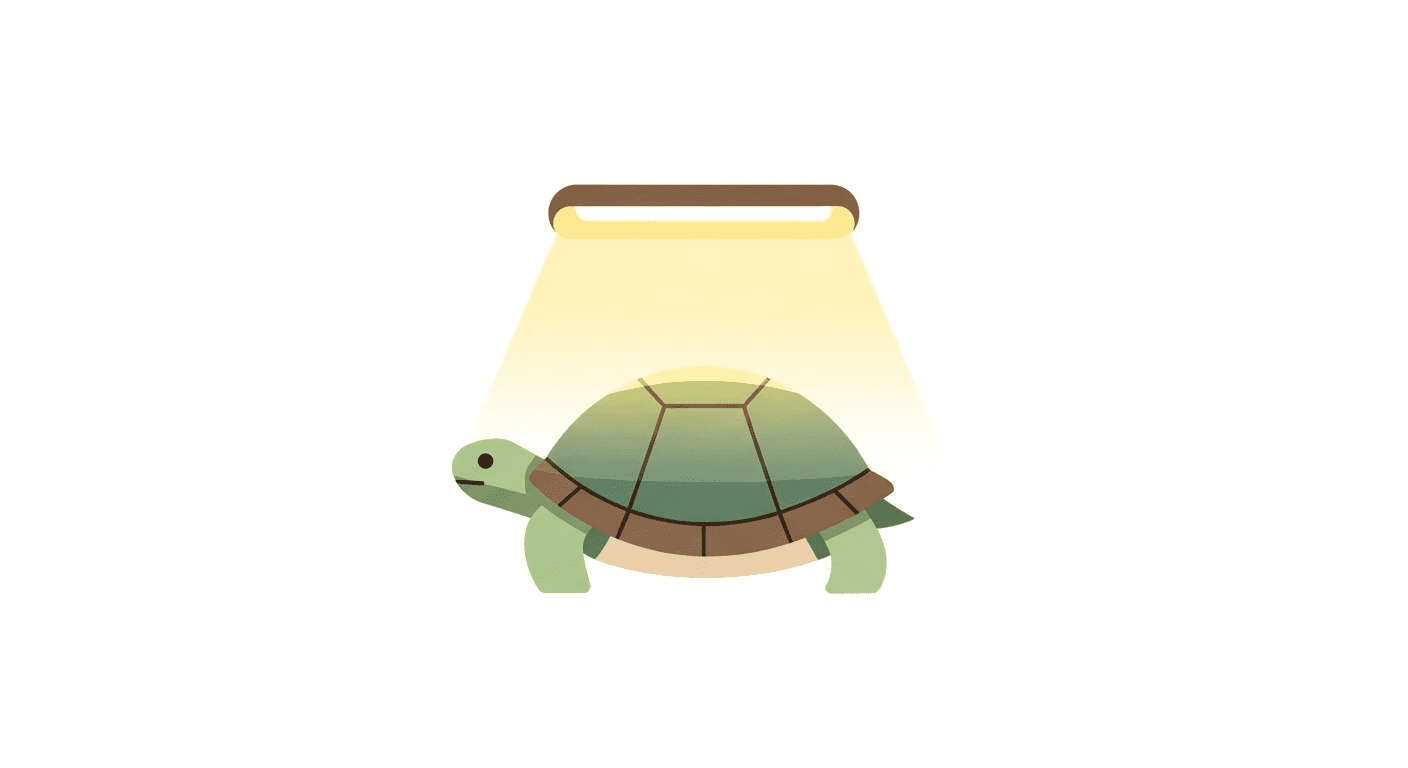
Why UVB Is Not Optional for Turtles
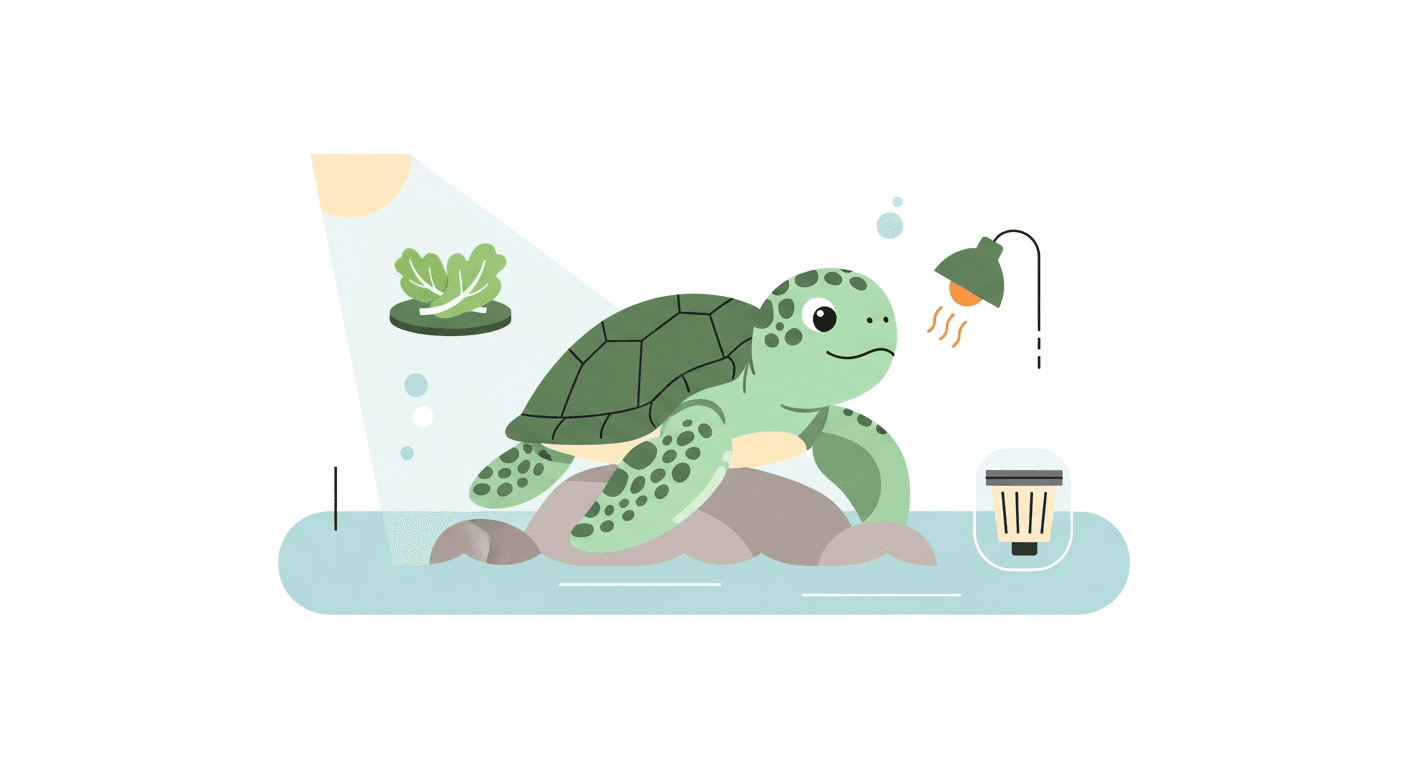
Turtles and tortoises synthesize vitamin D3 through exposure to UVB radiation — the same UV wavelengths present in natural sunlight (280–315nm). Without adequate D3, calcium cannot be absorbed from the diet regardless of how much calcium is supplemented. The result is metabolic bone disease: soft shells, deformed limbs, muscle weakness, neurological problems, and eventual death.
Most captive turtles that develop health problems trace the root cause to inadequate or absent UVB. Getting this right is the single most important preventive measure in turtle husbandry.
First 3 Steps at Home
- Choose the correct UVB bulb type: For most turtle and tortoise species, a linear T5 HO UVB tube rated 10.0 (high output) is appropriate. For tortoises in desert/grassland setups, a 12% T5 HO provides higher intensity. Compact coil bulbs often marketed for reptiles provide inadequate UVB and should be avoided. Mercury vapor bulbs provide combined heat and UVB but require careful distance management.
- Mount the bulb at the correct distance: T5 HO 10.0 bulbs should be mounted 25–35 cm above the basking surface (check manufacturer specifications for your specific bulb). Too far away = insufficient UVB. Too close = possible UVB burn, especially around the eyes. Test with a Solarmeter 6.5 if you want to be precise about the UV Index your turtle receives.
- Replace the bulb on schedule: UVB tubes lose their UV output long before they visually burn out. Most manufacturers recommend replacement every 12 months. Some higher-output bulbs may last up to 18 months. Mark the replacement date on the bulb with a permanent marker when you install it. A burned-out-looking bulb that you think still works may have been providing zero UVB for months.
When to Go to the Vet Immediately
- Soft shell or flexible carapace — indicates calcium metabolism failure from D3 deficiency
- Limb swelling or deformity
- Inability to lift the body off the ground — muscle weakness from advanced MBD
- Seizures or twitching — hypocalcemia (dangerously low blood calcium) emergency
Follow-Up Care Checklist
- Run UVB on a 10–14 hour photoperiod matching natural light cycles for your species
- Never place glass between the UVB bulb and the turtle — glass filters UVB completely
- Provide a basking site close enough to the bulb for effective UVB exposure
- Combine UVB with calcium supplementation (without D3 if using proper UVB)
- Replace bulbs on schedule every 12 months minimum
Track Lighting Schedule with TailRounds
Log the bulb installation date and planned replacement date in the TailRounds Daily Log. A single note protects your turtle from months of inadvertent UVB deficiency when life gets busy and you forget when you last changed the bulb.
Book a Vet Appointment
A new turtle wellness exam is the ideal time to review your full lighting and temperature setup with an expert. Book at Happy Paws with our reptile team for a full husbandry consultation.
Summary for Your Clinic Visit
Bring your bulb brand and model name, current bulb age, mounting distance from basking site, and photoperiod schedule. Also bring any shell photos showing the texture and color for assessment.
Continue Reading
 🐢 Turtle & Tortoise Health
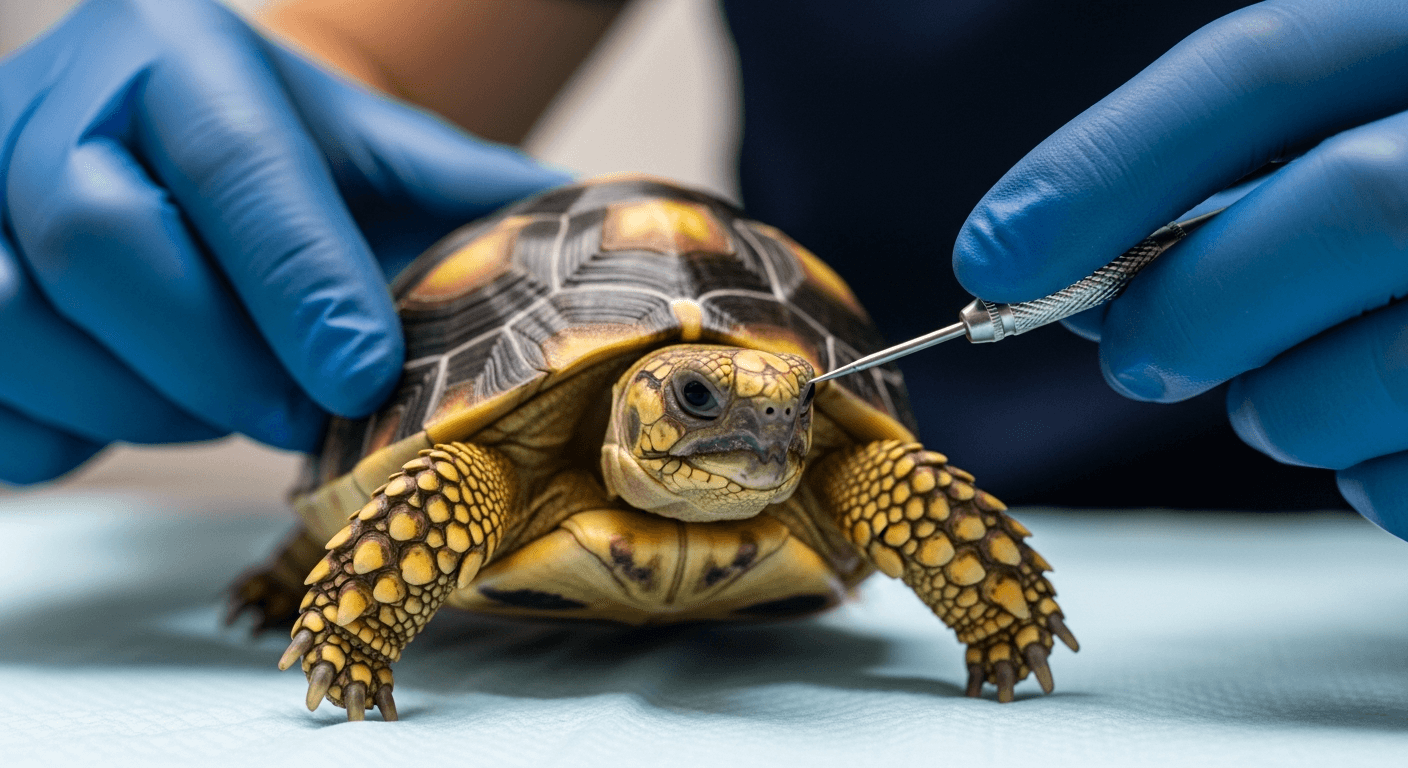
Turtle Shell Problems: Soft Shell, Shell Rot, and Pyramid Scutes Explained
The shell is a turtle's most visible health indicator. Learn to recognize soft shell (metabolic bone disease), shell rot, injuries, and what each requires in terms of treatment.
 🐢 Turtle & Tortoise Health
Vitamin Deficiencies in Turtles: Vitamin A, D3, and Calcium Explained
Nutritional deficiencies cause most preventable illness in captive turtles. Learn which vitamins matter most, how deficiency presents, and how to correct it safely.
 🐢 Turtle & Tortoise Health
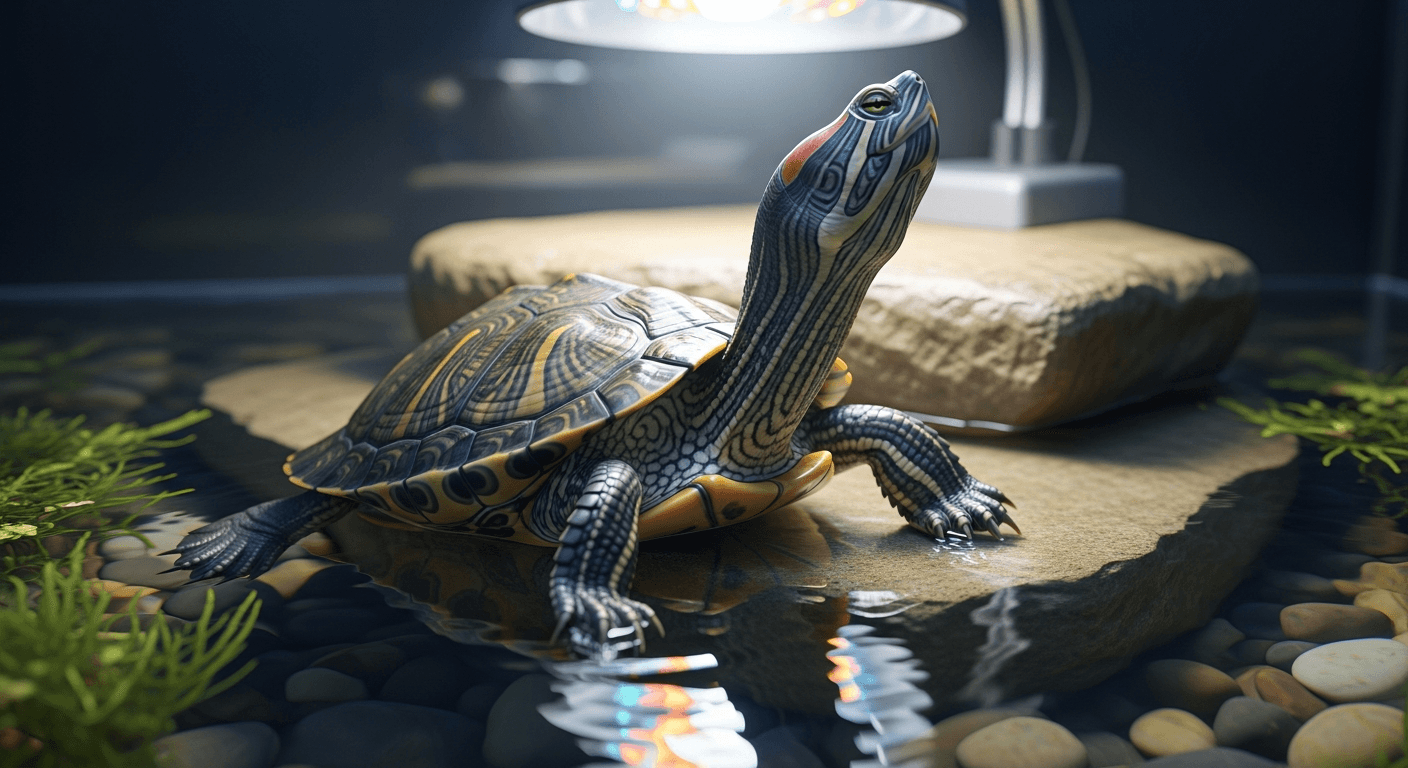
My Turtle Won't Eat: Causes, What to Check at Home, and When to See a Vet
A turtle refusing food may be hibernating, stressed, or ill. Learn how to tell the difference and when refusal to eat requires immediate veterinary attention.
 🐢 Turtle & Tortoise Health
Daily Care Checklist for Turtles and Tortoises: Building Habits That Prevent Disease
Consistent daily care prevents most common turtle health problems. Use this checklist to build a daily routine that catches problems early and maintains long-term health.