
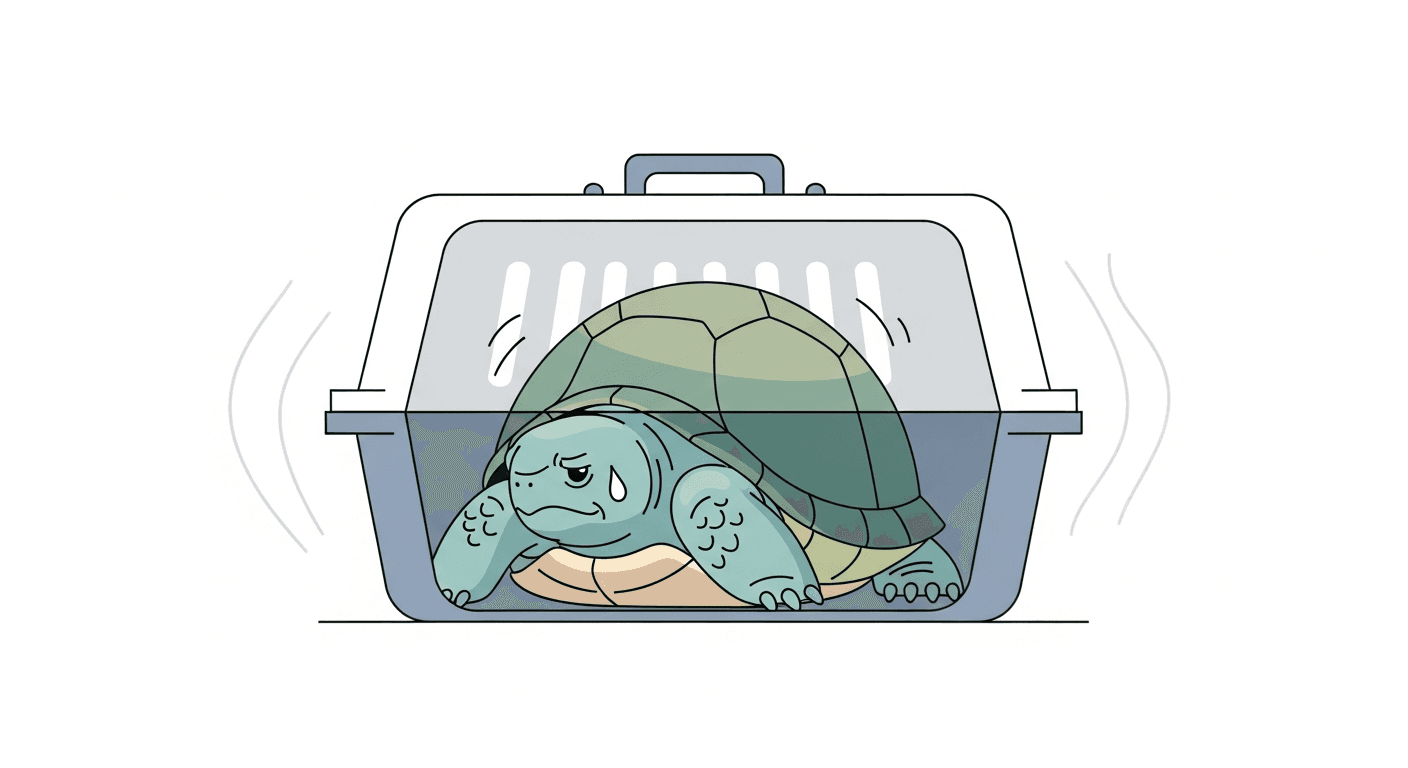
Why Travel Is Particularly Stressful for Turtles
Turtles and tortoises are highly territorial and routine-dependent animals. They orient themselves using visual and olfactory landmarks within their home environment, and displacement — even to a car and back — activates the stress response. Combined with the temperature fluctuations inherent in vehicle transport, travel represents a genuine health risk, particularly for animals that are already unwell.
With the right preparation, most transport is manageable and recoverable. Without preparation, transport can tip a mildly stressed animal into genuine illness.
First 3 Steps at Home
- Prepare a temperature-stable transport box: Use a secure box (cardboard for short trips, plastic tub with ventilation holes for longer ones) lined with newspaper, paper towel, or dry straw. For warm-weather transport, wrap a heat pack in a towel and place it outside the inner container so the animal cannot directly contact it. For cold weather, pre-warm the car and minimize time the carrier is exposed to outdoor temperatures.
- Time fasting appropriately for tortoises: For journeys longer than 1–2 hours, do not feed the tortoise for 24 hours before travel. A tortoise with food in the gut exposed to reduced temperatures during transport risks gut bacterial overgrowth. For short trips to the vet, fasting is not necessary.
- Keep the carrier dark and stable: Cover the transport box with a cloth to block visual stimulation — darkness is calming for most reptiles. Keep the box on a stable surface that doesn't slide. Sudden movements, loud noise, and vibration all contribute to travel stress.
When to Go to the Vet Immediately
- Any turtle that appears distressed, unresponsive, or cold after transport
- Respiratory signs appearing within 48 hours of travel — cold exposure during transport can trigger infection
- Refusal to eat for more than 10 days after travel in a correctly maintained environment
Follow-Up Care Checklist
- Allow the turtle to warm up completely under basking lights after arrival before offering food
- Do not handle unnecessarily for 2–3 days after travel — allow acclimation
- Offer a warm soak after arrival if the journey was long
- Monitor closely for respiratory signs in the 7–14 days following travel
Track Post-Travel Recovery with TailRounds
Log behavior, appetite, and any symptoms in the days following travel in the TailRounds Daily Log. Post-travel health changes tracked carefully can be caught early when they're most treatable.
Book a Vet Appointment
If your turtle develops health problems after travel, book promptly. Book at Happy Paws — our exotic team can assess whether travel-related stress has triggered a secondary health issue.
Summary for Your Clinic Visit
Describe the transport conditions (duration, temperatures, container), any signs of distress during the journey, and the specific symptoms you're now observing at home post-travel.
Continue Reading
 🐢 Turtle & Tortoise Health
Lethargy in Turtles: How to Tell Rest From Illness
Turtles naturally rest for long periods, making it hard to detect genuine lethargy. Learn the signs that distinguish healthy rest from illness-related inactivity.
 🐢 Turtle & Tortoise Health
New Turtle Owner Guide: Everything You Need Before Bringing a Turtle Home
Turtles require specialized care that most pet stores don't explain. This complete guide covers what to research, what equipment you need, and the first steps after bringing your turtle home.
 🐢 Turtle & Tortoise Health
Turtle and Tortoise Housing: Species-Specific Requirements for Tanks, Terrariums, and Outdoor Pens
Turtles and tortoises have very different housing needs. This guide covers space, substrate, temperature gradients, humidity, and outdoor setups for the most common pet species.
 🐢 Turtle & Tortoise Health
Daily Care Checklist for Turtles and Tortoises: Building Habits That Prevent Disease
Consistent daily care prevents most common turtle health problems. Use this checklist to build a daily routine that catches problems early and maintains long-term health.