
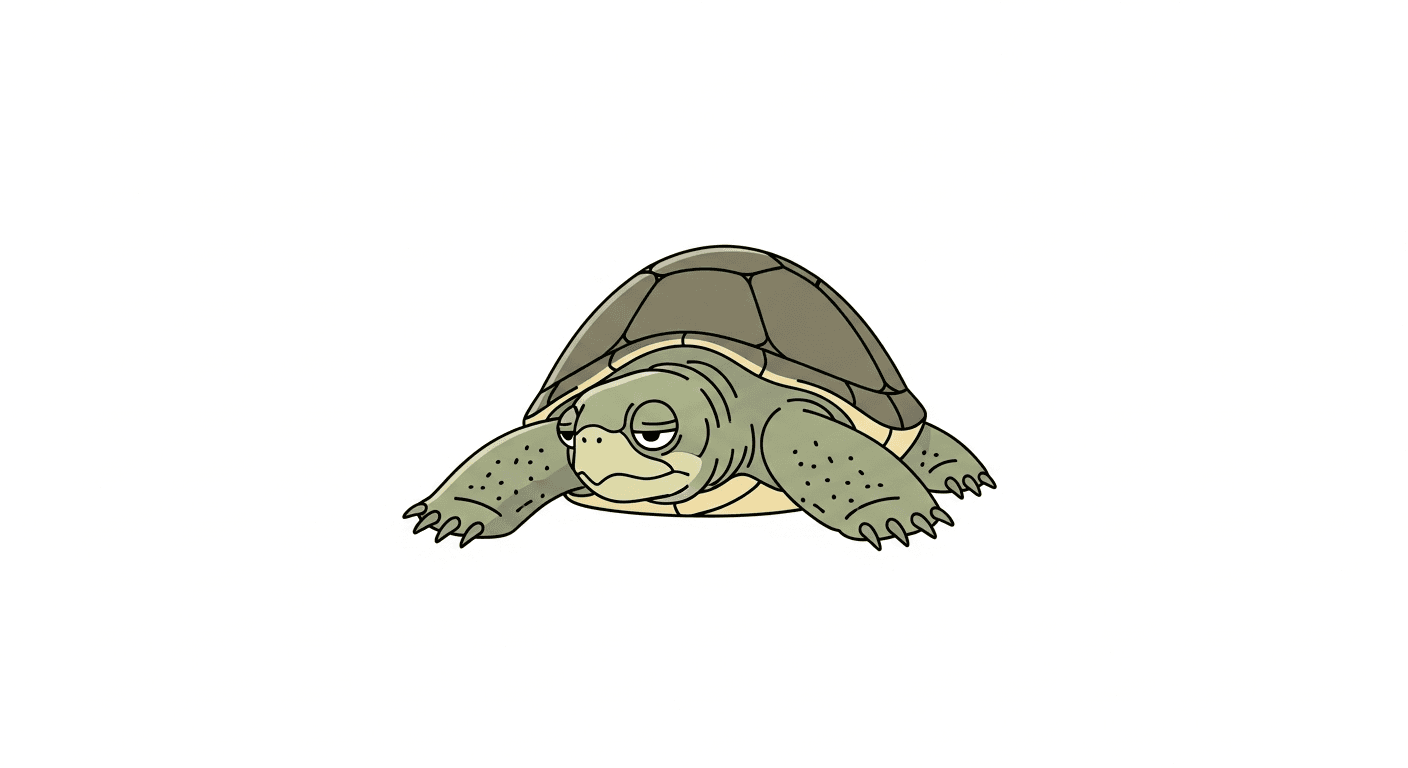
Is My Turtle Lazy or Sick?
Turtles are not high-energy animals. They spend significant portions of the day resting, digesting, and thermoregulating. This can make genuine illness-related lethargy difficult to distinguish from normal resting behavior. The key is to understand your individual turtle's baseline — what normal activity looks like for your specific animal at the current time of year — and to respond when activity drops significantly below that baseline for multiple days in a row.
First 3 Steps at Home
- Check environmental temperatures first: A turtle that is too cold becomes inactive as a physiological response to low temperature, not because of illness. Confirm basking spot and ambient temperatures are correct. If temperatures are low, correct them and observe the turtle over 24–48 hours — activity should return if temperature was the cause.
- Observe response to food: A healthy but resting turtle will typically show interest in food when it is offered. A genuinely ill turtle often refuses food entirely and may fail to react to food in the normal way. Offer a highly preferred food item and observe the response carefully.
- Assess posture and position: A healthy turtle adopts normal species-appropriate postures. An ill turtle may hold the limbs extended and limp, position the head awkwardly, list to one side (in aquatic species), or be unable to retract properly. Abnormal posture is a reliable illness indicator.
When to Go to the Vet Immediately
- Lethargy with complete food refusal for more than a week at correct temperatures
- Inability to hold normal posture
- Floating tilted in aquatic turtles
- Unresponsive to touch
- Lethargy accompanied by any respiratory signs, eye changes, or swelling
Follow-Up Care Checklist
- Keep a consistent temperature in the enclosure and measure daily
- Log activity levels and feeding responses monthly as a baseline
- Be aware of seasonal changes that naturally reduce activity in some species
- Weigh monthly — weight loss is often the first objective measure of illness
Track Activity with TailRounds
Daily activity notes — even brief ones like "active, basked well, ate" versus "less active than usual, no interest in food" — in the TailRounds Daily Log create the baseline that makes genuine lethargy immediately visible.
Book a Vet Appointment
If lethargy persists beyond a few days at correct temperatures, book a veterinary assessment. Book at Happy Paws — our exotic team can evaluate for the full range of illness causes in turtles and tortoises.
Summary for Your Clinic Visit
Note the current enclosure temperatures, duration of reduced activity, whether the turtle has eaten recently, any physical changes observed, and your turtle's typical baseline activity level for comparison.
Continue Reading
 🐢 Turtle & Tortoise Health
My Turtle Won't Eat: Causes, What to Check at Home, and When to See a Vet
A turtle refusing food may be hibernating, stressed, or ill. Learn how to tell the difference and when refusal to eat requires immediate veterinary attention.
 🐢 Turtle & Tortoise Health
Respiratory Infection in Turtles: Signs, Causes, and Treatment
Respiratory infections are common and serious in turtles. Recognize the early signs, understand why they occur, and learn when emergency care is essential.
 🐢 Turtle & Tortoise Health
Vitamin Deficiencies in Turtles: Vitamin A, D3, and Calcium Explained
Nutritional deficiencies cause most preventable illness in captive turtles. Learn which vitamins matter most, how deficiency presents, and how to correct it safely.
 🐢 Turtle & Tortoise Health
Daily Care Checklist for Turtles and Tortoises: Building Habits That Prevent Disease
Consistent daily care prevents most common turtle health problems. Use this checklist to build a daily routine that catches problems early and maintains long-term health.