
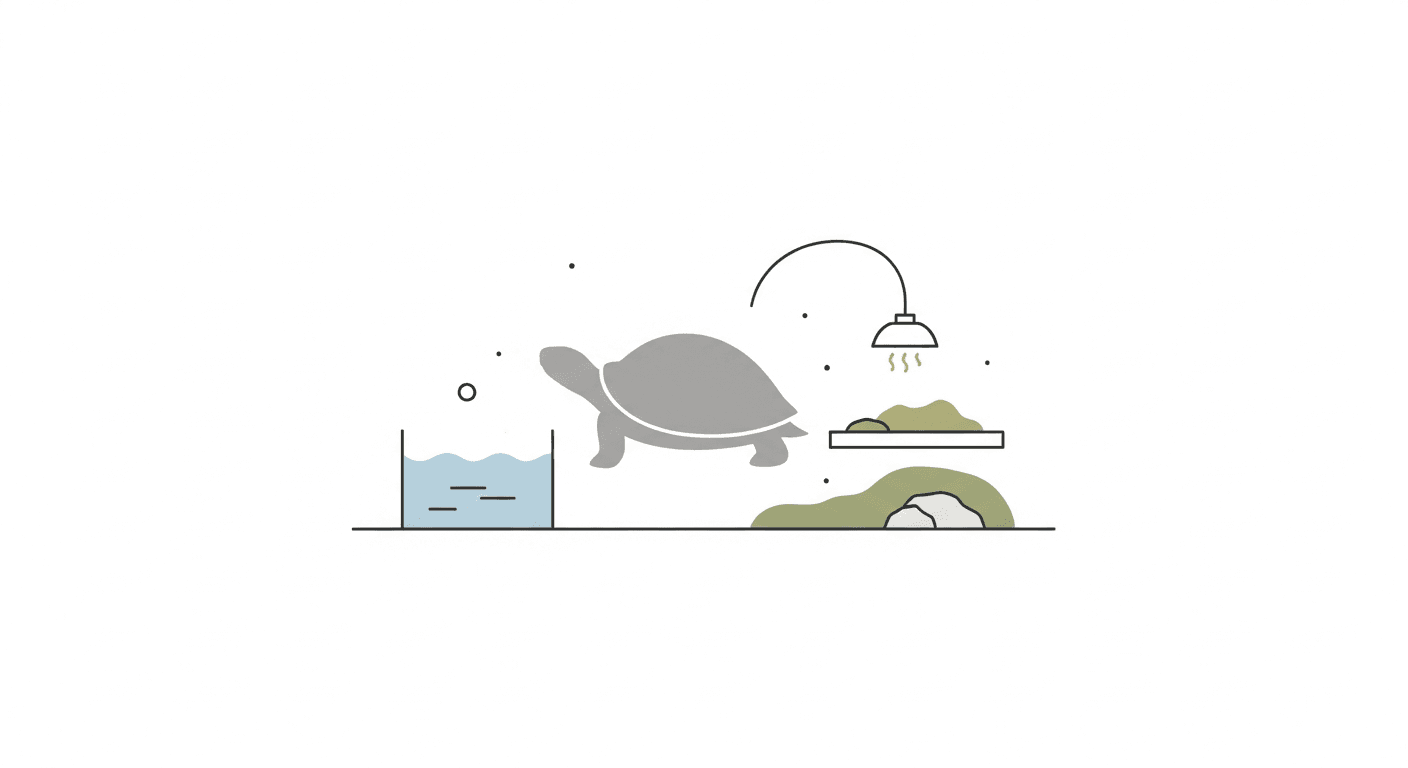
Why Getting Housing Right Is Foundational to Turtle Health
More illness in captive turtles traces back to inadequate housing than to any other single factor. Temperature, UVB access, humidity, space, and substrate all interact to either support or undermine the turtle's immune function, metabolism, and psychological wellbeing. An otherwise well-fed turtle in an inadequate enclosure will develop preventable health problems over time.
Housing requirements vary dramatically by species, which is why identifying your exact species is the necessary first step.
First 3 Steps at Home
- Aquatic turtles — scale the tank to the animal: The minimum for a hatchling red-eared slider or similar medium aquatic turtle is a 40-gallon (150L) tank. Adults of most medium-sized species require 100+ gallons (375L) or a pond setup. The guideline is 10 gallons of water per inch of shell length, applied to the adult size of the species — not the current juvenile size. Undersized tanks cause chronic stress and water quality problems that directly affect health.
- Tortoises — prioritize floor space and appropriate substrate: Tortoises need significant floor space to roam and thrive. A tortoise table or modified wardrobe setup with minimum 4x2 feet floor space is appropriate for small species (Hermann's, horsefield tortoises). Mediterranean tortoises benefit enormously from outdoor access during warm months. Substrate should allow burrowing — topsoil, coir, or sand-soil mix to a depth of at least 6 inches for adults.
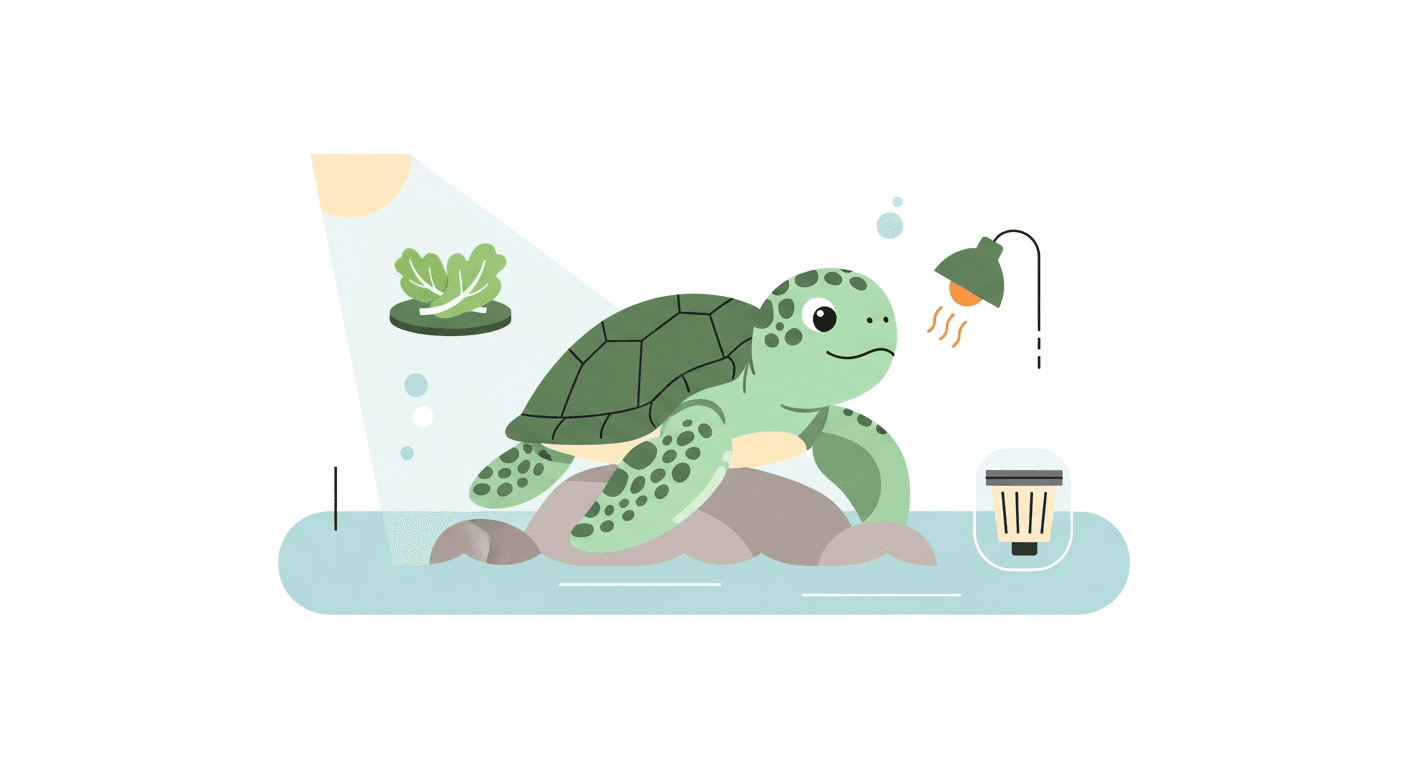
- Create a proper thermal gradient in all setups: Every turtle enclosure needs a clear warm end (with basking spot) and a cool end for thermoregulation. Turtles self-regulate body temperature behaviorally — if the entire enclosure is the same temperature, the animal has no option for temperature regulation and chronic thermal stress results. Measure both ends with a probe thermometer.
When to Go to the Vet Immediately
- Behavioral signs of a housing-related problem: persistent attempts to escape, aggression, complete hiding, refusal to bask
- Health problems developing shortly after a housing change
- Humidity-related respiratory infection in a desert species kept too damp, or a tropical species kept too dry
Follow-Up Care Checklist
- Clean aquatic tank substrate weekly and perform partial water changes
- Spot-clean tortoise substrate daily; full substrate replacement monthly or as needed
- Ensure outdoor enclosures are predator-proof (hedgehogs, foxes, dogs can harm tortoises)
- Provide hides in all enclosures — a turtle that cannot hide is chronically stressed
- Review housing against your species' wild habitat and replicate relevant elements
Track Environment with TailRounds
Log daily temperature and humidity readings, any housing modifications, and corresponding behavioral changes in the TailRounds Daily Log. This data helps you optimize the environment over time.
Book a Vet Appointment
A reptile-experienced vet can review your housing setup as part of a wellness exam. Book at Happy Paws for a husbandry consultation and ensure your turtle's home supports long-term health.
Summary for Your Clinic Visit
Bring your enclosure dimensions, a description of the thermal gradient, UVB setup, humidity range, and substrate type. Photos of the enclosure layout are helpful for your vet to assess setup quality.
Continue Reading
 🐢 Turtle & Tortoise Health
UVB Lighting for Turtles and Tortoises: Getting It Right to Prevent Disease
UVB is essential for turtle health and most problems in captive turtles trace back to inadequate UVB. Learn how to choose, install, and replace UVB lighting correctly.
 🐢 Turtle & Tortoise Health
Water Quality for Aquatic Turtles: Parameters, Filtration, and Preventing Disease
Poor water quality is the leading cause of illness in aquatic turtles. Learn the key parameters, filtration requirements, and maintenance schedule to keep your turtle healthy.
 🐢 Turtle & Tortoise Health
Complete Turtle and Tortoise Diet Guide: What to Feed by Species
Feeding requirements vary enormously between turtle species. This guide covers aquatic turtles, box turtles, and tortoises with practical food lists and common mistakes to avoid.
 🐢 Turtle & Tortoise Health
Daily Care Checklist for Turtles and Tortoises: Building Habits That Prevent Disease
Consistent daily care prevents most common turtle health problems. Use this checklist to build a daily routine that catches problems early and maintains long-term health.