
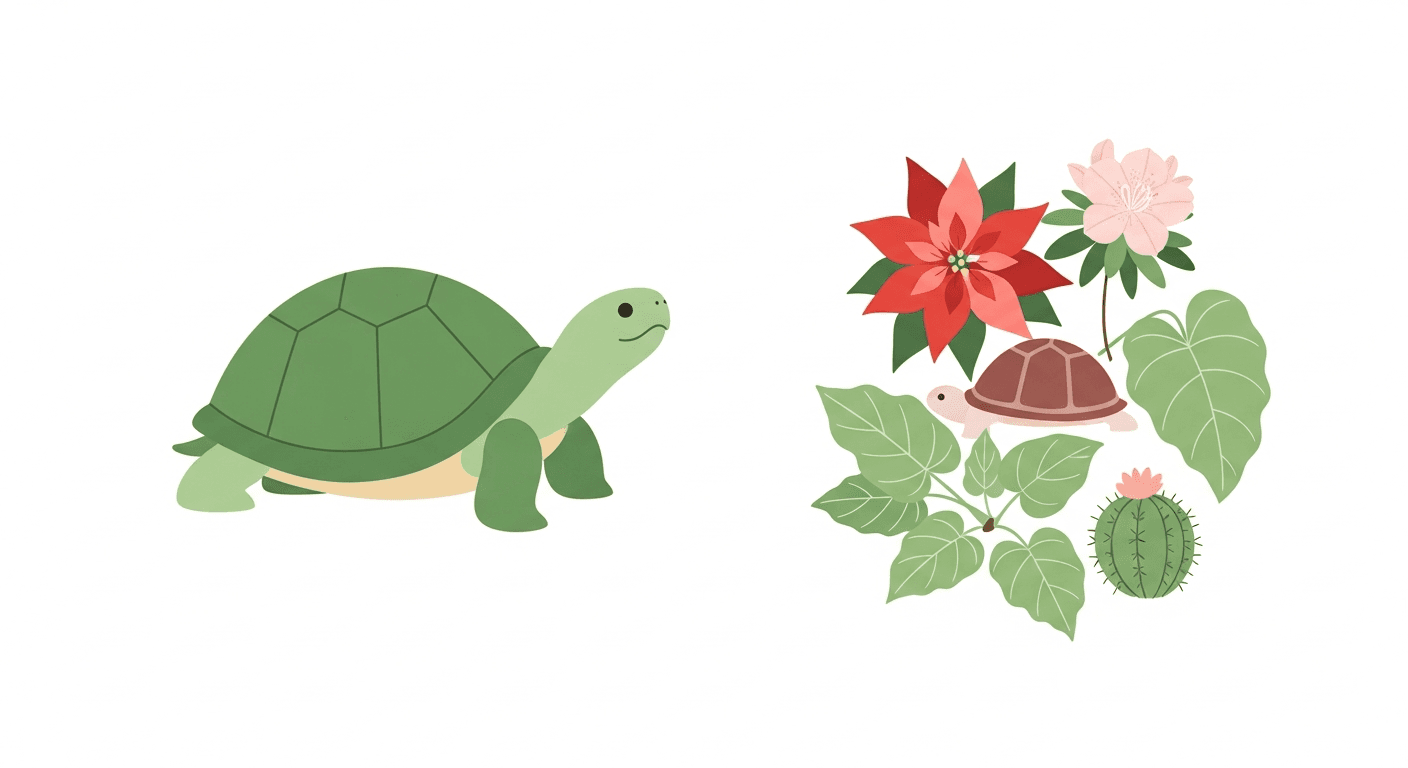
Why Plant Toxicity Matters for Tortoises
Tortoises are indiscriminate grazers who will eat many plants they encounter, including some that are toxic. In the wild, the diversity of the environment and the instinctive avoidance of certain plants through smell and taste provides some protection. In a garden or outdoor pen, a tortoise may encounter a wider range of unusual plants than it would in its native habitat, and confinement means it may return to the same toxic plant repeatedly.
Plant toxicity ranges from mild digestive upset to acute liver failure and death.
First 3 Steps at Home
- Audit your outdoor pen for toxic plants: The most commonly encountered toxic plants in gardens include: buttercups (Ranunculus spp.), daffodils and all bulb plants, foxglove (Digitalis), rhododendron and azalea, yew, ivy, nightshades (including tomato and potato leaves), rhubarb, and privet. Walk the outdoor area and identify all plants. Remove or fence off any you cannot positively identify as safe.
- Identify safe grazing plants to encourage: Dandelions (whole plant), plantain weed (Plantago), clover, hibiscus leaves and flowers, rose leaves and petals, mulberry leaves, and most common edible leafy greens are safe and nutritious. Establishing these in the pen gives the tortoise appropriate grazing alternatives.
- Respond to suspected ingestion promptly: If you observe a tortoise eating a suspicious plant, note the plant species if possible, photograph it, remove the animal from the area, and call your vet. Do not wait for symptoms — some toxins have delayed effects, and early intervention (including activated charcoal in some cases) may prevent serious harm.
When to Go to the Vet Immediately
- Any observed ingestion of a plant you suspect is toxic
- Sudden lethargy, swollen neck, or abnormal gait after outdoor time
- Vomiting (regurgitation) — unusual in tortoises and may indicate toxic ingestion
- Abnormal droppings following outdoor access
Follow-Up Care Checklist
- Create a plant inventory of your tortoise's outdoor area annually as new plants may establish
- Never treat outdoor areas used by tortoises with herbicides, pesticides, or slug pellets
- Check that soil is not contaminated with previous pesticide treatments if using a new garden area
- Teach any family members who interact with the tortoise which plants are in the safe zone
Track Outdoor Exposure with TailRounds
Log outdoor sessions and any observed plant eating (even of safe plants) in the TailRounds Daily Log. A note "grazing on clover patch" after a session that the tortoise becomes unwell helps your vet identify the cause far faster.
Book a Vet Appointment
If you suspect plant toxin ingestion, call your vet before symptoms develop. Book at Happy Paws for urgent assessment — early treatment dramatically improves outcomes for plant toxicity.
Summary for Your Clinic Visit
If possible, bring a sample or photograph of the plant consumed. Note the estimated quantity eaten, when the ingestion occurred, the tortoise's current symptoms, and any changes in behavior since the incident.
Continue Reading
 🐢 Turtle & Tortoise Health
Complete Turtle and Tortoise Diet Guide: What to Feed by Species
Feeding requirements vary enormously between turtle species. This guide covers aquatic turtles, box turtles, and tortoises with practical food lists and common mistakes to avoid.
 🐢 Turtle & Tortoise Health
Outdoor Time for Turtles and Tortoises: Benefits, Hazards, and Safety Rules
Natural sunlight and outdoor access offer huge health benefits for turtles. Learn how to provide outdoor time safely, including predator protection and temperature management.
 🐢 Turtle & Tortoise Health
My Turtle Won't Eat: Causes, What to Check at Home, and When to See a Vet
A turtle refusing food may be hibernating, stressed, or ill. Learn how to tell the difference and when refusal to eat requires immediate veterinary attention.
 🐢 Turtle & Tortoise Health
Daily Care Checklist for Turtles and Tortoises: Building Habits That Prevent Disease
Consistent daily care prevents most common turtle health problems. Use this checklist to build a daily routine that catches problems early and maintains long-term health.