
Why Diet Differs Dramatically by Turtle Species
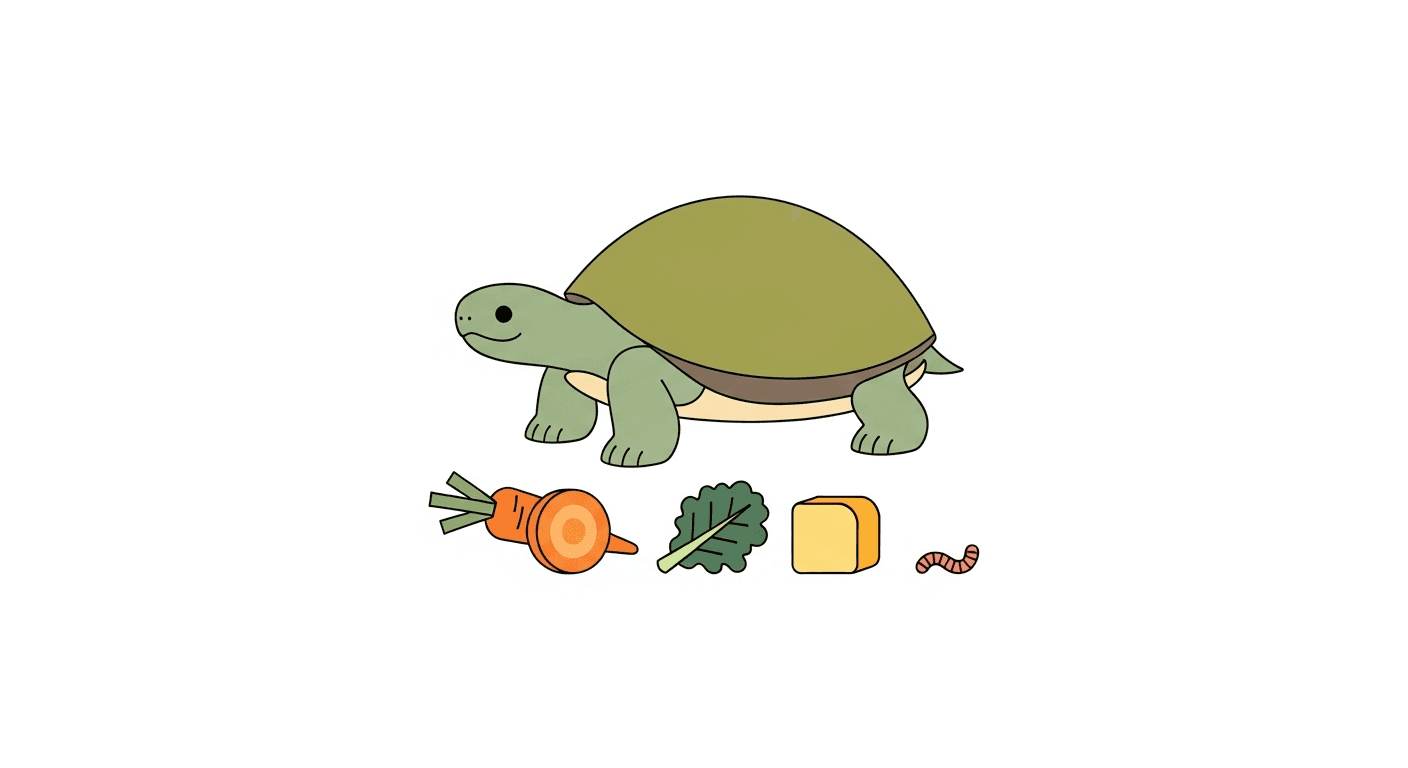
Turtles evolved in incredibly diverse environments and ecologies, resulting in wildly different dietary needs. A red-eared slider eats both plant and animal material and thrives on a varied omnivorous diet. A sulcata tortoise is a strict herbivore adapted to semi-arid grasslands and should never receive fruit or high-protein foods. Feeding a tortoise like an omnivorous turtle — or vice versa — causes progressive nutritional disease that develops over months before becoming apparent.
Always research the specific dietary needs of your species before feeding.
First 3 Steps at Home
- Establish your turtle's actual species: Many turtles are sold without correct species identification. A "common" aquatic turtle might be a red-eared slider, a cooter, a painted turtle, a map turtle, or several other species with slightly different requirements. If unsure, a reptile vet or herpetological society can help with identification, which then determines appropriate diet.
- Aquatic turtles — set up a plant-heavy varied omnivore diet: The base should be 40–60% commercial aquatic turtle pellets (Reptomin, Mazuri are quality options) with the remainder being whole prey (feeder insects, earthworms, small fish in moderation) and aquatic plants (water hyacinth, duckweed, romaine lettuce). Feeder goldfish are high in thiaminase and should be limited — use shiners, guppies, or earthworms instead.
- Tortoises — make fiber and leafy greens the foundation: Tortoises should eat primarily mixed leafy greens and edible weeds. Dandelion, plantain weed, hibiscus leaves, sow thistle, clover, and mustard greens are excellent. Supplement with hay (Timothy, orchard grass) for additional fiber. Fruit should be a rare occasional treat (5% or less of diet) for species that naturally eat it — for Sulcata and Aldabra tortoises, avoid fruit almost entirely.
When to Go to the Vet Immediately
- Signs of vitamin A deficiency: swollen eyes, reduced appetite, abnormal skin (see separate article)
- Kidney disease signs in tortoises fed too much protein — lethargy, not eating, swollen neck
- Any suspected toxic plant ingestion
Follow-Up Care Checklist
- Calcium supplement: dust food 3–5 times per week
- Avoid iceberg lettuce (no nutrition), spinach and beet greens in large amounts (oxalates), and acidic fruits for most tortoise species
- Offer appropriate feed daily for growing animals, every other day for adults
- Keep a food diary to track dietary variety — repeat the same food every day tends to lead to nutritional narrowing
Track Diet with TailRounds
Log what you feed, in what quantities, and the turtle's feeding response in the TailRounds Daily Log. A complete feeding history is invaluable context for any health assessment.
Book a Vet Appointment
An annual nutritional check helps prevent diet-related disease before symptoms develop. Book at Happy Paws with our exotic team for species-specific feeding guidance.
Summary for Your Clinic Visit
Bring your food diary, list current supplements with brands and frequency, and describe any feeding refusals or changes in appetite. Your vet can then make specific targeted recommendations.
Continue Reading
 🐢 Turtle & Tortoise Health
Vitamin Deficiencies in Turtles: Vitamin A, D3, and Calcium Explained
Nutritional deficiencies cause most preventable illness in captive turtles. Learn which vitamins matter most, how deficiency presents, and how to correct it safely.
 🐢 Turtle & Tortoise Health
My Turtle Won't Eat: Causes, What to Check at Home, and When to See a Vet
A turtle refusing food may be hibernating, stressed, or ill. Learn how to tell the difference and when refusal to eat requires immediate veterinary attention.
 🐢 Turtle & Tortoise Health
UVB Lighting for Turtles and Tortoises: Getting It Right to Prevent Disease
UVB is essential for turtle health and most problems in captive turtles trace back to inadequate UVB. Learn how to choose, install, and replace UVB lighting correctly.
 🐢 Turtle & Tortoise Health
Daily Care Checklist for Turtles and Tortoises: Building Habits That Prevent Disease
Consistent daily care prevents most common turtle health problems. Use this checklist to build a daily routine that catches problems early and maintains long-term health.