
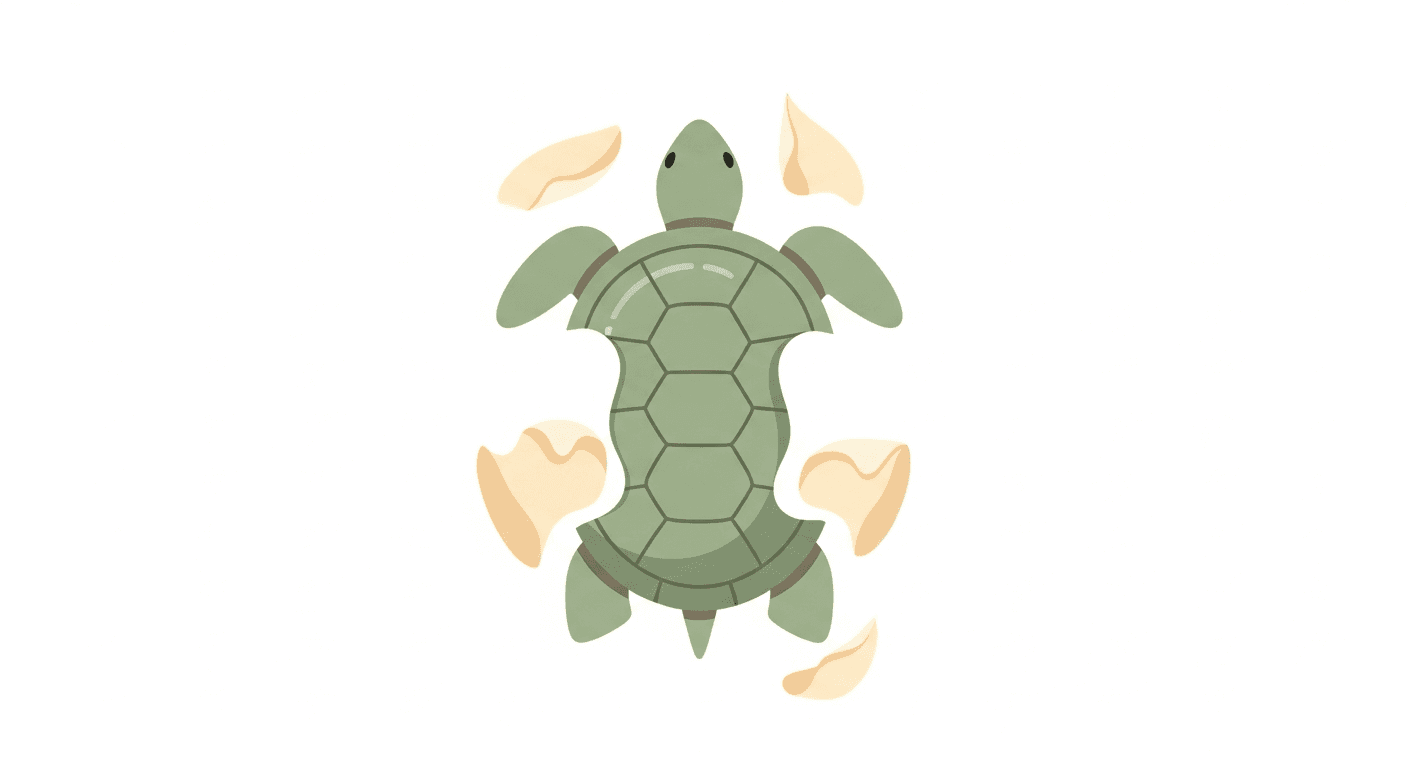
What Is Normal Shedding in Turtles?
Turtles shed both the outer layer of skin on their limbs and neck and the outer layer of their shell scutes. Scute shedding in aquatic turtles (like red-eared sliders) is normal as the shell grows — thin, transparent sheets of keratin separate from the underlying scutes and float off in the water. Skin shedding on the neck and limbs happens more gradually and may be barely noticeable.
Problems occur when shedding is excessive, stuck (dysecdysis), associated with white patches of dead skin that don't come off, or accompanied by odor or visible skin breakdown.
First 3 Steps at Home
- Differentiate scute shedding from shell rot: Normal scute shedding produces thin, whole, transparent sheets that come off cleanly revealing a healthy new scute beneath. Shell rot produces soft, discolored, pitted areas that may smell foul and leave raw-looking surfaces. If you're unsure, photograph the area and contact your vet.
- Address retained skin on limbs: White, thickened, or wrapped skin on the neck, leg folds, or tail that doesn't shed normally may indicate low humidity, vitamin deficiency, or bacterial/fungal infection. For aquatic turtles, ensure the water temperature and quality are optimal. For tortoises, review humidity. Gentle soaking can help in mild cases.
- Check for white fluffy fungal growth: White cotton-like growth on the skin or shell of aquatic turtles is fungal (Saprolegnia or similar). This indicates poor water quality and sometimes secondary immunosuppression. Improve water quality immediately and seek veterinary antifungal treatment promptly — fungal infections progress rapidly.
When to Go to the Vet Immediately
- Visible white fluffy growth anywhere on the body — fungal infection
- Skin that appears raw, bleeding, or deeply eroded
- Retained shed on digits that may constrict blood flow
- Scute separation revealing dark, bloody, or foul-smelling tissue beneath
Follow-Up Care Checklist
- Maintain optimal water quality in aquatic turtle tanks — the single biggest factor in skin health
- Ensure tortoises have appropriate humidity for their species
- Never forcibly peel shedding skin or scutes — wait for natural separation or seek veterinary assistance
- Provide a rough surface in the tank or enclosure — rocks and driftwood help with natural skin sloughing
Track Shedding with TailRounds
Note any unusual shedding patterns or skin observations in the TailRounds Daily Log alongside water quality parameters. Correlations between water quality dips and skin problems often become clear in the record over time.
Book a Vet Appointment
Persistent shedding problems or suspected infection require veterinary assessment. Book at Happy Paws with our exotic team for a skin and shell health evaluation.
Summary for Your Clinic Visit
Describe the shedding abnormality, location, duration, and any associated changes (odor, discoloration, behavior change). For aquatic turtles, bring recent water test results.
Continue Reading
 🐢 Turtle & Tortoise Health
Turtle Shell Problems: Soft Shell, Shell Rot, and Pyramid Scutes Explained
The shell is a turtle's most visible health indicator. Learn to recognize soft shell (metabolic bone disease), shell rot, injuries, and what each requires in terms of treatment.
 🐢 Turtle & Tortoise Health
Water Quality for Aquatic Turtles: Parameters, Filtration, and Preventing Disease
Poor water quality is the leading cause of illness in aquatic turtles. Learn the key parameters, filtration requirements, and maintenance schedule to keep your turtle healthy.
 🐢 Turtle & Tortoise Health
Vitamin Deficiencies in Turtles: Vitamin A, D3, and Calcium Explained
Nutritional deficiencies cause most preventable illness in captive turtles. Learn which vitamins matter most, how deficiency presents, and how to correct it safely.
 🐢 Turtle & Tortoise Health
Daily Care Checklist for Turtles and Tortoises: Building Habits That Prevent Disease
Consistent daily care prevents most common turtle health problems. Use this checklist to build a daily routine that catches problems early and maintains long-term health.