
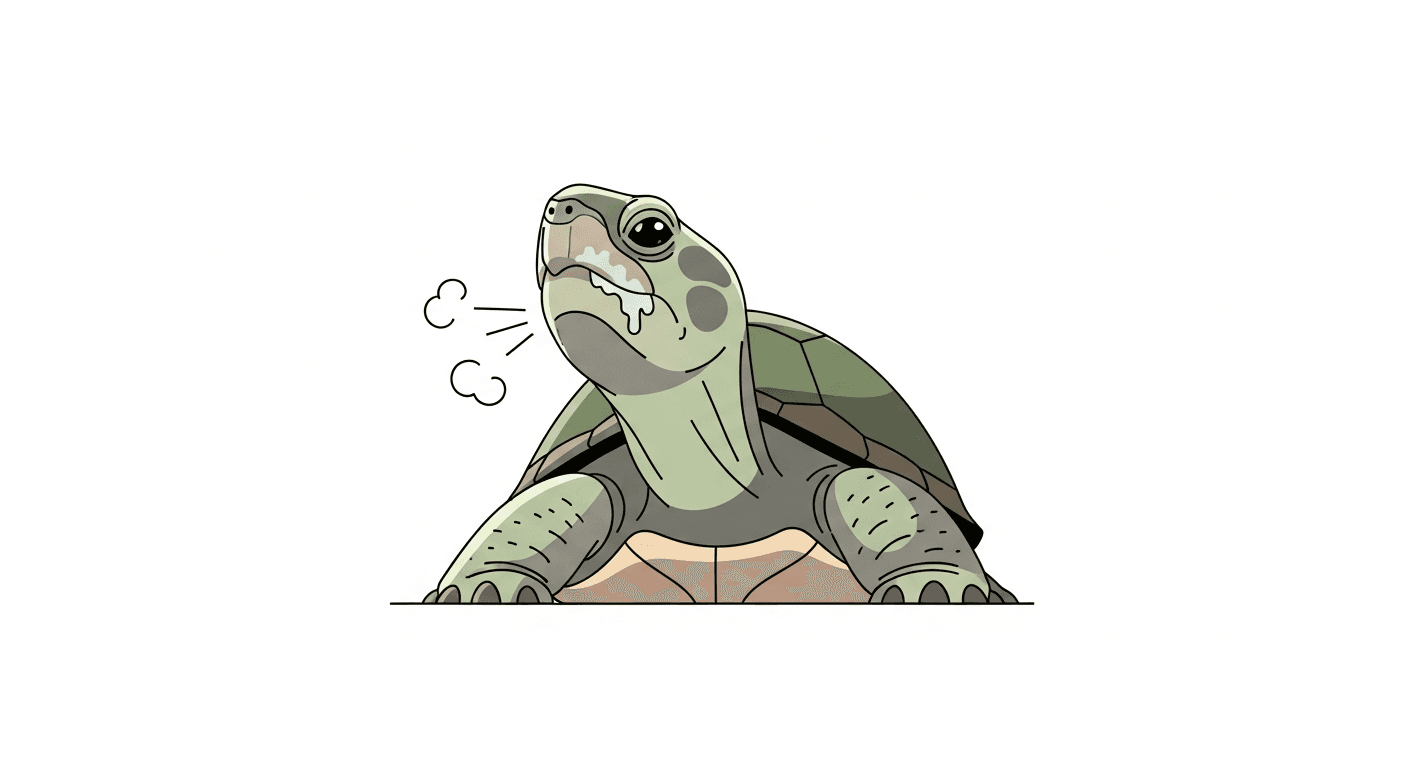
What Is a Respiratory Infection in Turtles?
Respiratory infections (RI) in turtles encompass bacterial, viral, fungal, and parasitic infections affecting the lungs and airways. They are among the most common causes of illness and death in captive turtles, and are closely associated with inadequate husbandry — particularly temperatures that are too cold, which impair the turtle's immune system and allow opportunistic pathogens to proliferate.
Aquatic turtles with respiratory infections often float tilted to one side, as fluid accumulates in one lung, affecting buoyancy. Land tortoises may show nasal discharge and labored breathing.
First 3 Steps at Home
- Raise environmental temperatures: Increase basking spot to 32–35°C and ambient temperatures to the upper end of the appropriate range for your species. A warmer environment boosts immune function and slows bacterial multiplication. Do not overheat — use a reliable thermometer and target temperatures appropriate for the specific species.
- Observe for buoyancy problems in aquatic turtles: A healthy aquatic turtle should float and swim level. A turtle floating with one side of the body higher than the other, or that has difficulty submerging, likely has fluid in the lungs. Remove the turtle from deep water temporarily and allow shallow-water access only to reduce drowning risk while you arrange vet care.
- Do not attempt home antibiotic treatment: Human antibiotics are not safe for turtles and inappropriately treated infections can worsen significantly. The veterinary treatment typically involves injectable antibiotics (most commonly enrofloxacin or azithromycin), which require specific dosing for reptiles. Home treatment delays appropriate care.
When to Go to the Vet Immediately
- Open-mouth breathing — severe respiratory distress
- Audible wheezing or clicking sounds with breathing
- Tilted floating with inability to submerge
- Mucus discharge from nose or mouth
- Turtle extending neck and gasping
- Lethargy with complete refusal to eat
Follow-Up Care Checklist
- Complete the full antibiotic course prescribed by your vet — respiratory infections relapse easily if treatment is stopped early
- Correct the underlying husbandry issues — temperature, UVB, humidity — that contributed to the infection
- Keep the turtle isolated from any other reptiles during treatment
- Re-evaluate within 2–3 weeks of completing treatment to confirm resolution
- Ensure water filtration in aquatic turtle tanks is adequate — bacteria-laden water is a constant reinfection source
Track Respiratory Health with TailRounds
Log daily observations including breathing rate, posture, appetite, and any nasal discharge in the TailRounds Daily Log. Respiratory infections can escalate overnight — daily records help you track trajectory accurately.
Book a Vet Appointment
Any respiratory signs in a turtle warrant prompt veterinary assessment. Book at Happy Paws with our reptile-experienced exotic team for diagnostics including culture and sensitivity testing to guide appropriate antibiotic selection.
Summary for Your Clinic Visit
Note the duration of symptoms, current enclosure temperatures and humidity, the turtle's recent appetite and activity level, any known exposure to other reptiles, and whether the turtle is floating abnormally.
Continue Reading
 🐢 Turtle & Tortoise Health
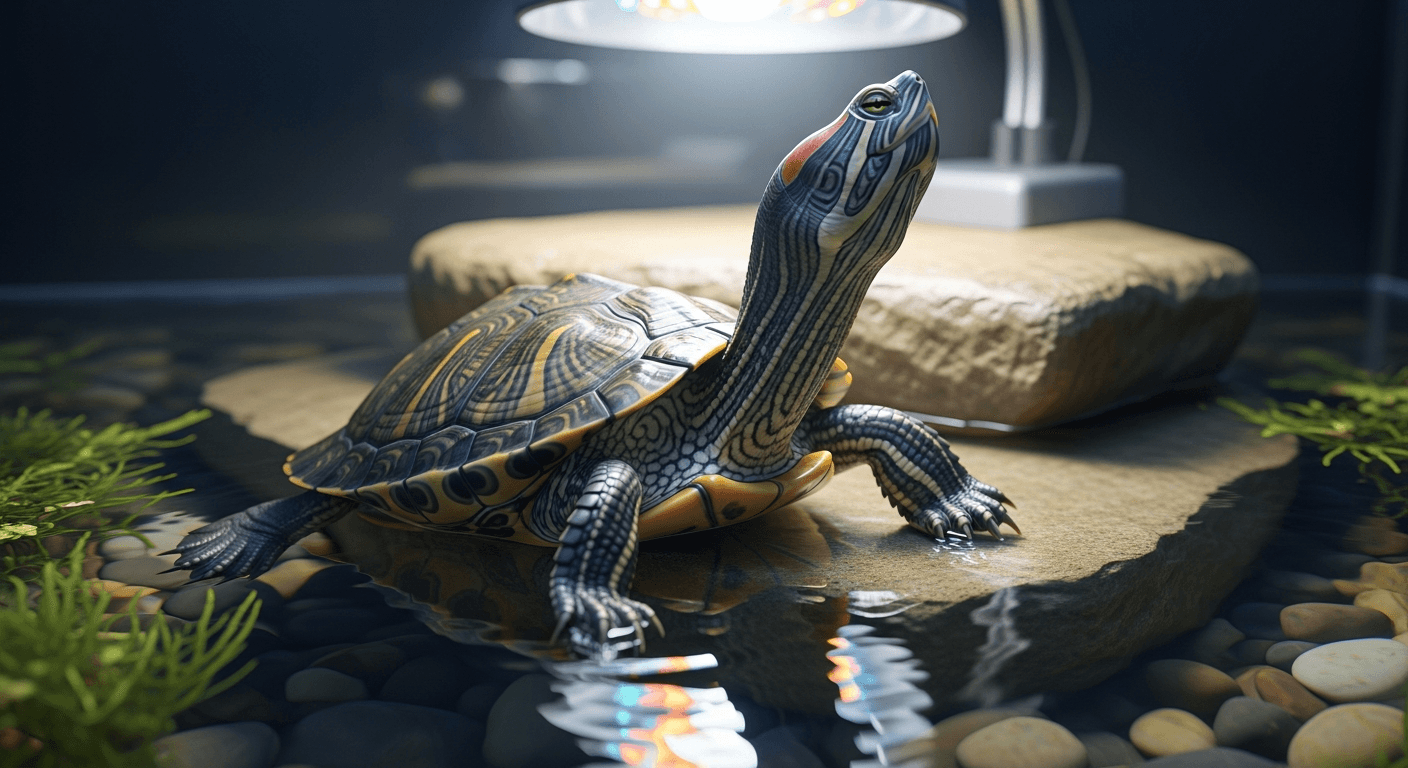
My Turtle Won't Eat: Causes, What to Check at Home, and When to See a Vet
A turtle refusing food may be hibernating, stressed, or ill. Learn how to tell the difference and when refusal to eat requires immediate veterinary attention.
 🐢 Turtle & Tortoise Health
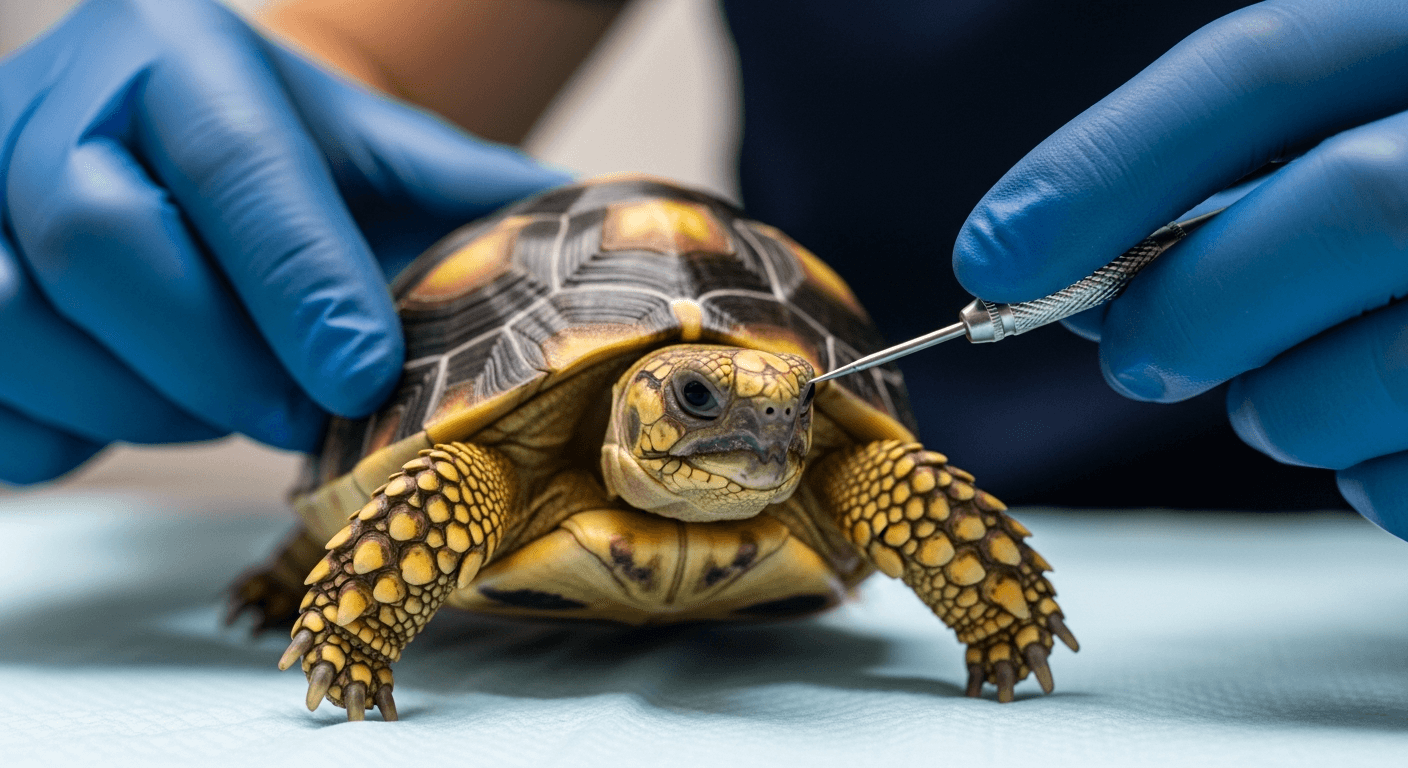
Turtle Shell Problems: Soft Shell, Shell Rot, and Pyramid Scutes Explained
The shell is a turtle's most visible health indicator. Learn to recognize soft shell (metabolic bone disease), shell rot, injuries, and what each requires in terms of treatment.
 🐢 Turtle & Tortoise Health
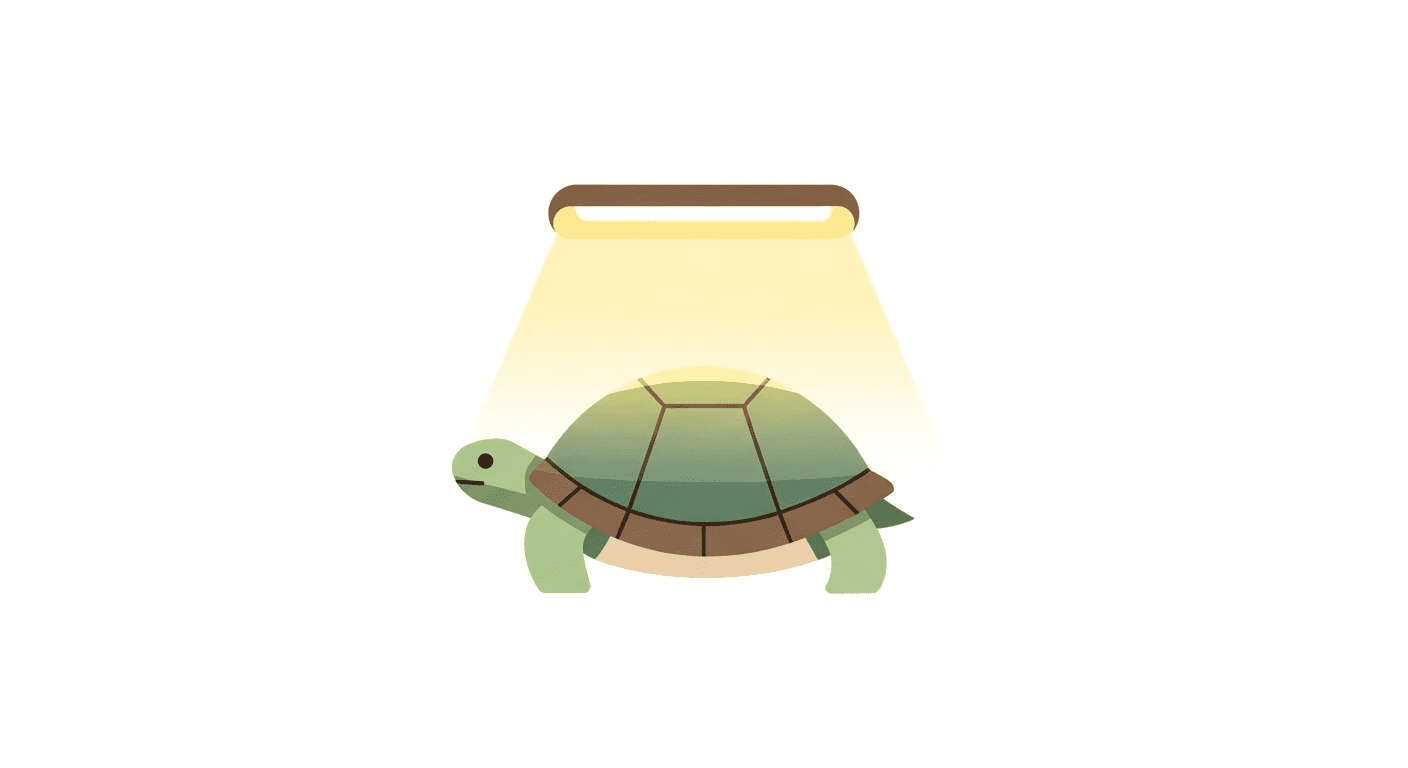
UVB Lighting for Turtles and Tortoises: Getting It Right to Prevent Disease
UVB is essential for turtle health and most problems in captive turtles trace back to inadequate UVB. Learn how to choose, install, and replace UVB lighting correctly.
 🐢 Turtle & Tortoise Health
Daily Care Checklist for Turtles and Tortoises: Building Habits That Prevent Disease
Consistent daily care prevents most common turtle health problems. Use this checklist to build a daily routine that catches problems early and maintains long-term health.