
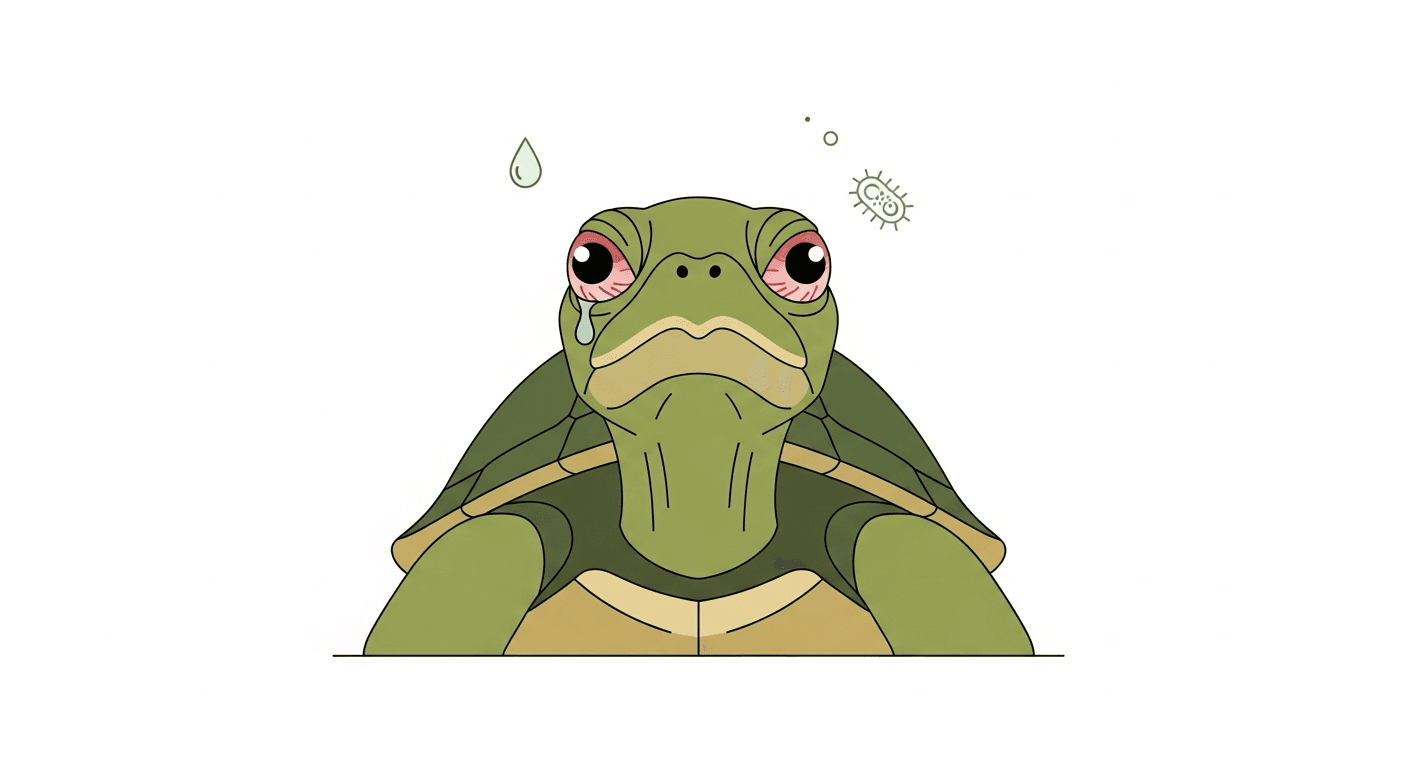
What Causes Eye Problems in Turtles?
Eye problems are one of the most common presentations in pet turtles, and the cause matters significantly for treatment. The most frequent causes are vitamin A deficiency (causing bilateral swollen, puffy eyelids), bacterial infection secondary to poor water quality (aquatic turtles), or physical trauma. Correct identification prevents inappropriate treatment — a bacterial infection needs antibiotics, while a vitamin A deficiency needs nutritional correction and possibly injection.
First 3 Steps at Home
- Determine whether one or both eyes are affected: Bilateral (both eyes) swollen, shut eyelids in an aquatic turtle strongly suggests vitamin A deficiency, particularly if the turtle has been on a restricted diet. Unilateral (one eye) problems are more commonly infectious or traumatic.
- Check water quality for aquatic turtles: Ammonia and nitrite spikes from poor filtration cause eye irritation and secondary bacterial infections. Test the water with an aquarium test kit. If ammonia or nitrite is detectable, perform a 50% water change immediately and review your filtration system.
- Do not apply eye drops: Human or over-the-counter eye drops are generally inappropriate for turtles and can worsen conditions. Gently rinsing the eye with sterile saline or clean water is the only safe home step while arranging vet care.
When to Go to the Vet Immediately
- Both eyes swollen shut and turtle refusing to eat — vitamin A deficiency requiring injection
- Eye discharge with pus or cloudiness of the cornea
- Any visible mass, growth, or penetrating injury near the eye
- Eye that appears sunken or deflated
- Eye problem lasting more than 3 days with no improvement
Follow-Up Care Checklist
- Improve diet vitamin A content — dark leafy greens, sweet potato, carrot for tortoises; quality pellets for aquatic turtles
- Maintain aquarium water quality with adequate filtration and regular partial water changes
- Administer prescribed eye drops or ointment exactly as directed
- Recheck with the vet within 2 weeks to confirm resolution
Track Eye Health with TailRounds
Note eye appearance, whether eyes are fully open, any discharge, and whether the turtle appears responsive when offered food in the TailRounds Daily Log daily during treatment.
Book a Vet Appointment
Eye problems in turtles rarely resolve without treatment. Book at Happy Paws with our exotic team — treatment outcomes are significantly better with early intervention.
Summary for Your Clinic Visit
Note whether one or both eyes are affected, duration of the problem, current diet and supplementation, water quality parameters for aquatic turtles, and any home treatment already attempted.
Continue Reading
 🐢 Turtle & Tortoise Health
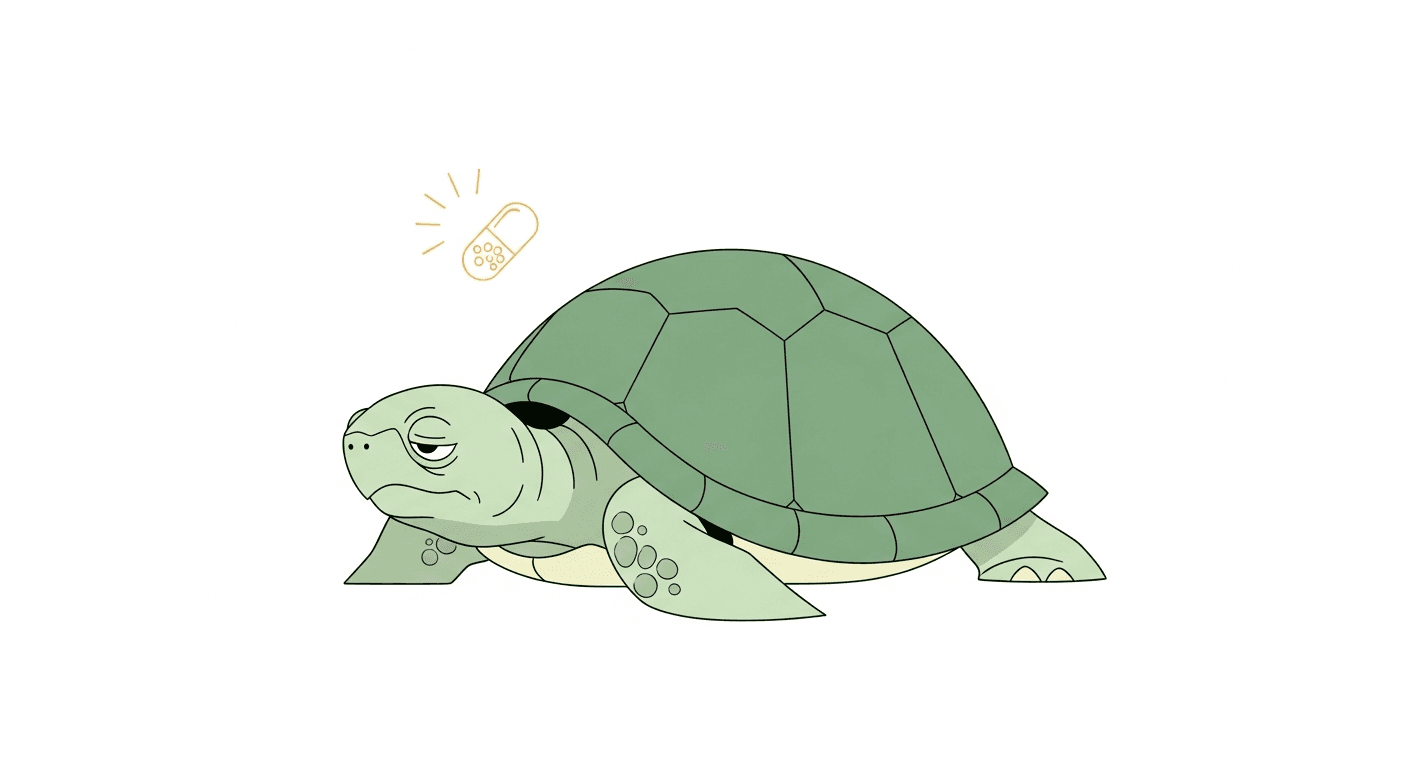
Vitamin Deficiencies in Turtles: Vitamin A, D3, and Calcium Explained
Nutritional deficiencies cause most preventable illness in captive turtles. Learn which vitamins matter most, how deficiency presents, and how to correct it safely.
 🐢 Turtle & Tortoise Health
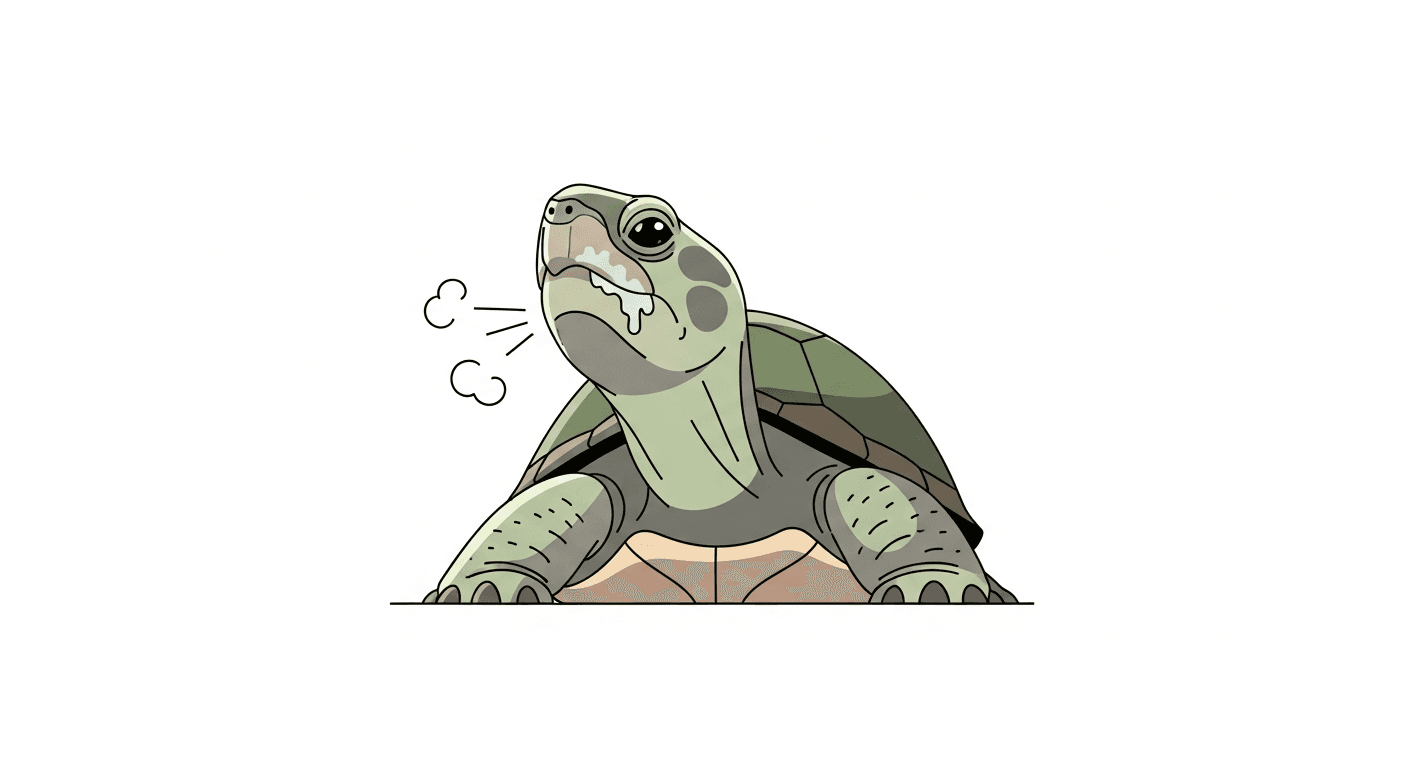
Respiratory Infection in Turtles: Signs, Causes, and Treatment
Respiratory infections are common and serious in turtles. Recognize the early signs, understand why they occur, and learn when emergency care is essential.
 🐢 Turtle & Tortoise Health
My Turtle Won't Eat: Causes, What to Check at Home, and When to See a Vet
A turtle refusing food may be hibernating, stressed, or ill. Learn how to tell the difference and when refusal to eat requires immediate veterinary attention.
 🐢 Turtle & Tortoise Health
Daily Care Checklist for Turtles and Tortoises: Building Habits That Prevent Disease
Consistent daily care prevents most common turtle health problems. Use this checklist to build a daily routine that catches problems early and maintains long-term health.