
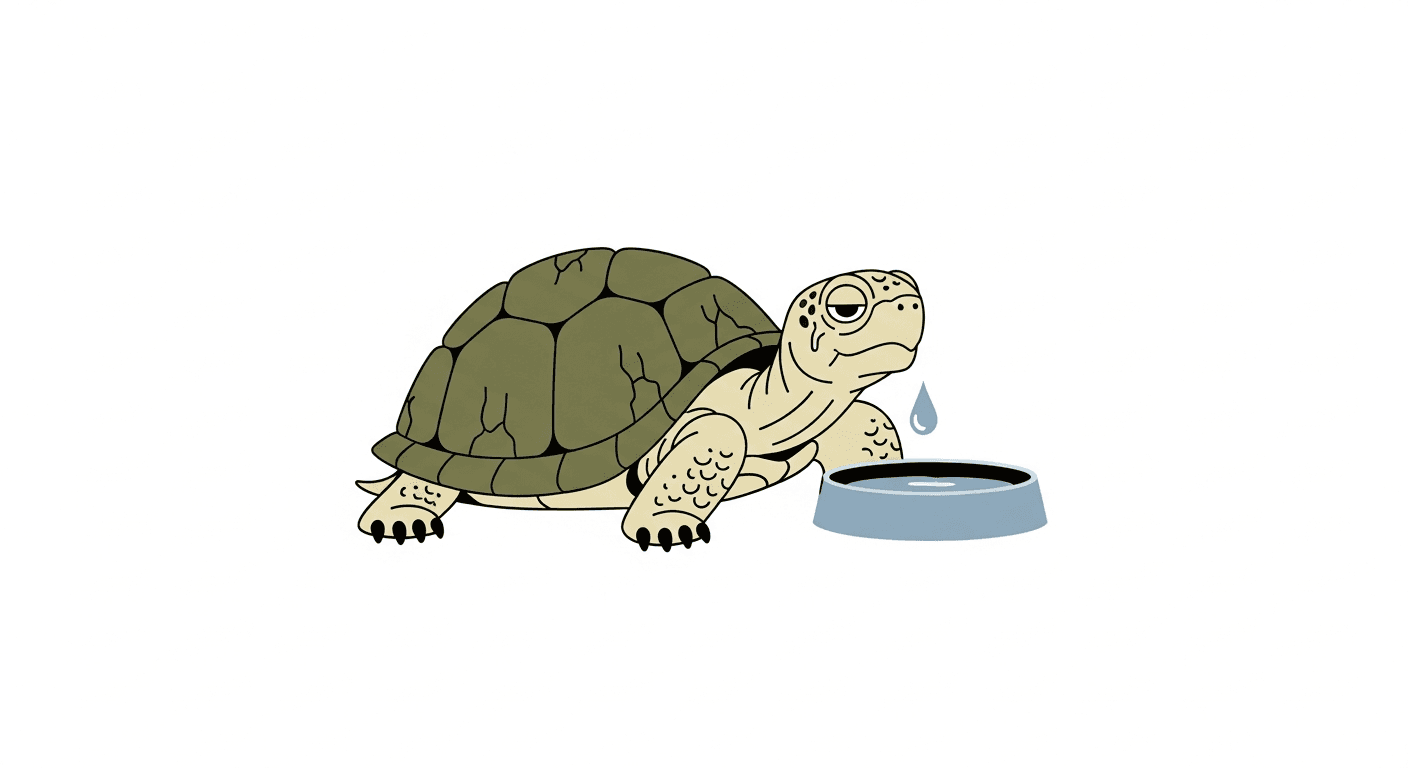
Why Dehydration Is Common in Captive Turtles
Turtles and tortoises have relatively low water requirements compared to mammals, but they still need consistent access to fresh water and appropriate environmental humidity. In captivity, the most common causes of dehydration are inadequate water access, incorrect humidity levels, temperatures that are too high (causing increased evaporative loss), and illness that reduces the animal's motivation to drink or soak.
Tortoises often show more visible dehydration signs than aquatic turtles due to greater variation in their environmental moisture exposure.
First 3 Steps at Home
- Assess hydration status: The most reliable physical sign is skin tenting (pinch the neck skin gently — in a well-hydrated turtle it returns to normal immediately; in a dehydrated turtle it remains tented for a moment). Sunken eyes (eyes appear pulled back into the skull rather than plump and prominent) are a sign of more significant dehydration. White chalky urates passed without any liquid urine may also indicate dehydration.
- Provide a warm shallow soak: For tortoises and land turtles, a 20–30 minute soak in lukewarm water (28–30°C) at a depth no higher than the shell bridge (the area connecting top and bottom shell) is the standard first response to dehydration. Most tortoises will drink during the soak. Repeat daily for mild dehydration.
- Review and correct water provision: Ensure the water dish or pool is clean and accessible. Some tortoises need to be shown water — place them directly in front of the water source. For aquatic turtles, confirm water quality is adequate (dirty water discourages drinking and bathing).
When to Go to the Vet Immediately
- Sunken eyes with lethargy and complete food refusal
- Extreme skin tenting that doesn't resolve after 24 hours of soaking
- Turtles that have been without water access for unknown extended periods
- Dehydration combined with any other illness sign
Follow-Up Care Checklist
- Soak tortoises proactively 2–3 times per week as standard care
- Offer high water content foods to tortoises: fresh leafy greens, cucumber, watermelon (in moderation)
- Ensure water dish is large enough and easily accessible for the animal's size
- Monitor for and correct any causes of excessive heat that increase evaporative loss
Track Hydration with TailRounds
Log soak frequency, observations during soaking (whether the animal drank, urinated), and any dehydration signs in the TailRounds Daily Log. This record helps identify whether dehydration is recurring and whether any environmental factor is contributing.
Book a Vet Appointment
Moderate to severe dehydration requires veterinary fluid therapy. Book at Happy Paws — our exotic team can provide subcutaneous or intracoelemic fluids for cases that don't resolve with soaking.
Summary for Your Clinic Visit
Note the duration of suspected dehydration, current and recent diet and water provision, whether the turtle has soaked and whether it drank during soaking, and the most recent weight compared to a previous measurement.
Continue Reading
 🐢 Turtle & Tortoise Health
My Turtle Won't Eat: Causes, What to Check at Home, and When to See a Vet
A turtle refusing food may be hibernating, stressed, or ill. Learn how to tell the difference and when refusal to eat requires immediate veterinary attention.
 🐢 Turtle & Tortoise Health
Lethargy in Turtles: How to Tell Rest From Illness
Turtles naturally rest for long periods, making it hard to detect genuine lethargy. Learn the signs that distinguish healthy rest from illness-related inactivity.
 🐢 Turtle & Tortoise Health
Complete Turtle and Tortoise Diet Guide: What to Feed by Species
Feeding requirements vary enormously between turtle species. This guide covers aquatic turtles, box turtles, and tortoises with practical food lists and common mistakes to avoid.
 🐢 Turtle & Tortoise Health
Daily Care Checklist for Turtles and Tortoises: Building Habits That Prevent Disease
Consistent daily care prevents most common turtle health problems. Use this checklist to build a daily routine that catches problems early and maintains long-term health.