
What Is Normal Snake Shedding?
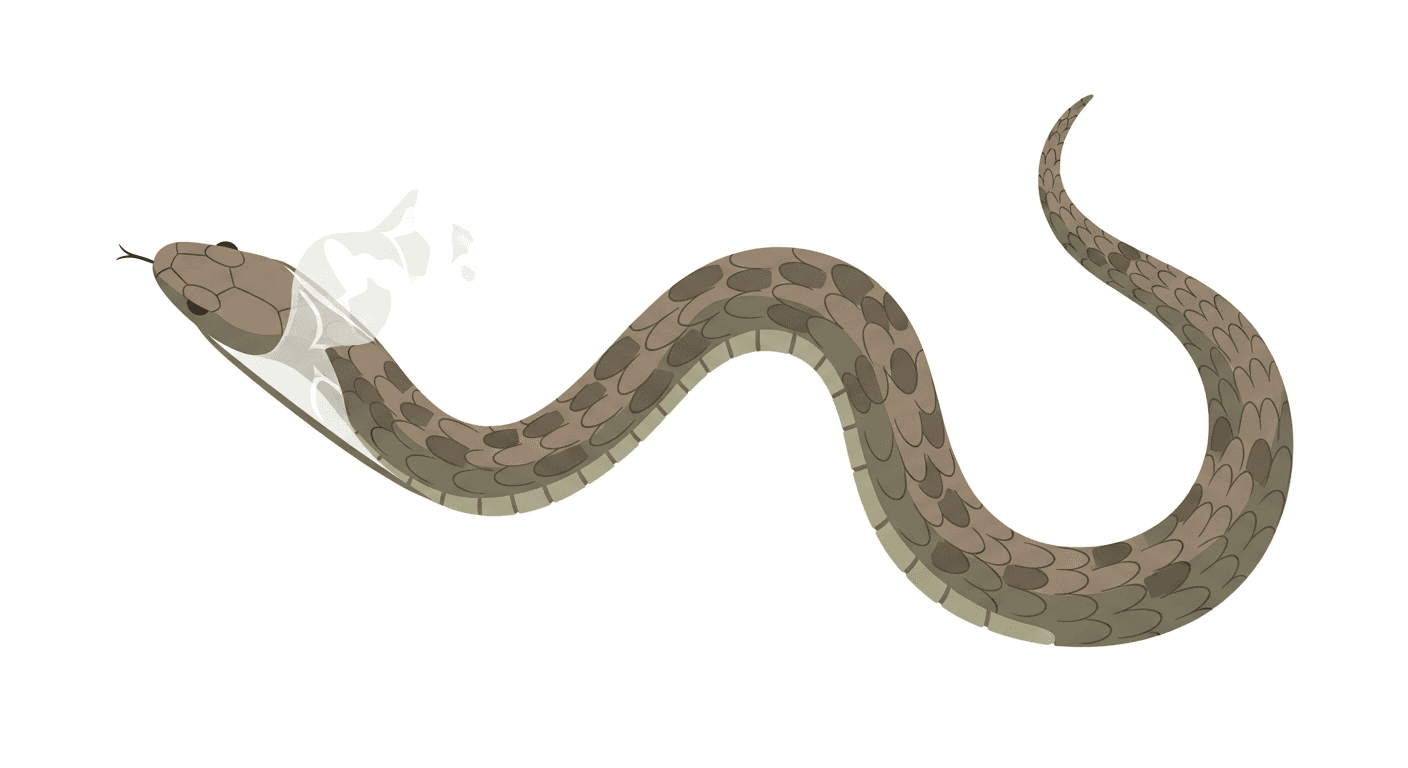
Snakes shed their entire outer skin layer (ecdysis) as they grow and repair skin damage. A healthy snake sheds in one piece — from nose to tail tip — like removing a sock turned inside out. Healthy sheds are complete and intact. Shedding frequency depends on age and growth rate: juvenile snakes may shed every 3–6 weeks; adults may shed every 4–8 weeks or less frequently.
Dysecdysis (retained shed or stuck shed) is when the shed does not come off completely or cleanly, and it is very common in captive snakes — almost always caused by inadequate humidity.
First 3 Steps at Home
- Recognize the pre-shed phase: When a snake is preparing to shed, the eyes turn blue-gray or opaque as fluid builds between old and new skin layers. Skin color becomes dull and faded. The snake typically refuses food, hides more, and may be more defensive. This phase lasts 7–14 days before the shed begins. Do not handle during this period.
- Provide a humid hide: Place a container with a damp substrate (sphagnum moss, paper towels) inside the enclosure as a humid microclimate. The snake can choose to use it. This significantly reduces stuck shed without raising overall enclosure humidity (which can cause respiratory problems in some species).
- Assist a stuck shed safely: If the shed is clearly stuck — particularly on the eyes (eye caps) or tail tip — a warm soak in 28–30°C water for 20–30 minutes often loosens the retained shed enough for it to be removed. After soaking, allow the snake to move through your lightly closed hand — the gentle friction often removes the shed. Never pull or tear at stuck shed forcefully — this removes new skin and causes injury.
When to Go to the Vet Immediately
- Eye caps (retained shed over the eyes) that do not come off with one careful soak attempt — see the vet, do not force removal
- Multiple successive incomplete sheds
- Skin that appears raw, bleeding, or damaged under retained shed
- Retained shed on the tail tip causing constriction and discoloration of the tail end
Follow-Up Care Checklist
- Correct humidity: most snakes shed cleanly at 60–70% humidity; tropical species (ball pythons) need 70–80%
- Provide a humid hide permanently — this is the simplest and most effective prevention
- Ensure the water bowl is large enough for the snake to soak voluntarily
- Check the enclosure after each shed for completeness — compare number of eye cap pieces to confirm both came off
Track Shedding with TailRounds
Log the start of pre-shed phase, shed date, and whether the shed was complete in the TailRounds Daily Log. Repeated incomplete sheds signal a chronic humidity problem.
Book a Vet Appointment
Retained eye caps or constricted tail tips require professional removal. Book at Happy Paws promptly to prevent eye damage or tail necrosis.
Summary for Your Clinic Visit
Note the date of the shed, where shed is retained, current humidity levels, whether this is a recurring problem, and what you have already tried at home.
Continue Reading
 🦎 Reptile Health
My Snake Won't Eat: Common Reasons and When to See a Vet
Snakes naturally fast for weeks at a time. Learn which causes of food refusal are normal, which require attention, and how to encourage a reluctant feeder.
 🦎 Reptile Health
Temperature Requirements for Reptiles: Why Getting It Right Saves Lives
Every reptile species has a specific temperature range that determines its health. Learn how to create a proper thermal gradient and the consequences of getting it wrong.
 🦎 Reptile Health
Dehydration in Reptiles: Signs, Species Differences, and How to Rehydrate
Dehydration is a common but often missed problem in captive reptiles. Learn the species-specific signs, how to assess hydration, and when veterinary fluid therapy is needed.
 🦎 Reptile Health
Daily Care Checklist for Reptiles: Building a Routine That Protects Your Animal's Health
A consistent daily care routine is your most powerful tool for keeping reptiles healthy and catching problems early. Use this checklist to build habits that work for any species.