
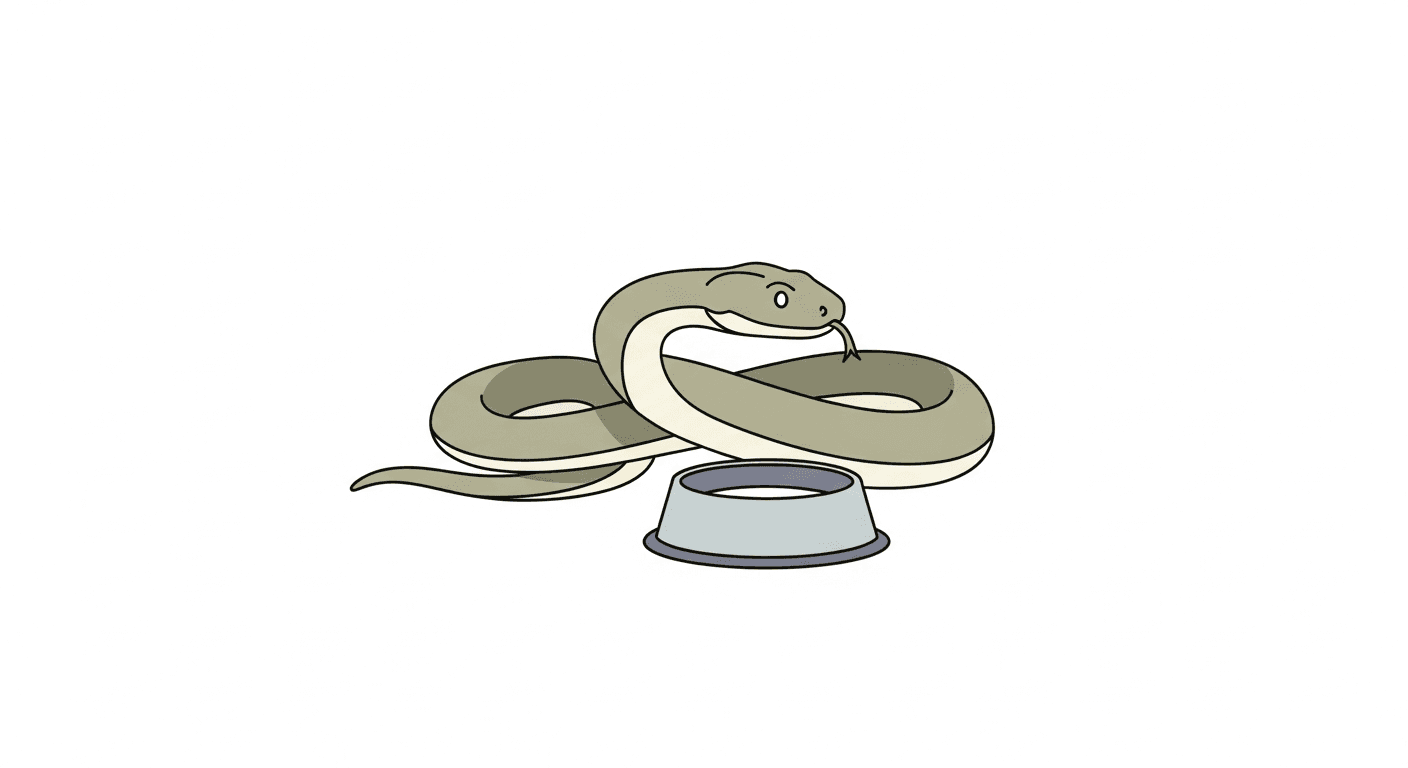
Why Snakes Stop Eating
Unlike most pets, snakes are well-adapted to extended food-free periods. In the wild, prey availability is unpredictable, and healthy snakes can fast for weeks, months, or even longer without harm. However, in captivity with food readily available, prolonged food refusal usually indicates a problem — environmental, physiological, or behavioral.
Common reasons snakes refuse food: pre-shed (bluing of the eyes and skin change = expect 7–14 days of fasting), seasonal hormonal changes (particularly in sexually mature males), too-cold temperatures, enclosure stress, inappropriate prey size or type, and illness.
First 3 Steps at Home
- Check for pre-shed signs: Look for a blue or opaque tint to the eyes ("in blue"), a dull, faded skin color, and increased hiding. A snake in pre-shed will often refuse food entirely and should not be disturbed more than necessary. Once the shed is complete, appetite should return within a few days.
- Verify temperatures precisely: Snakes require a warm end of their enclosure at the correct species-specific temperature to digest prey safely. A ball python needs a hot spot of 32–35°C. A corn snake needs 28–30°C on the warm end. Temperatures below the minimum cause both appetite suppression and failure to digest, leading to prey rotting in the gut — dangerous without access to correct temperatures.
- Reduce enclosure stress: Handling too frequently, an enclosure in a high-traffic area, an enclosure with inadequate hides, or recent changes to the setup all cause stress that suppresses appetite. Ensure the snake has a tight-fitting hide (body touching all sides) on both the warm and cool ends. Leave the snake alone for 48–72 hours after a failed feeding attempt.
When to Go to the Vet Immediately
- Weight loss of more than 10% in a month
- Food refusal beyond 3–4 months in a healthy adult, or 3–4 weeks in a juvenile
- Respiratory signs alongside food refusal: mucus, wheezing, open-mouth breathing
- Abnormal feces or absence of feces for more than 6–8 weeks
- Unusual behavior: repetitive regurgitation of prey after accepting it
- Neurological signs: stargazing (head tilted up), corkscrewing, loss of coordination
Follow-Up Care Checklist
- Weigh monthly — weight is the most objective measure of long-term nutritional status
- Use pre-killed or frozen-thawed prey — live prey can injure snakes and is not necessary
- Try warming the prey slightly before offering — a warmer scent profile can trigger feeding response
- Offer prey at the correct size — no wider than the widest point of the snake's body
- Offer prey after lights out — most snakes are more confident feeders in low light
Track Feeding with TailRounds
Log every feeding attempt, prey type, prey size, response (accepted/refused), and current weight in the TailRounds Daily Log. A feeding history is invaluable context for any vet assessment of a snake's health.
Book a Vet Appointment
Extended food refusal warrants veterinary assessment. Book at Happy Paws with our reptile team for a physical examination and fecal parasite test.
Summary for Your Clinic Visit
Note the duration of food refusal, prey type and size offered, current enclosure temperatures, last shed date, last successful feeding date, current weight versus last known weight, and any behavioral changes.
Continue Reading
 🦎 Reptile Health
Temperature Requirements for Reptiles: Why Getting It Right Saves Lives
Every reptile species has a specific temperature range that determines its health. Learn how to create a proper thermal gradient and the consequences of getting it wrong.
 🦎 Reptile Health
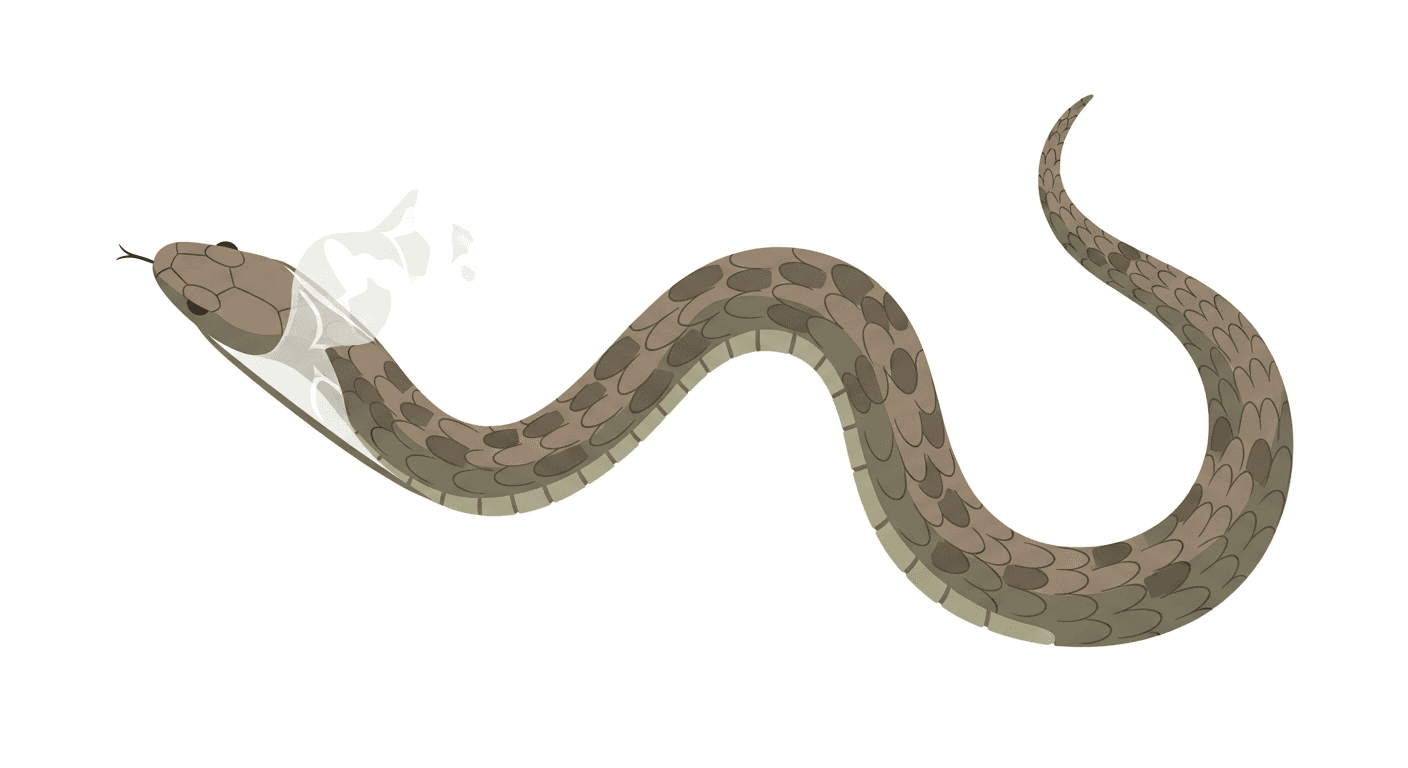
Snake Shedding: Normal Process, Stuck Shed, and How to Help
Shedding is a natural process but retained shed is a common problem in captivity. Learn the signs of stuck shed, how to assist safely, and how correct humidity prevents it.
 🦎 Reptile Health
Respiratory Infections in Reptiles: Signs, Causes, and What Treatment Involves
Respiratory infections are among the most common serious illnesses in captive reptiles. Learn to recognize the signs early and understand why immediate veterinary care is essential.
 🦎 Reptile Health
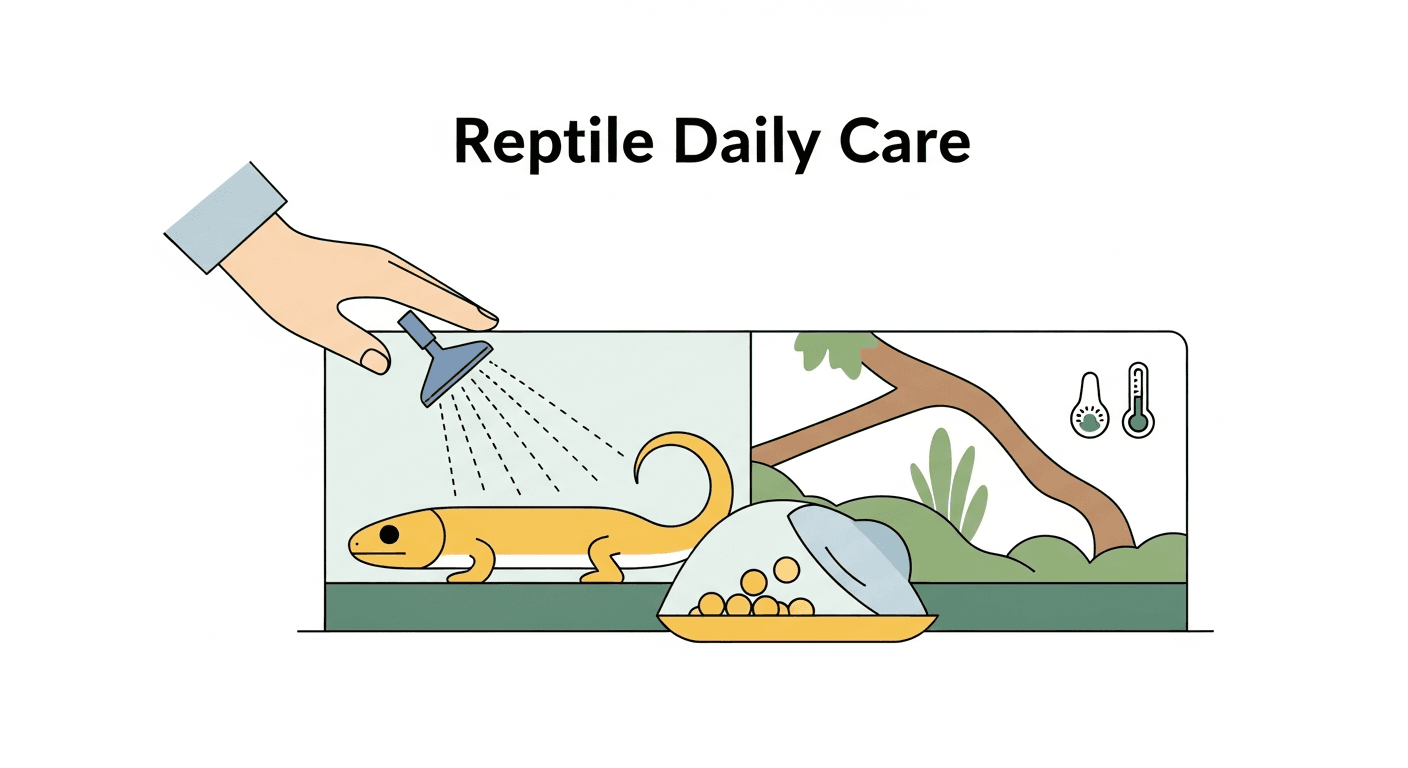
Daily Care Checklist for Reptiles: Building a Routine That Protects Your Animal's Health
A consistent daily care routine is your most powerful tool for keeping reptiles healthy and catching problems early. Use this checklist to build habits that work for any species.