
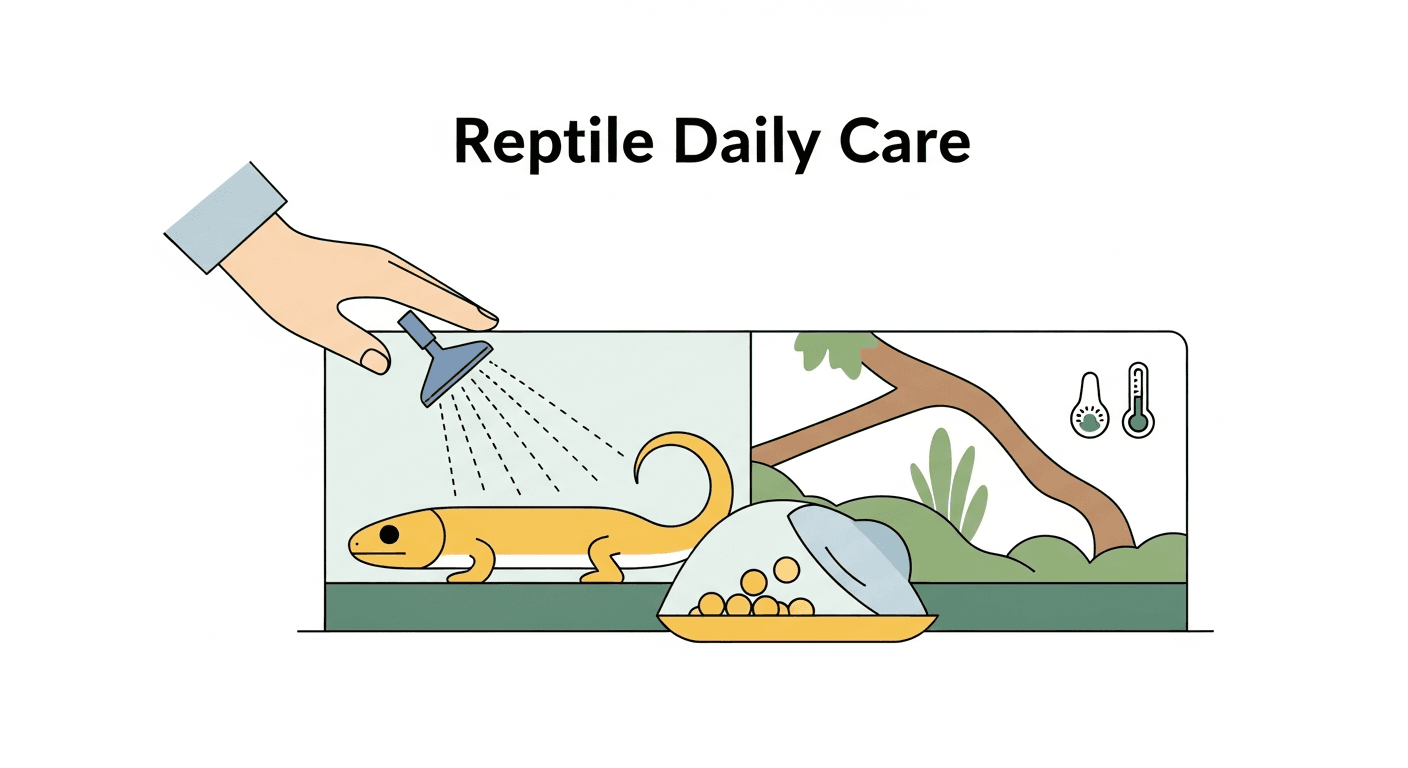
Why Daily Observation Is the Cornerstone of Reptile Health
Reptiles are stoic animals that hide illness until they can no longer compensate. The owner who observes their reptile daily for 5–10 minutes builds an intimate understanding of what is normal for that individual animal. When something deviates — a slight change in posture, a minor reduction in feeding response, an unusual skin color — the daily observer notices immediately. The owner who checks in weekly may not notice until the change has progressed significantly.
Daily observation is not about doing more; it is about building habits that integrate naturally into your routine.
First 3 Steps at Home
- Morning check — environment first: Before interacting with the reptile, verify the enclosure conditions. Check basking spot temperature (temperature gun), verify the UVB light is on, confirm water availability, and check that the enclosure is within the correct humidity range if relevant to your species. These take 2 minutes and catch equipment failures (a burned-out basking bulb, a malfunctioning thermostat) before they expose the animal to hours of incorrect temperatures.
- Feeding and behavioral observation: During feeding, observe the reptile's body language, movement quality, and feeding response. Note whether it ate, what it ate, and how it behaved. A reptile that is usually quick to feed but hesitates today, or that usually has bright eyes but today appears slightly dull, is showing you something. These subtle observations are the first line of defense against illness.
- End-of-day check: Before lights out, check the enclosure for feces and urates — note appearance and consistency. Check for any shed, shed pieces, or skin changes. Ensure water is clean and available. Note whether the reptile is in its normal resting position. This brief check completes the daily picture and ensures overnight conditions are correct.
When to Go to the Vet Immediately
- Any emergency sign from the emergency signs article
- Progressive weight loss over multiple weigh-ins
- Any new physical change: swelling, skin lesion, color change, discharge
- Food refusal beyond species-normal parameters at correct temperatures
Follow-Up Care Checklist
- Weekly: weigh the reptile, inspect skin and shed quality, test water parameters for aquatic species, review supplement schedule
- Monthly: full enclosure clean, check equipment function, review feeding record
- Annually: UVB bulb replacement, wellness exam with fecal parasite test, bloodwork for older animals
Track Everything with TailRounds
The TailRounds Daily Log is designed for exactly this kind of daily observation record. Even brief daily entries — temperatures, feeding response, feces noted, behavior normal — compound over time into a comprehensive health history that serves both your own awareness and your vet's diagnostic accuracy.
Book a Vet Appointment
Annual wellness exams are the professional complement to daily home observation. Book your reptile's annual exam at Happy Paws — our exotic team catches what even the most attentive daily observation can miss.
Summary for Your Clinic Visit
Bring your daily log, weight record for the past 3–6 months, supplement schedule, and any specific observations that prompted the visit. Your daily records transform a routine wellness exam into a targeted, precise assessment of your individual animal's health trajectory.
Continue Reading
 🦎 Reptile Health
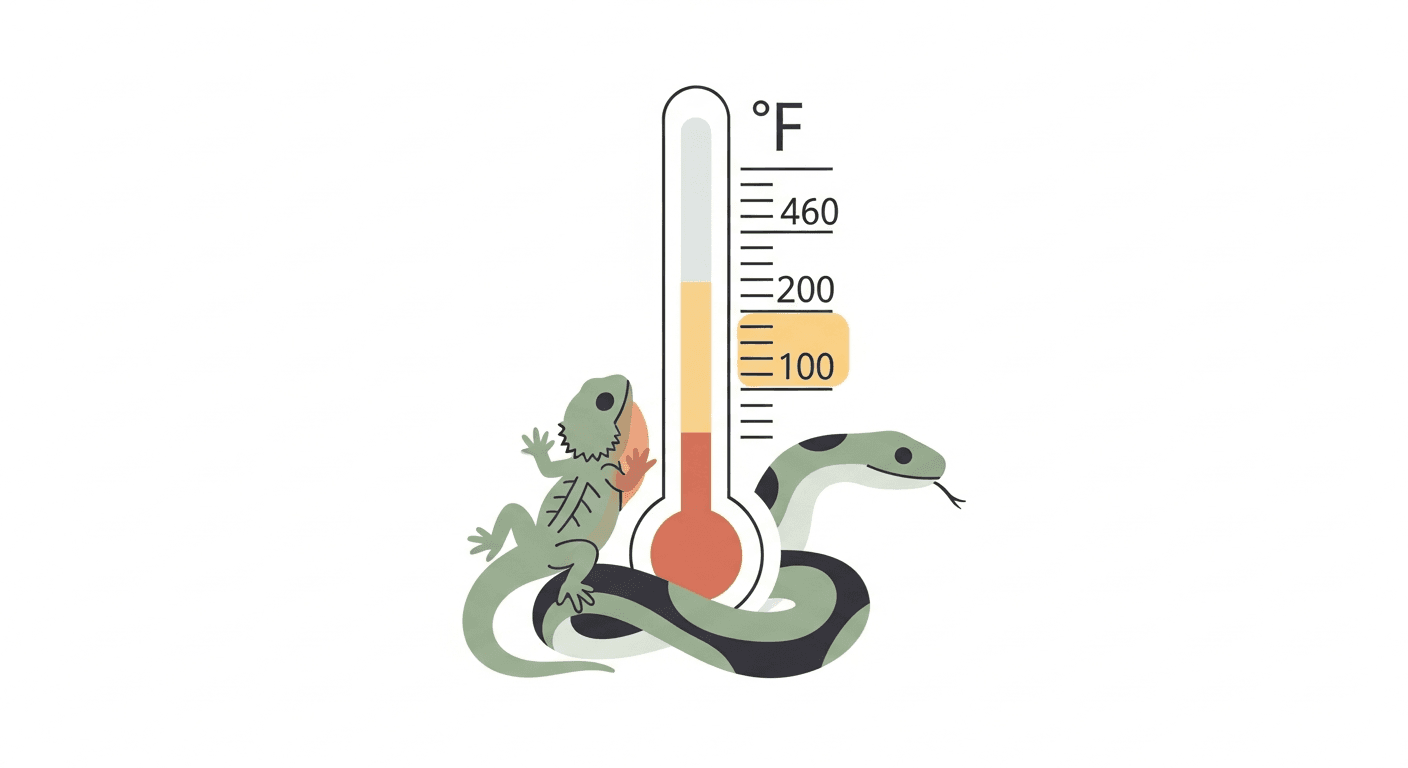
Temperature Requirements for Reptiles: Why Getting It Right Saves Lives
Every reptile species has a specific temperature range that determines its health. Learn how to create a proper thermal gradient and the consequences of getting it wrong.
 🦎 Reptile Health
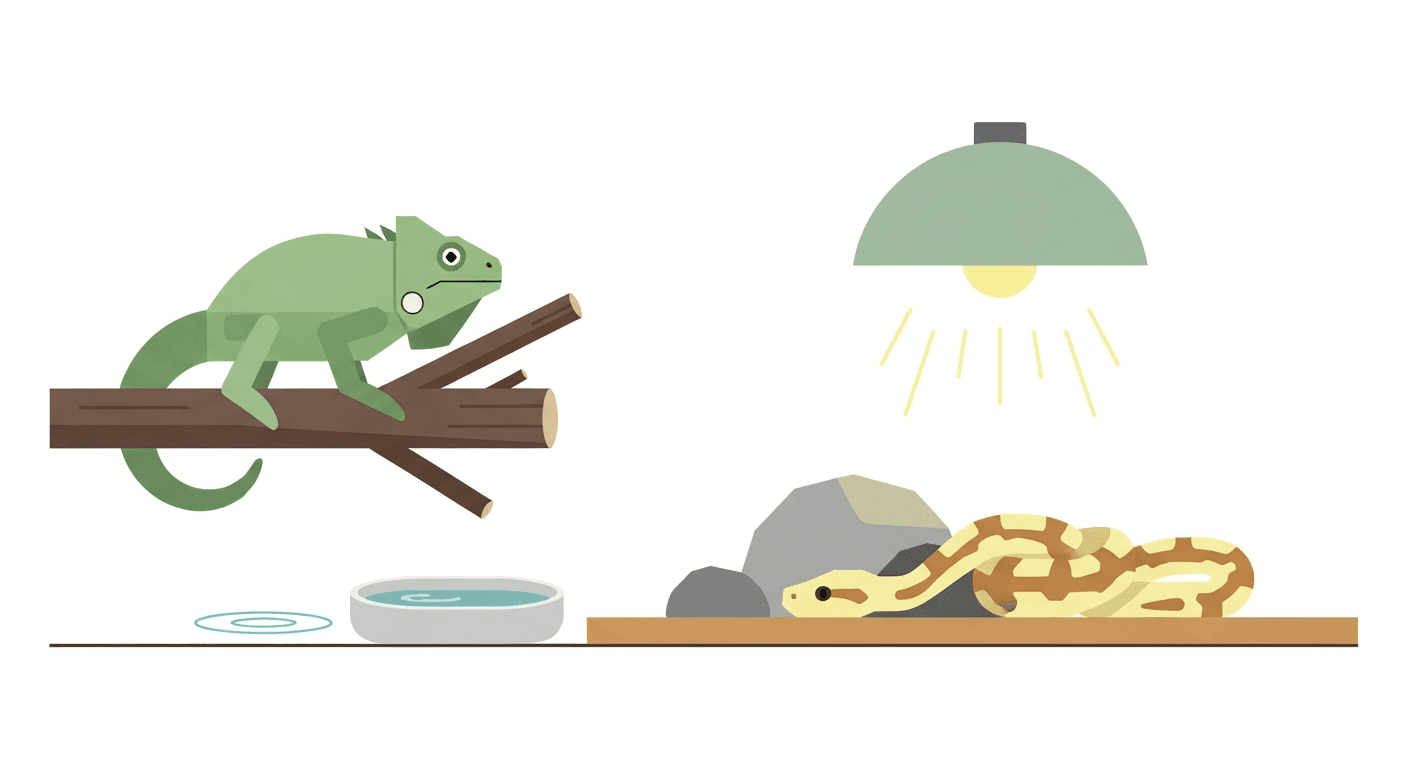
Reptile Enclosure Guide: Size, Substrate, and Setup for Common Pet Species
The right enclosure setup prevents most common reptile health problems. Learn the minimum requirements for popular species and the most common setup mistakes to avoid.
 🦎 Reptile Health
Reptile Diet Guide: What to Feed Insectivores, Herbivores, and Omnivores
Reptile diets are as diverse as the species. Learn what to feed the most popular pet reptile types, including feeder insect rotation, dusting protocols, and foods to avoid.
 🦎 Reptile Health
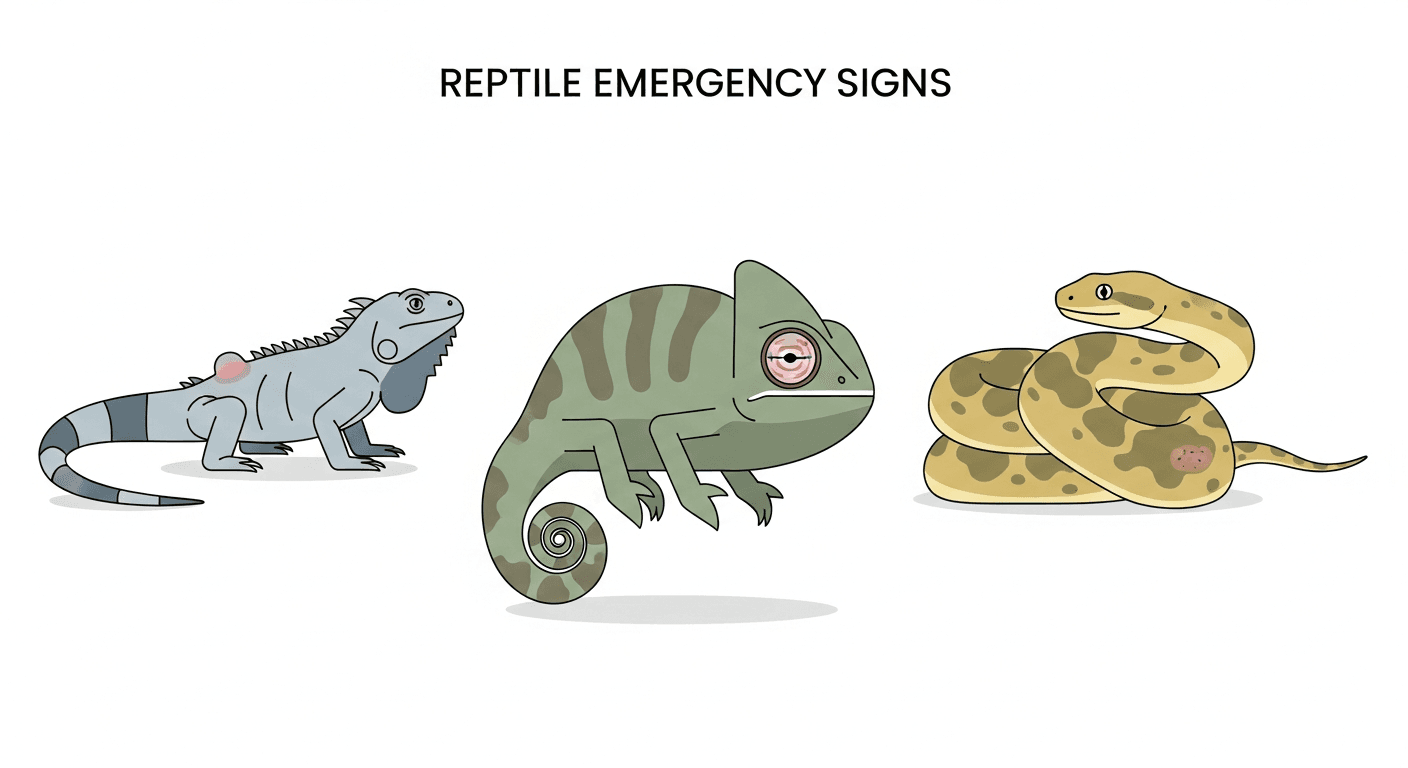
Reptile Emergency Signs: What Cannot Wait and How to Transport Safely
Reptile emergencies require immediate action. Learn the critical warning signs across snake and lizard species, and how to transport a critically ill reptile safely to the vet.