
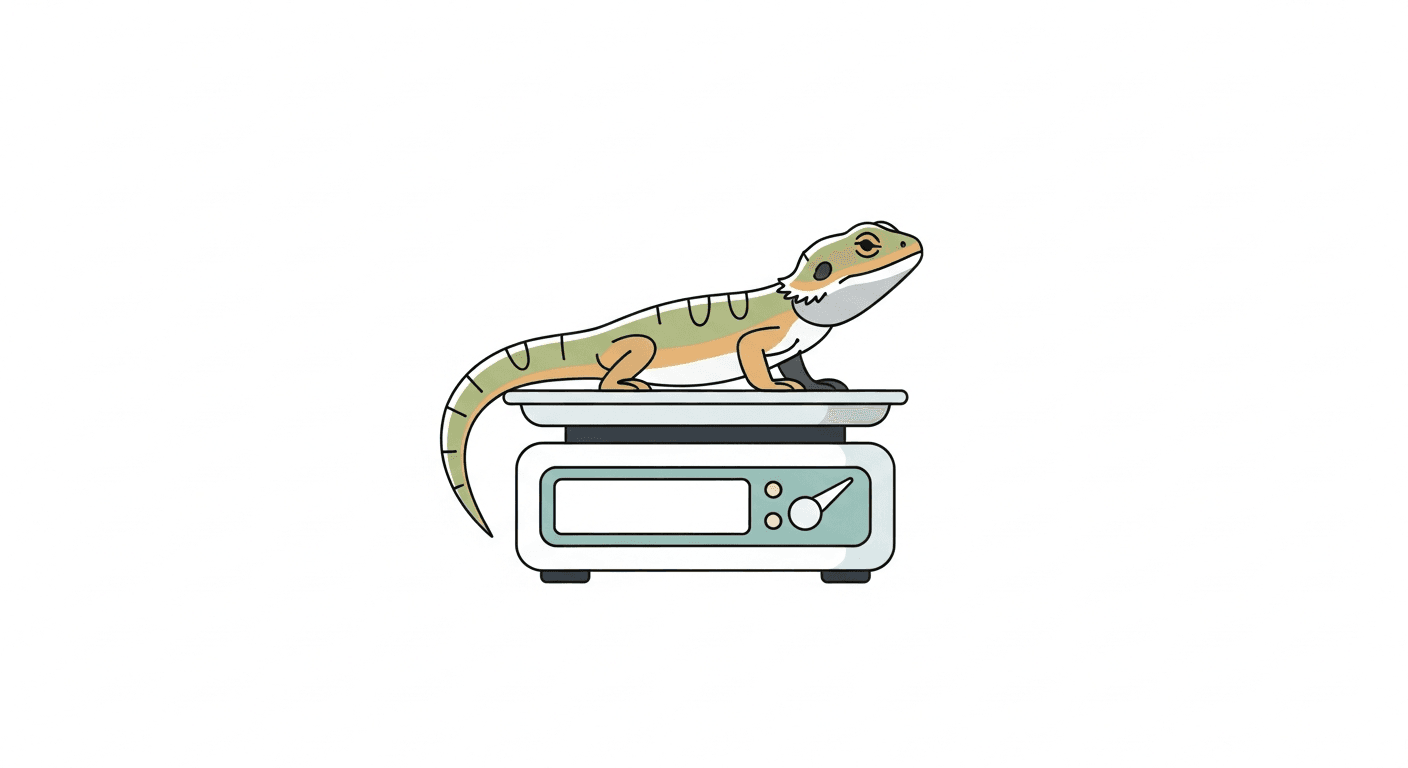
Why Weight Is the Most Objective Reptile Health Metric
Reptiles hide illness, but they cannot hide weight loss indefinitely. A reptile that is sick but appearing behaviorally normal may be losing weight steadily for weeks before other signs appear. A weight record going back 6 months transforms a single measurement into a trend that tells a complete story — and turns a vague "seems a bit off" into a precise "has lost 15% of body weight over 6 weeks."
First 3 Steps at Home
- Establish a regular weighing schedule: Juveniles and growing reptiles: weekly. Healthy adults: monthly. Animals in recovery or being monitored: weekly or more frequently as directed by your vet. Use a kitchen scale accurate to 1 gram for small reptiles, or a postal scale with a tray for larger ones. Weigh at the same time of day before feeding for consistency.
- Know your acceptable weight variation ranges: Small fluctuations are normal — a bearded dragon may vary 5–10g between measurements depending on stomach contents and hydration. Concerning thresholds: weight loss of more than 10% of the baseline weight over any 4-week period; consistent downward trend over 3+ consecutive monthly measurements; failure to gain weight in a growing juvenile despite adequate feeding.
- Record every measurement: A single weight has limited diagnostic value. A log of measurements over time allows pattern recognition. Many small animals appear healthy at one measurement but show a clear declining trend when the full record is examined. Record the date, weight, and any notable context (post-shed, mid-brumation, recently fed).
When to Go to the Vet Immediately
- More than 10% weight loss in 4 weeks
- Progressive weight loss over 3+ consecutive monthly measurements
- Failure to gain appropriate weight in a growing juvenile
- Any weight loss accompanied by other illness signs
Follow-Up Care Checklist
- Correlate weight with diet — a feeding log alongside weight measurements identifies whether weight changes track with feeding changes
- Bring your weight record to every vet visit — it is among the most useful data you can provide
- Track weight recovery after illness or treatment to confirm the animal is responding
Track Weight with TailRounds
Every weight measurement logged in the TailRounds Daily Log becomes a data point in a trend line that protects your reptile's health. Building this habit early means you'll have months or years of baseline data available when you need it most.
Book a Vet Appointment
If weight trends concern you, book promptly. Book at Happy Paws — our reptile team can investigate the cause of weight loss with a physical exam, fecal test, and bloodwork as indicated.
Summary for Your Clinic Visit
Bring your full weight log, note current diet and feeding frequency, describe any behavioral changes coinciding with the weight change, and bring any recent fecal observations.
Continue Reading
 🦎 Reptile Health
Bearded Dragon Not Eating: Reasons, What to Check, and When to Worry
A bearded dragon refusing food may be in brumation, shedding, or experiencing illness. Learn to distinguish normal from concerning and when to seek veterinary care.
 🦎 Reptile Health
My Snake Won't Eat: Common Reasons and When to See a Vet
Snakes naturally fast for weeks at a time. Learn which causes of food refusal are normal, which require attention, and how to encourage a reluctant feeder.
 🦎 Reptile Health
Parasites in Reptiles: Worms, Protozoa, and Mites — Detection and Treatment
Internal and external parasites are extremely common in reptiles. Learn how to detect them, when they cause disease, and what veterinary treatment involves.
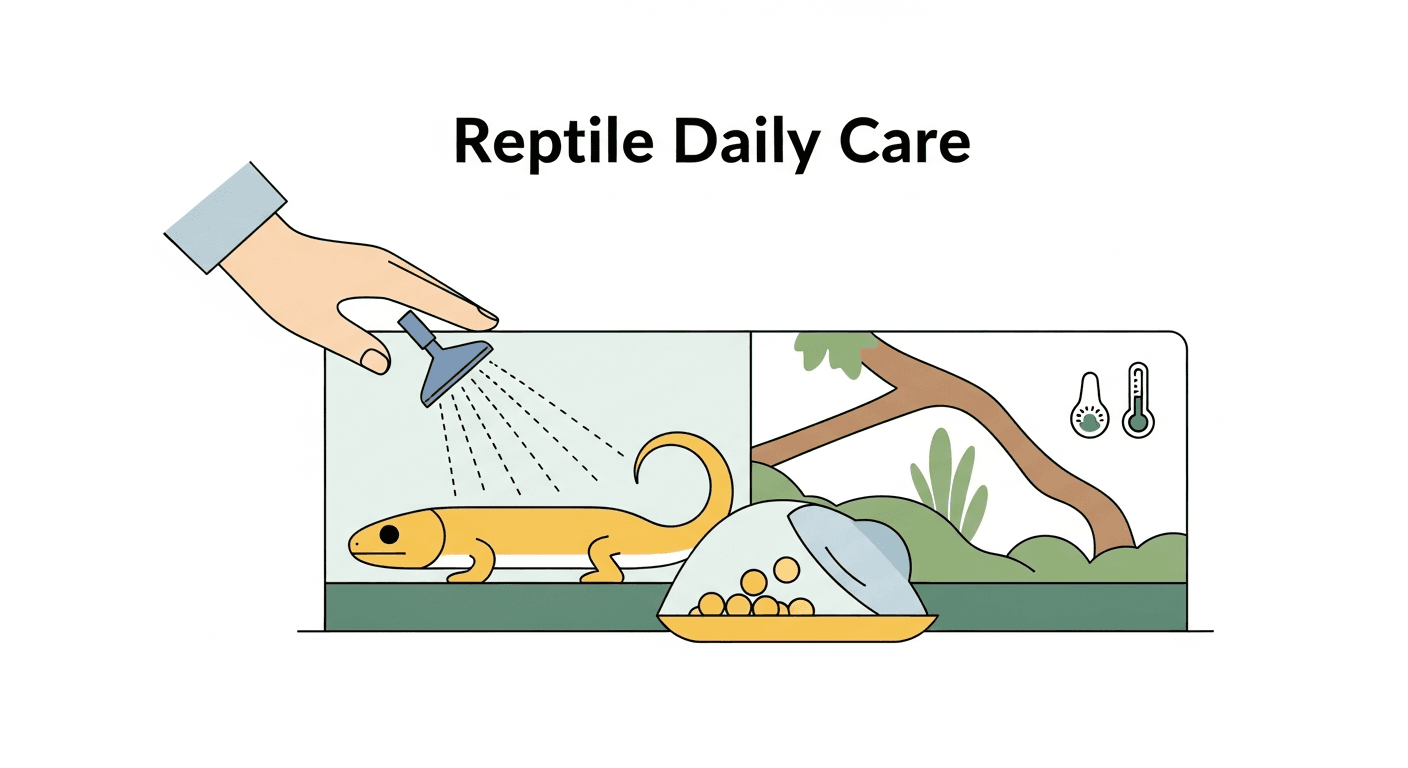 🦎 Reptile Health
Daily Care Checklist for Reptiles: Building a Routine That Protects Your Animal's Health
A consistent daily care routine is your most powerful tool for keeping reptiles healthy and catching problems early. Use this checklist to build habits that work for any species.