
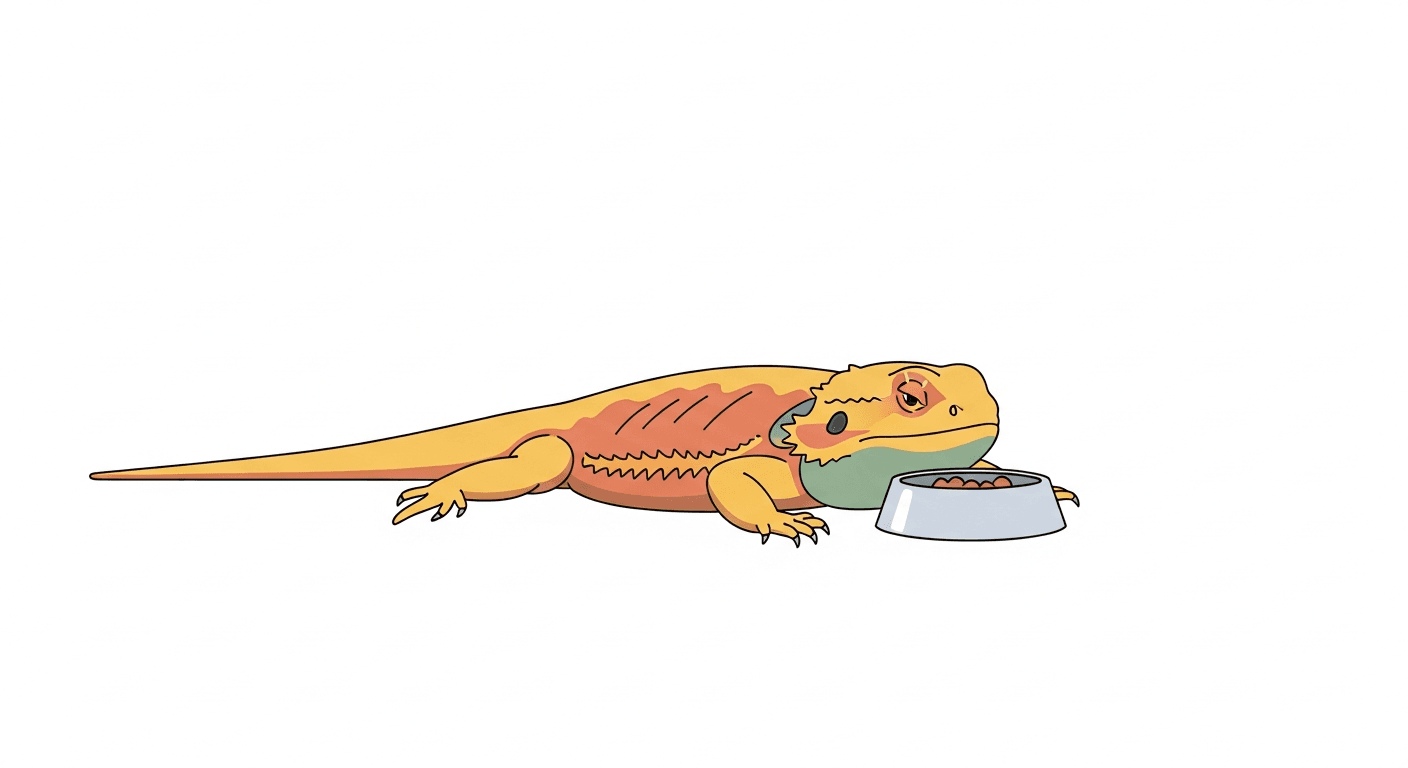
Why Bearded Dragons Stop Eating
Bearded dragons are robust eaters when their needs are fully met, which makes appetite loss a meaningful signal that something has changed. The challenge is that many causes of reduced appetite are entirely normal — brumation (winter dormancy), shedding, puberty in juveniles, seasonal slowdown — while others reflect genuine illness that requires attention.
The most common environmental causes include temperatures that are too low, inadequate UVB, a diet that has become monotonous, recent environmental changes (new tank, new home), or stress from overcrowding or unsuitable tank mates.
First 3 Steps at Home
- Verify basking spot temperature: Bearded dragons require a basking spot of 40–43°C (104–110°F) to properly digest food. A basking spot below 38°C frequently results in appetite shutdown because digestive enzyme function is temperature-dependent. Check with a temperature gun (infrared thermometer), not a strip thermometer — strip thermometers are inaccurate.
- Check UVB provision: Without adequate UVB, vitamin D3 synthesis fails, calcium metabolism deteriorates, and appetite declines. Confirm your UVB bulb is less than 12 months old and is mounted at the correct distance per manufacturer instructions. A T5 HO 10% bulb is appropriate for most bearded dragon setups.
- Assess the calendar and the dragon's behavior: Brumation typically begins in autumn and winter in the Northern Hemisphere. Signs include increasing lethargy, longer sleep, reduced appetite, and seeking out cool, dark areas of the tank. If the dragon is still alert, eyes are bright, and it responds to handling, brumation is a likely cause of reduced appetite.
When to Go to the Vet Immediately
- Weight loss detectable on a scale over 2–3 weeks
- Appetite loss combined with lethargy, sunken eyes, or loose skin
- Any respiratory signs: open-mouth breathing, mucus discharge, wheezing
- Discolored feces or absence of feces for more than 10 days
- Swollen limbs, jaw, or belly
- Color changes — a chronically dark beard in a previously non-stressed dragon indicates illness or stress
Follow-Up Care Checklist
- Check basking and ambient temperatures with an accurate thermometer daily
- Ensure the tank is 120x60cm minimum for an adult bearded dragon
- Vary the diet — alternate protein sources (dubia roaches, crickets, hornworms) and leafy greens
- Weigh monthly to catch weight changes early
- Schedule annual wellness exams including fecal parasite test
Track Feeding with TailRounds
Log daily feeding attempts, what was offered, what was eaten, and weight measurements weekly in the TailRounds Daily Log. This record distinguishes a one-day refusal from a multi-week trend that warrants vet attention.
Book a Vet Appointment
If appetite loss persists beyond 2–3 weeks at correct temperatures, or if any other symptoms are present, book a veterinary assessment. Book at Happy Paws with our reptile-experienced exotic team.
Summary for Your Clinic Visit
Note duration of appetite loss, current basking and ambient temperatures (measured with a temperature gun), UVB setup, recent behavioral changes, last fecal observation, and current weight versus last known weight.
Continue Reading
 🦎 Reptile Health
Bearded Dragon Brumation: Is It Normal and How to Manage It Safely
Brumation in bearded dragons confuses many owners. Learn what it is, how to distinguish it from illness, and how to manage the dormancy period safely.
 🦎 Reptile Health
UVB Lighting for Bearded Dragons: Setup, Bulb Selection, and Common Mistakes
UVB is essential for bearded dragon health. Learn which bulb to choose, how to mount it correctly, and the mistakes that lead to metabolic bone disease.
 🦎 Reptile Health
Metabolic Bone Disease in Reptiles: Prevention, Signs, and Treatment
Metabolic bone disease is the most common nutritional disorder in captive reptiles. Learn what causes it, how to recognize the early and advanced signs, and how to prevent it entirely.
 🦎 Reptile Health
Daily Care Checklist for Reptiles: Building a Routine That Protects Your Animal's Health
A consistent daily care routine is your most powerful tool for keeping reptiles healthy and catching problems early. Use this checklist to build habits that work for any species.