

What Causes Incomplete Shedding in Lizards?
Incomplete shedding (dysecdysis) in lizards is almost always caused by inadequate humidity or hydration. Some lizard species have specific humidity requirements during shedding — even "desert" species like leopard geckos and bearded dragons benefit from higher humidity during the shed phase. Nutritional deficiencies (vitamin A, calcium) and systemic illness can also impair shedding.
The most dangerous locations for retained shed are the eyes, digits, and tail tip — all areas where retained skin can constrict blood flow or impair vision if not resolved.
First 3 Steps at Home
- Provide a humid hide or humid environment during shedding: When a lizard begins to show the dull skin and behavioral changes of pre-shed (reduced appetite, more time in hides, color change), place a humid hide in the enclosure — a container with moistened sphagnum moss. The animal will use it when needed. This is the single most effective prevention for stuck shed.
- Warm soak for mild retained shed: A 20–30 minute soak in warm water loosens retained skin on the body, legs, and tail significantly. After soaking, allow the lizard to move through a damp towel — gentle friction removes softened skin. Do not rub actively — wet skin on a freshly shed reptile is tender.
- Never pull retained shed forcibly: Pulling at stuck skin that is not ready to come off removes new skin along with it, causing wounds that are prone to infection. This is the most common owner mistake with stuck shed. If skin does not come off gently after soaking, do not force it — seek veterinary assistance.
When to Go to the Vet Immediately
- Retained eye cap (spectacle) — the transparent scale over a leopard gecko's eye that hasn't shed cleanly
- Multiple consecutive incomplete sheds
- Digit or tail with discoloration (purple, black) where constricted — indicates blood flow compromise
- Skin appearing raw, bloody, or infected under retained shed
Follow-Up Care Checklist
- After resolving stuck shed, identify and correct the underlying humidity cause
- Permanently maintain a humid hide option in the enclosure for future sheds
- Review hydration — a consistently well-hydrated lizard sheds more easily
- After veterinary removal of retained eye caps or digit shed, monitor for infection
Track Shedding with TailRounds
Log each shed start date, shed completion date, and whether the shed was complete in the TailRounds Daily Log. Repeated incomplete sheds indicate a chronic environmental problem that needs investigation.
Book a Vet Appointment
Retained eye caps and digit constriction require professional care. Book at Happy Paws promptly — delay risks permanent vision damage or digit loss.
Summary for Your Clinic Visit
Note where the shed is retained, how many consecutive incomplete sheds have occurred, current humidity levels, and what home attempts you've made. Bring the lizard for physical examination.
Continue Reading
 🦎 Reptile Health
Dehydration in Reptiles: Signs, Species Differences, and How to Rehydrate
Dehydration is a common but often missed problem in captive reptiles. Learn the species-specific signs, how to assess hydration, and when veterinary fluid therapy is needed.
 🦎 Reptile Health
Temperature Requirements for Reptiles: Why Getting It Right Saves Lives
Every reptile species has a specific temperature range that determines its health. Learn how to create a proper thermal gradient and the consequences of getting it wrong.
 🦎 Reptile Health
Calcium Supplementation for Reptiles: Products, Frequency, and How to Avoid Mistakes
Calcium supplementation prevents metabolic bone disease in reptiles. Learn which products to use for different species, how often to supplement, and the risk of over-supplementation.
 🦎 Reptile Health
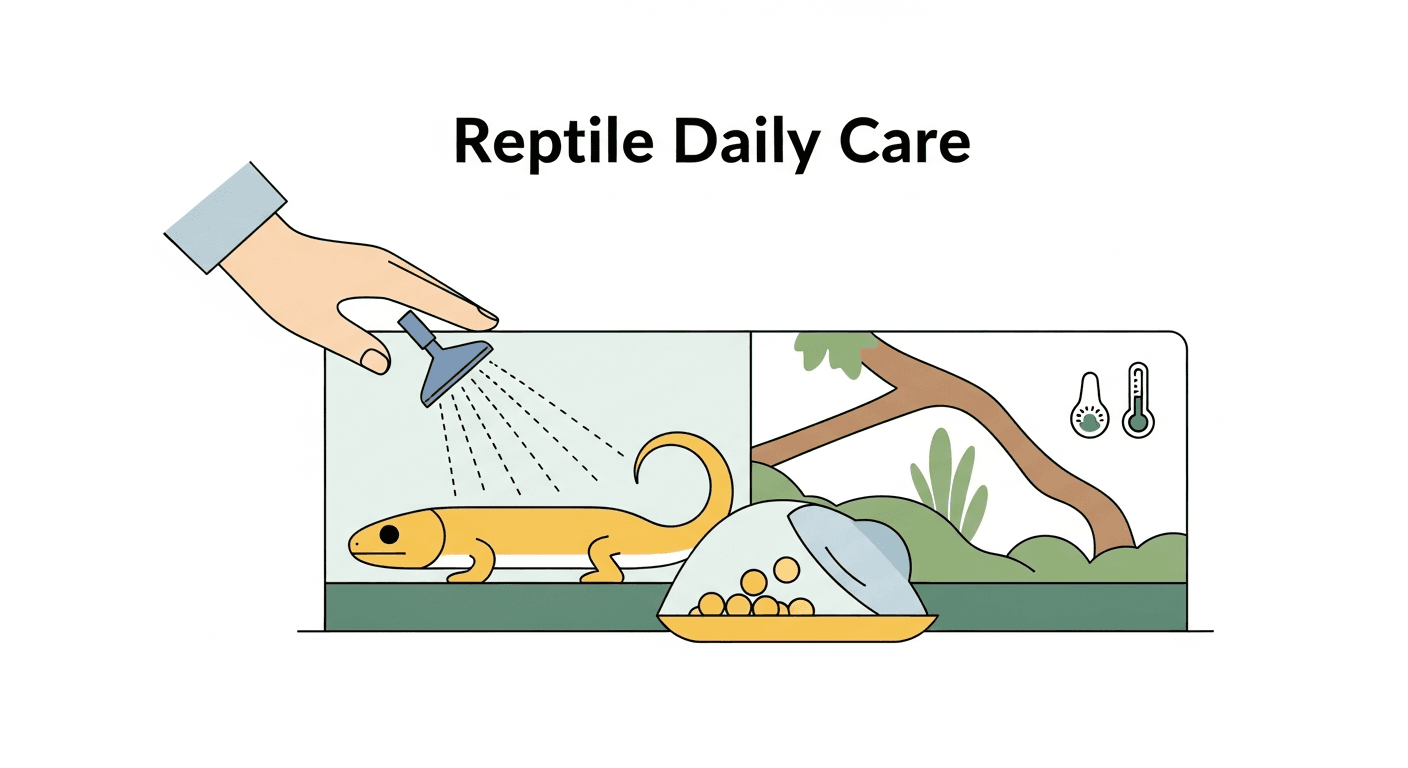
Daily Care Checklist for Reptiles: Building a Routine That Protects Your Animal's Health
A consistent daily care routine is your most powerful tool for keeping reptiles healthy and catching problems early. Use this checklist to build habits that work for any species.