

What Most New Reptile Owners Are Not Told
Reptiles are sold as "easy" pets because they are quiet, don't require walks, and don't visibly express distress the way a dog or cat does. In reality, reptiles have specialized husbandry requirements that exceed those of most mammals, and they hide illness until conditions are critical. A $30 bearded dragon hatchling requires a $300+ setup to be kept correctly. Understanding this before purchase rather than after is the difference between a thriving reptile and a preventable death.
First 3 Steps at Home
- Set up the full habitat before acquiring the animal: For aquatic reptiles, cycle the tank. For all reptiles, establish the temperature gradient, UVB provision, and substrate before the animal arrives. A reptile placed in a correct environment from day one experiences vastly less stress than one moved through multiple temporary setups while equipment is assembled. A correctly set-up enclosure with stable temperatures is the most important element of a new reptile's health.
- Allow a 2-week acclimation period with minimal handling: A new reptile in a new environment is experiencing significant stress — new smells, new visual environment, possible different water, different temperature fluctuations. Handle only for essential cage maintenance during the first 2 weeks. Allow the reptile to explore and settle. Most appetite and behavioral "problems" in new reptiles resolve during acclimation.
- Book a wellness exam within 30 days: A reptile health check within the first month accomplishes multiple things: it catches any health conditions present at the time of sale (many sellers are not honest about health history), establishes a relationship with a reptile-experienced vet before an emergency, tests for parasites in wild-caught animals, and allows you to review your setup with an expert. This single investment prevents many of the first-year problems that new reptile owners encounter.
When to Go to the Vet Immediately
- Any respiratory signs in the first weeks — particularly in wild-caught animals or animals from uncertain sources
- Refusal to eat beyond species-normal fasting periods with concurrent weight loss
- Any physical abnormality noticed on initial examination
- Behavioral signs of severe stress or pain
Follow-Up Care Checklist
- Research your specific species thoroughly — requirements vary enormously even within popular groups
- Connect with species-specific reptile keeper communities for current best practices
- Plan for the animal's full lifespan — many reptiles live 10–30 years
- Budget for annual wellness exams and unexpected veterinary costs — consider reptile pet insurance
- Have a plan for the animal if circumstances change — rehoming arrangements take time to establish responsibly
Track from Day One with TailRounds
Start the TailRounds Daily Log from day one. Early records of temperature, feeding response, and behavior establish the baseline that makes health problems detectable — and your first year of records becomes the reference point for the animal's entire future health history.
Book a Vet Appointment
Book a new reptile wellness exam within the first 30 days of ownership. Book at Happy Paws with our reptile team for a health assessment, parasite screening, and husbandry review.
Summary for Your Clinic Visit
Bring the reptile, a fecal sample if possible, your enclosure description (temperatures measured with a thermometer gun, UVB setup), current diet and supplementation, and any seller or rescue documentation. Your vet can then give targeted advice for your specific species and individual animal.
Continue Reading
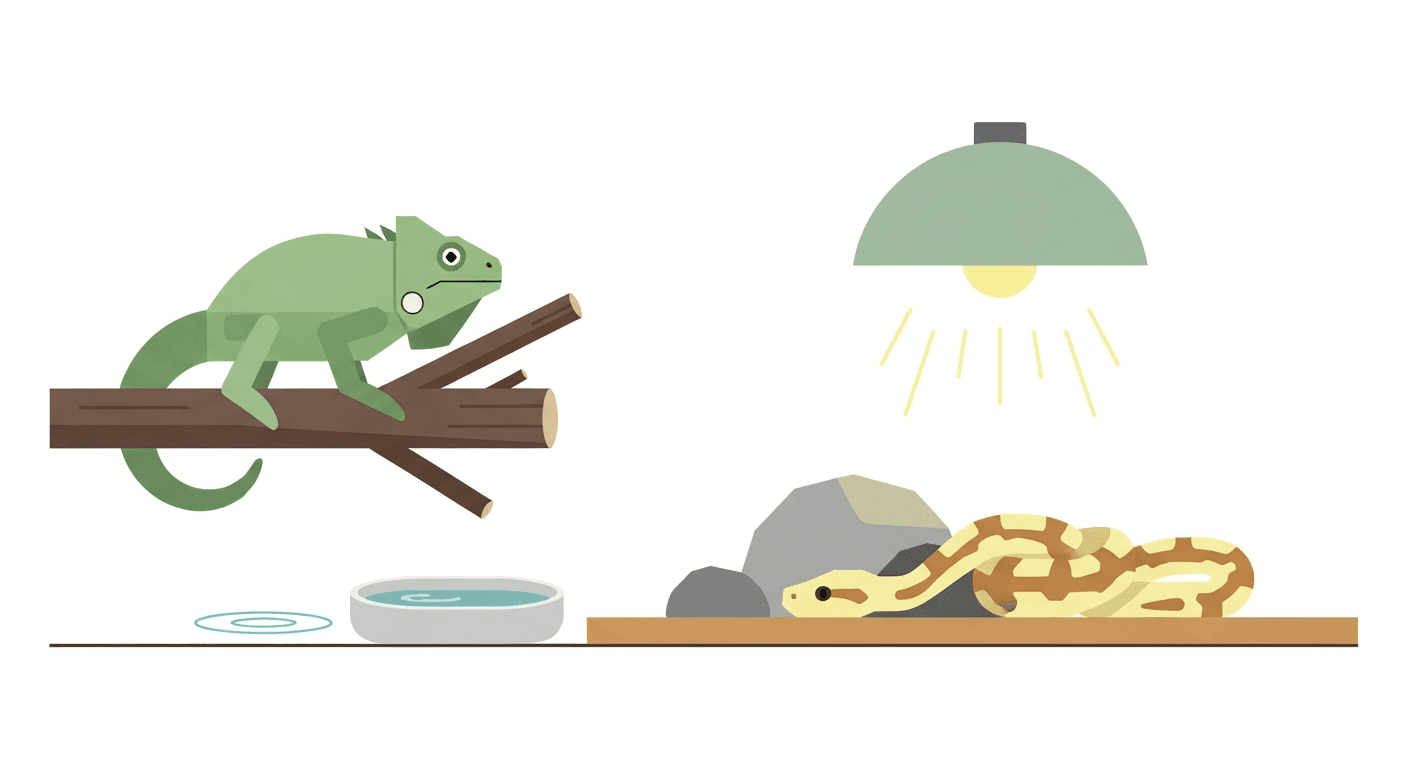 🦎 Reptile Health
Reptile Enclosure Guide: Size, Substrate, and Setup for Common Pet Species
The right enclosure setup prevents most common reptile health problems. Learn the minimum requirements for popular species and the most common setup mistakes to avoid.
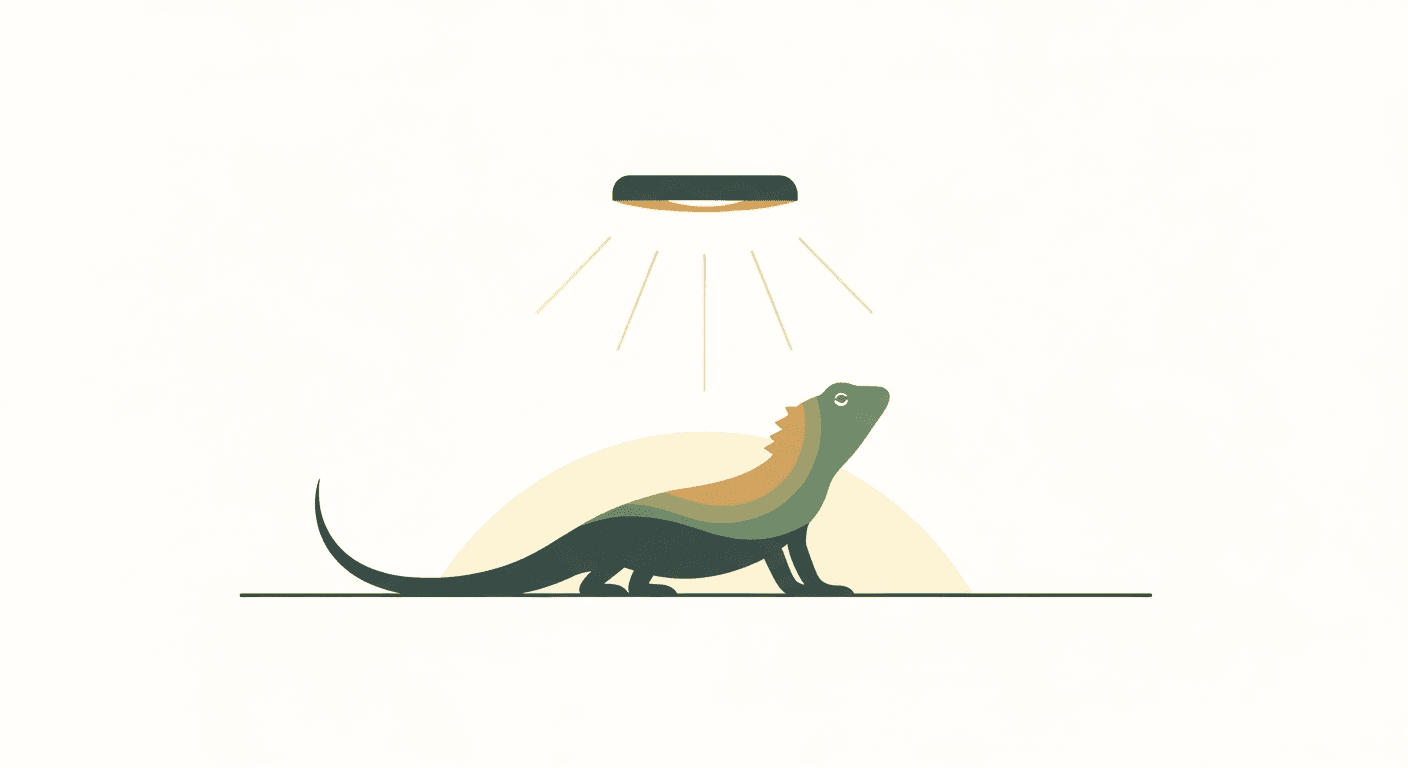 🦎 Reptile Health
UVB Lighting for Bearded Dragons: Setup, Bulb Selection, and Common Mistakes
UVB is essential for bearded dragon health. Learn which bulb to choose, how to mount it correctly, and the mistakes that lead to metabolic bone disease.
 🦎 Reptile Health
Reptile Diet Guide: What to Feed Insectivores, Herbivores, and Omnivores
Reptile diets are as diverse as the species. Learn what to feed the most popular pet reptile types, including feeder insect rotation, dusting protocols, and foods to avoid.
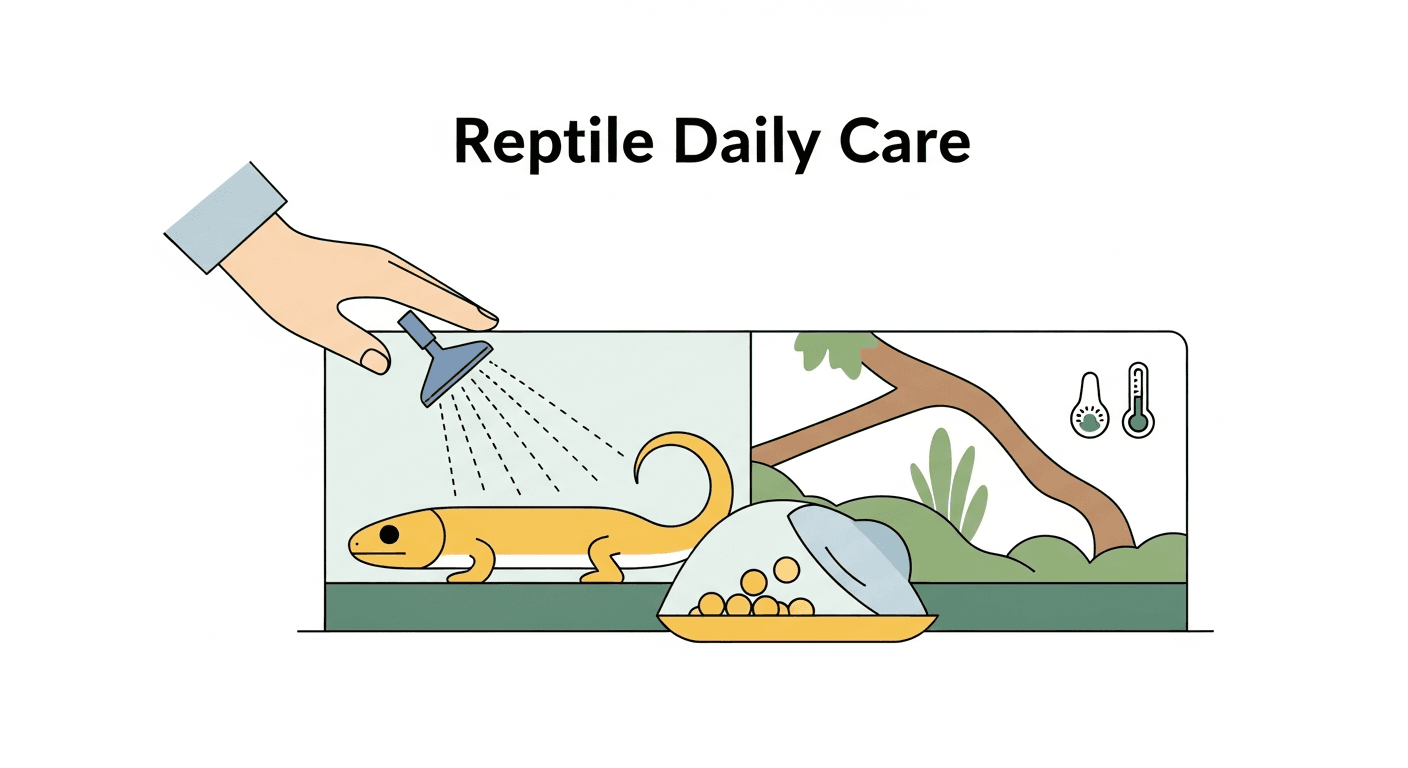 🦎 Reptile Health
Daily Care Checklist for Reptiles: Building a Routine That Protects Your Animal's Health
A consistent daily care routine is your most powerful tool for keeping reptiles healthy and catching problems early. Use this checklist to build habits that work for any species.