
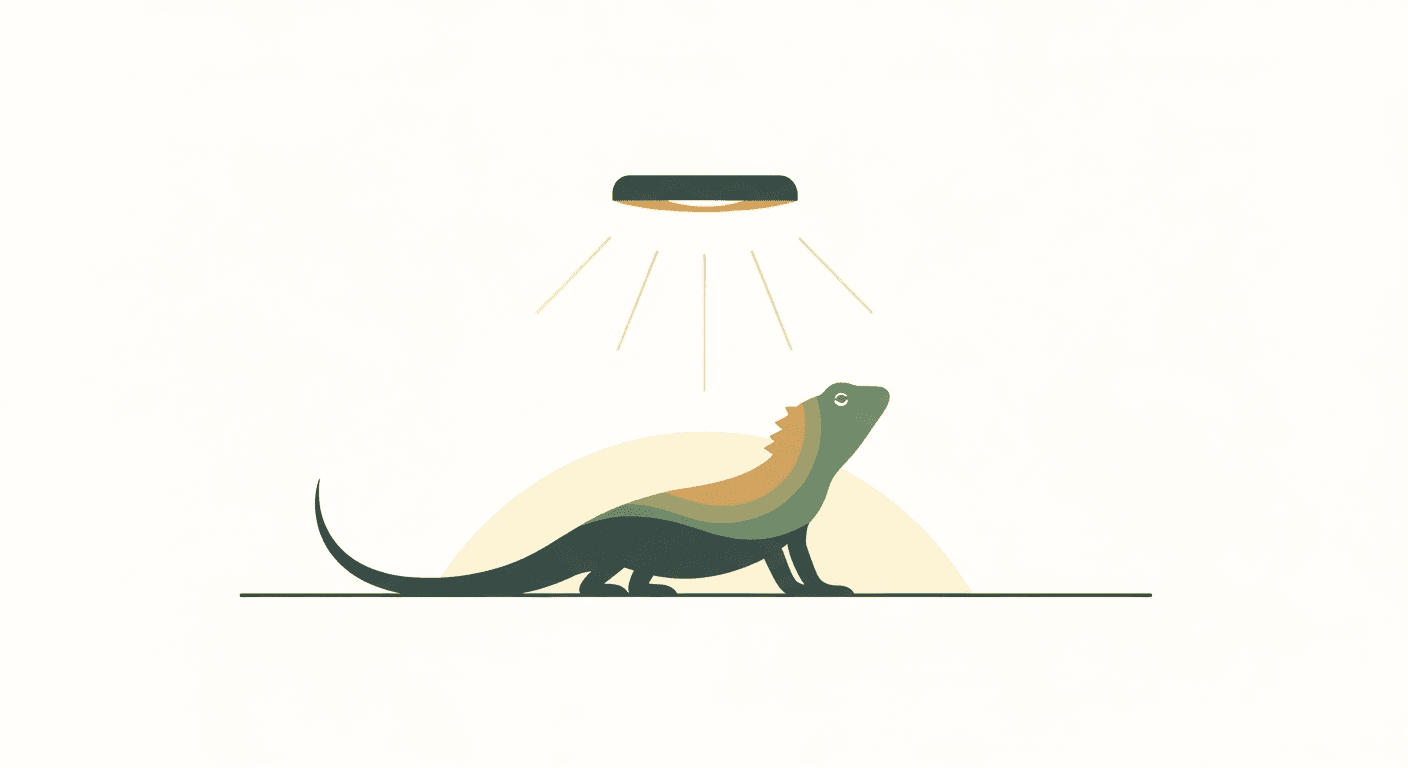
Why UVB Is Non-Negotiable for Bearded Dragons
Bearded dragons are desert reptiles that, in their natural Australian habitat, bask in intense sunlight for much of the day. This exposure generates vitamin D3 through UVB synthesis, which is essential for calcium metabolism. Without adequate UVB in captivity, metabolic bone disease (MBD) develops — causing soft bones, tremors, pathological fractures, and eventual paralysis and death. MBD is entirely preventable but common in bearded dragons kept under inadequate lighting.
First 3 Steps at Home
- Choose a T5 HO 10% or 12% UVB tube: For a standard enclosure, a T5 High Output 10% UVB linear tube (brands: Arcadia D3+, Zoo Med Reptisun 10.0 T5 HO) is the minimum recommendation. For larger or taller enclosures or desert setups, 12% provides higher UV intensity appropriate for Australian desert species. Compact coil UVB bulbs are insufficient for bearded dragons despite being widely sold.
- Mount at the correct distance: A T5 HO 10% tube should be mounted 25–40cm above the basking surface (check your specific bulb's datasheet — distance varies by brand and wattage). The UV Index at the basking surface should be approximately 3–6 for most adult dragons. Too close can cause eye and skin damage; too far provides inadequate UVB.
- Replace on schedule: Mark the installation date on the bulb. Replace every 12 months for most T5 HO bulbs, even if the bulb is still producing visible light. UVB output degrades significantly after 12 months while visible light output continues — the bulb looks fine but is providing no UVB protection.
When to Go to the Vet Immediately
- Limb tremors or muscle twitching — possible hypocalcemia from inadequate vitamin D3
- Soft or flexible limbs in a juvenile — early MBD
- Inability to lift the body off the substrate while walking
- Jaw softness — rubbery lower jaw is a classic MBD sign in bearded dragons
Follow-Up Care Checklist
- Run UVB on a 12–14 hour photoperiod during summer, 10–12 hours in winter
- Never place glass or acrylic between the UVB bulb and the dragon — these filter UVB completely
- Ensure the dragon can bask within the effective UVB zone daily
- Combine UVB with calcium supplementation — dust feeders with calcium powder 5x per week for juveniles, 3x for adults
Track Lighting Schedule with TailRounds
Log the bulb brand, installation date, and planned replacement date in the TailRounds Daily Log so the replacement schedule doesn't get forgotten in a busy year.
Book a Vet Appointment
New bearded dragon owners should book a wellness exam to review their full setup including lighting. Book at Happy Paws with our reptile team for a setup review and preventive care planning.
Summary for Your Clinic Visit
Bring the bulb brand and model, current bulb age, mounting distance from the basking surface, and photoperiod schedule. Also bring any photos of physical changes or unusual behaviors you've observed.
Continue Reading
 🦎 Reptile Health
Bearded Dragon Not Eating: Reasons, What to Check, and When to Worry
A bearded dragon refusing food may be in brumation, shedding, or experiencing illness. Learn to distinguish normal from concerning and when to seek veterinary care.
 🦎 Reptile Health
Metabolic Bone Disease in Reptiles: Prevention, Signs, and Treatment
Metabolic bone disease is the most common nutritional disorder in captive reptiles. Learn what causes it, how to recognize the early and advanced signs, and how to prevent it entirely.
 🦎 Reptile Health
Bearded Dragon Diet Guide: What to Feed at Every Life Stage
Bearded dragon diet requirements change significantly from juvenile to adult. Learn the right protein to vegetable ratio, which foods to avoid, and how to supplement correctly.
 🦎 Reptile Health
Daily Care Checklist for Reptiles: Building a Routine That Protects Your Animal's Health
A consistent daily care routine is your most powerful tool for keeping reptiles healthy and catching problems early. Use this checklist to build habits that work for any species.