
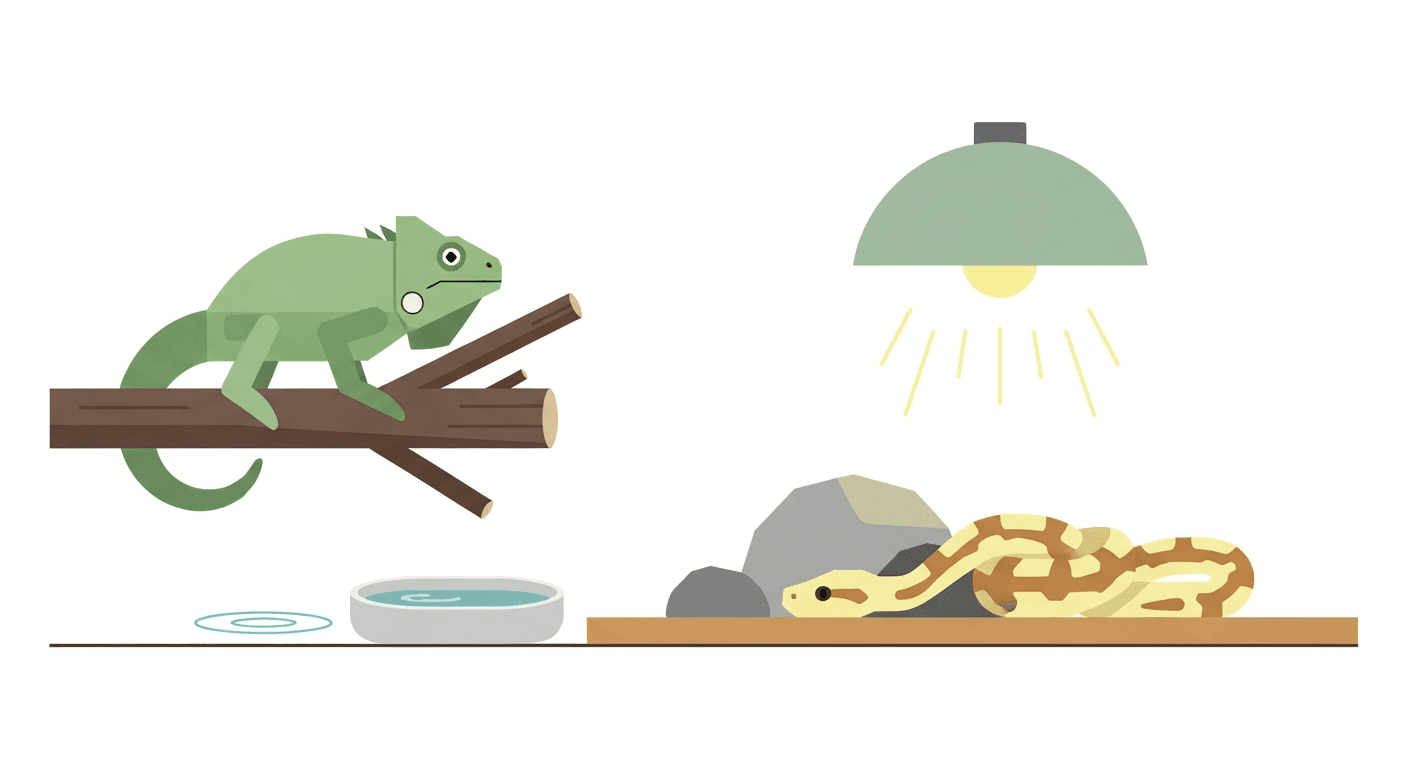
Why Enclosure Setup Is the Foundation of Reptile Health
Every health problem in a reptile has an environmental component — either directly caused by poor housing or worsened by it. Temperature, space, substrate, hiding options, and cleanliness all interact to either support or undermine the reptile's health. Getting these right from day one prevents the majority of common conditions that veterinary exotic practices see.
First 3 Steps at Home
- Size the enclosure correctly for the adult animal: Enclosures sized for hatchlings need upgrading as the reptile grows. Undersized enclosures cause chronic stress, prevent natural thermoregulatory behavior, and increase disease risk. Guidelines for common species: Bearded dragons — 120x60x60cm minimum for adults. Ball pythons — at minimum the snake's length × half the snake's length floor space. Leopard geckos — 60x30cm for one adult. Corn snakes — 90x45cm for adults. Crested geckos — 45x45x60cm (tall orientation). These are minimum standards, not ideals — larger is always better.
- Choose substrate appropriate for the species: Substrate choice balances naturalistic value, hygiene, and impaction risk. Bearded dragons: ceramic tile, reptile carpet, or bioactive (never loose sand for juveniles — impaction risk). Ball pythons: cypress mulch, coconut coir, or bioactive. Leopard geckos: paper towel, slate, or tile (avoid loose sand despite desert origin). Corn snakes: aspen shavings (no cedar — toxic), coconut coir, or cypress mulch. Crested geckos: coconut coir or bioactive with live plants. Loose particle substrates (play sand, walnut shell, gravel) should be avoided for juveniles of all species.
- Provide hides on both warm and cool ends: Every reptile enclosure needs at least two hides — one on the warm side, one on the cool side. Hides must be appropriately sized (the reptile fits snugly inside — body touching the walls) for the animal to feel secure. An animal without a suitable hide is chronically stressed, with predictable health consequences over time.
When to Go to the Vet Immediately
- Health problems developing shortly after enclosure changes — investigate setup as a contributing factor
- Persistent escape attempts indicating severe enclosure stress
- Any impaction signs if using loose particle substrate
Follow-Up Care Checklist
- Spot-clean daily, full substrate replacement on a species-appropriate schedule
- Disinfect hides and decorations monthly with reptile-safe disinfectant
- Ensure water bowls are cleaned and filled daily
- Review enclosure setup annually as the reptile grows
Track Enclosure Maintenance with TailRounds
Log cleaning dates, any substrate changes, and behavioral observations after enclosure modifications in the TailRounds Daily Log. This helps identify whether a health change correlates with an environmental modification.
Book a Vet Appointment
A first wellness exam is the ideal time to review your setup with an expert. Book at Happy Paws for a new reptile health assessment and husbandry consultation.
Summary for Your Clinic Visit
Describe your enclosure size and layout, substrate, heating and UVB setup, hide placement, and cleaning schedule. Photos of the enclosure help your vet assess the setup comprehensively.
Continue Reading
 🦎 Reptile Health
Temperature Requirements for Reptiles: Why Getting It Right Saves Lives
Every reptile species has a specific temperature range that determines its health. Learn how to create a proper thermal gradient and the consequences of getting it wrong.
 🦎 Reptile Health
Impaction in Reptiles: When Substrate or Food Causes a Dangerous Blockage
Impaction — a gastrointestinal blockage from ingested substrate or inappropriate food — is a veterinary emergency in reptiles. Learn the risks, signs, and prevention strategies.
 🦎 Reptile Health
UVB Lighting for Bearded Dragons: Setup, Bulb Selection, and Common Mistakes
UVB is essential for bearded dragon health. Learn which bulb to choose, how to mount it correctly, and the mistakes that lead to metabolic bone disease.
 🦎 Reptile Health
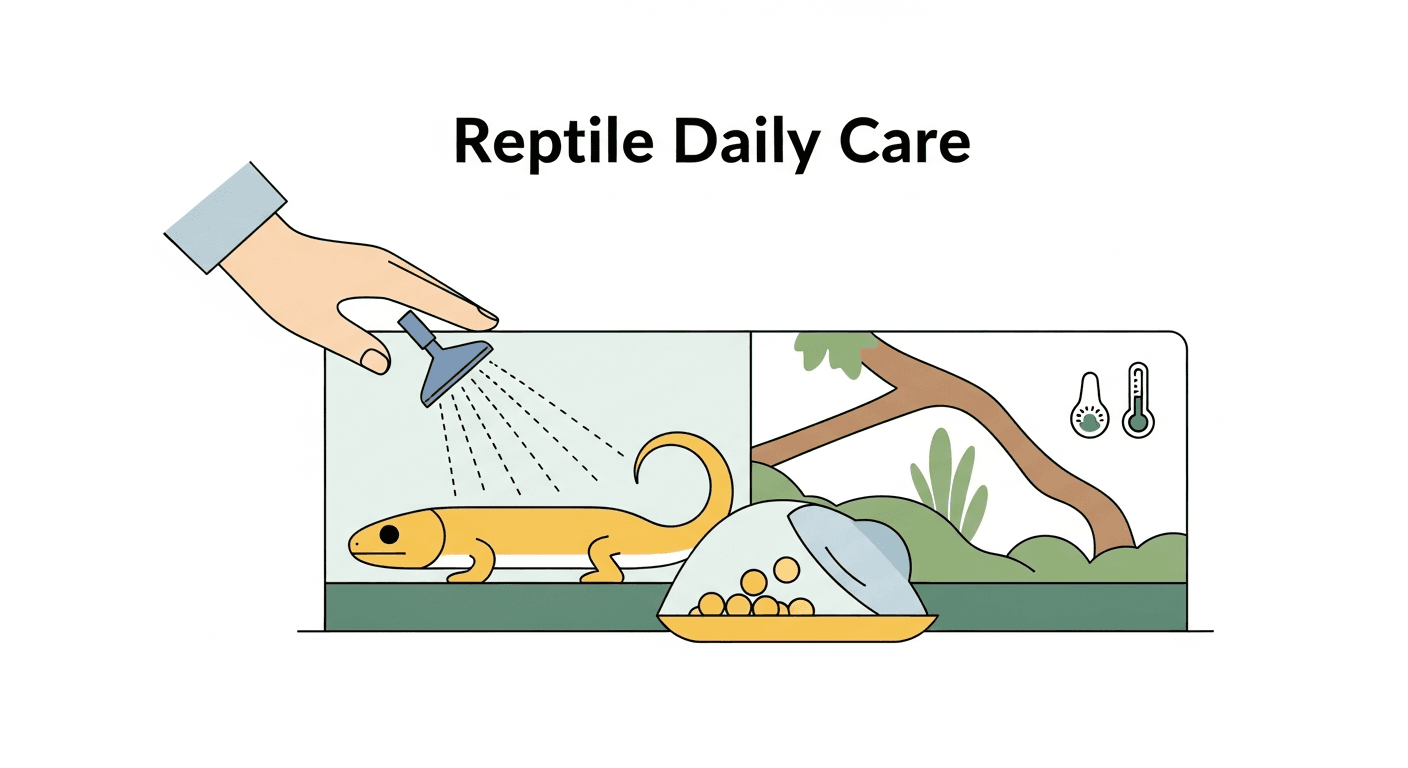
Daily Care Checklist for Reptiles: Building a Routine That Protects Your Animal's Health
A consistent daily care routine is your most powerful tool for keeping reptiles healthy and catching problems early. Use this checklist to build habits that work for any species.