
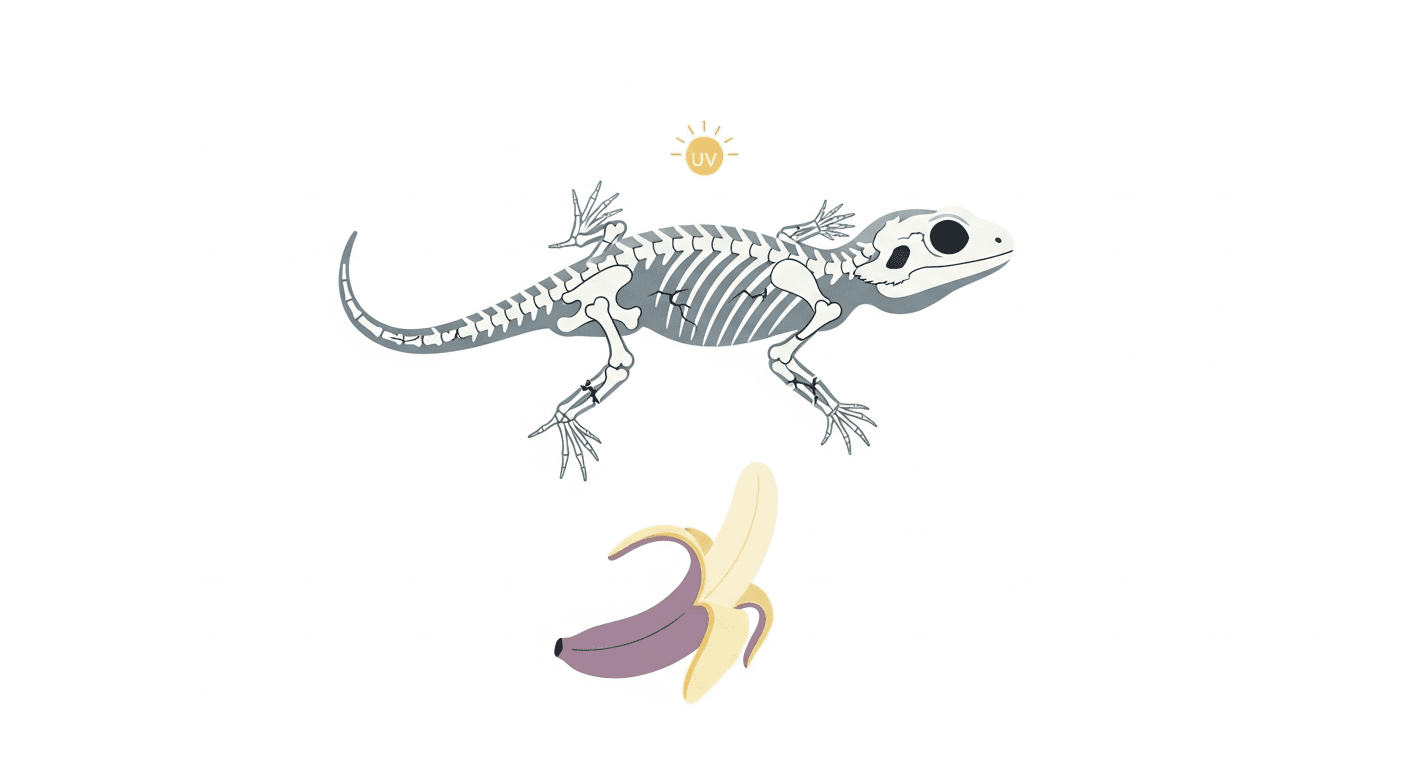
What Is Metabolic Bone Disease?
Metabolic bone disease (MBD) is an umbrella term for conditions resulting from disrupted calcium metabolism in reptiles. The most common form is nutritional secondary hyperparathyroidism — where chronically low blood calcium triggers parathyroid hormone release that leaches calcium from bones to maintain blood levels. The result is progressively demineralized, soft, deformed bones that fracture easily and fail to support normal movement and function.
MBD is caused by a deficiency of calcium, vitamin D3, or both — almost always resulting from inadequate UVB provision combined with inadequate dietary calcium. It is entirely preventable and tragically common in captive bearded dragons, iguanas, chameleons, and other species.
First 3 Steps at Home
- Correct UVB provision immediately: If MBD is suspected, verify and if necessary upgrade the UVB setup. A T5 HO 10% or higher bulb mounted at the correct distance is the foundation of prevention. If the current bulb is more than 12 months old, replace it now.
- Increase calcium supplementation: For early MBD, increase calcium dusting of feeders to daily (for juveniles) or every other day (for adults) while UVB correction takes effect. Use calcium without D3 if UVB is now adequate; use calcium with D3 on alternating days if UVB provision is still insufficient.
- Do not attempt to correct severe MBD at home: Severe MBD with tremors, pathological fractures, or paralysis requires veterinary injectable calcium, pain management, and nutritional support. Attempting home treatment of severe MBD delays appropriate care and risks permanent injury.
When to Go to the Vet Immediately
- Tremors or muscle twitching — hypocalcemia emergency
- Obvious limb or jaw softness in a juvenile
- Pathological fracture — fracture from minimal impact or normal movement
- Inability to walk normally or lift the body off the ground
- Any dragon with a rubbery or bending lower jaw
Follow-Up Care Checklist
- After veterinary stabilization, correct and maintain optimal UVB provision long-term
- Follow prescribed calcium and vitamin D3 supplementation schedule exactly
- Recheck bloodwork (ionized calcium) at the intervals your vet recommends
- Recovery from early MBD can be complete with sustained correction; advanced MBD may cause permanent deformity
- X-rays at follow-up assess bone density recovery
Track Supplementation with TailRounds
Log calcium supplementation frequency and UVB maintenance in the TailRounds Daily Log. Consistent records prevent the gaps in supplementation that allow subclinical deficiency to develop.
Book a Vet Appointment
Any reptile showing MBD signs needs immediate veterinary assessment. Book at Happy Paws urgently — bloodwork can confirm hypocalcemia and guide treatment intensity.
Summary for Your Clinic Visit
Note current UVB setup (bulb type, age, mounting distance), calcium supplementation frequency and product used, the reptile's current diet, and specific physical signs observed including their duration.
Continue Reading
 🦎 Reptile Health
UVB Lighting for Bearded Dragons: Setup, Bulb Selection, and Common Mistakes
UVB is essential for bearded dragon health. Learn which bulb to choose, how to mount it correctly, and the mistakes that lead to metabolic bone disease.
 🦎 Reptile Health
Calcium Supplementation for Reptiles: Products, Frequency, and How to Avoid Mistakes
Calcium supplementation prevents metabolic bone disease in reptiles. Learn which products to use for different species, how often to supplement, and the risk of over-supplementation.
 🦎 Reptile Health
Bearded Dragon Not Eating: Reasons, What to Check, and When to Worry
A bearded dragon refusing food may be in brumation, shedding, or experiencing illness. Learn to distinguish normal from concerning and when to seek veterinary care.
 🦎 Reptile Health
Daily Care Checklist for Reptiles: Building a Routine That Protects Your Animal's Health
A consistent daily care routine is your most powerful tool for keeping reptiles healthy and catching problems early. Use this checklist to build habits that work for any species.