
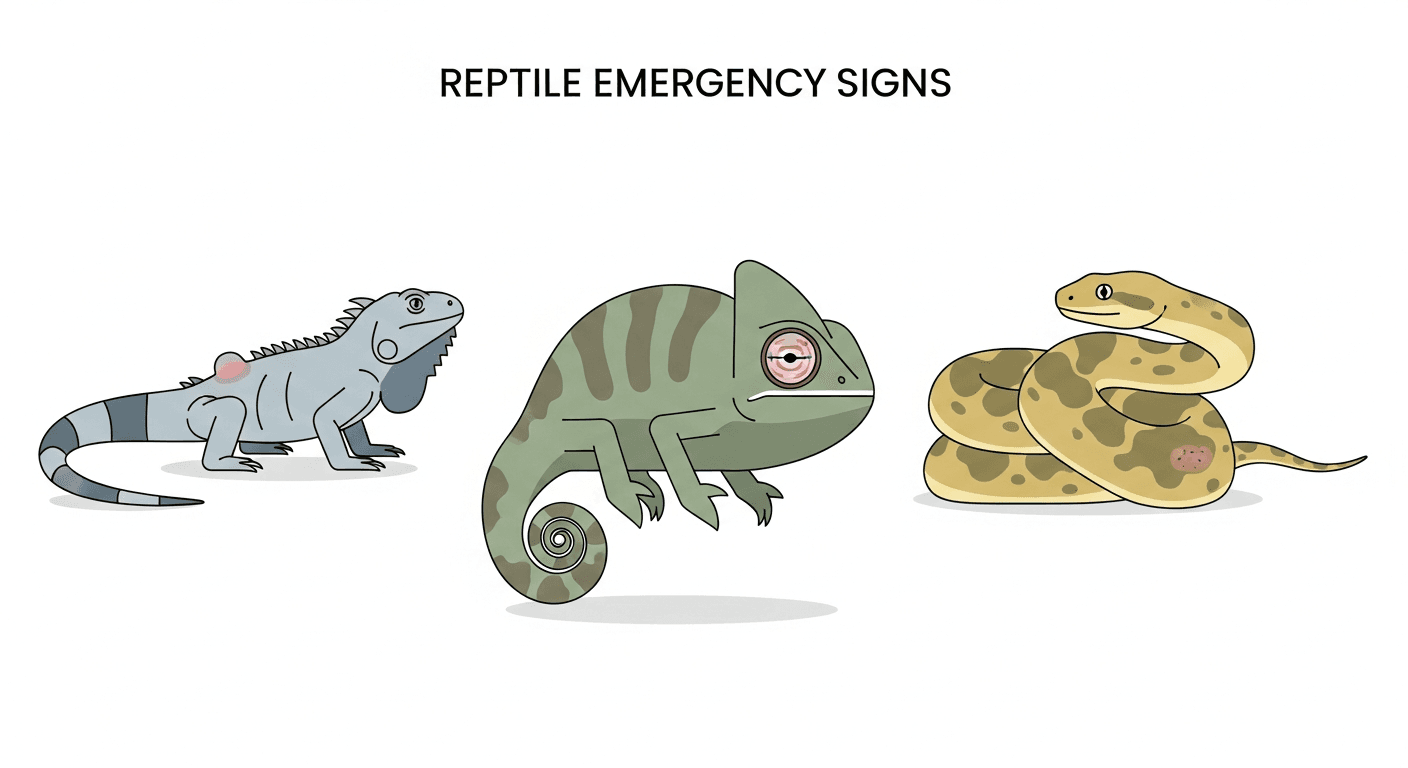
Why Reptile Emergencies Are Often Underestimated
Reptiles evolved to hide illness and injury to avoid predation, and they are extraordinarily good at it. By the time a reptile shows obvious physical distress — open-mouth breathing, inability to move, visible swelling — the condition is typically advanced and critical. This means the margin between "looks slightly off" and "life-threatening" is much narrower in reptiles than in mammals.
The appropriate response to uncertainty about a reptile's health is always to contact a vet. The cost of an unnecessary exam is always less than the cost of delayed treatment for a condition that was treatable 24 hours earlier.
First 3 Steps at Home
- Maintain warmth throughout the emergency: A sick reptile is often hypothermic. Place the animal in a secure, appropriately warm container. For most species, target 25–28°C during emergency management and transport. A heat pack wrapped in a towel and placed outside a well-ventilated container provides gentle warmth without risk of burning a weak animal that cannot move away.
- Do not attempt emergency treatment at home: Administering fluids by mouth to a non-responsive reptile risks aspiration. Attempting to manually correct a prolapse, remove impaction, or treat a severe respiratory infection at home is dangerous. Stabilize temperature, minimize handling, and get to a vet as quickly as possible.
- Call ahead and describe symptoms: Call the reptile-experienced vet before arriving so they can prepare. Describe the species, approximate age, the primary symptom, and duration. This information allows the team to prepare appropriate supportive care and medications before you arrive.
When to Go to the Vet Immediately
- Open-mouth breathing or visible breathing effort in any species
- Audible respiratory sounds: wheezing, clicking, gurgling
- Snake or lizard unable to right itself when placed on its back — neurological sign
- Stargazing posture in snakes (head tilted back looking upward) — possible inclusion body disease or IBD, other neurological emergency
- Prolapse of any tissue from the cloaca
- Seizures, muscle tremors, or uncontrolled movements
- Completely unresponsive to touch
- Significant trauma — injury from live prey, fall, or being caught by another animal
- Suspected toxic ingestion — feeder insects from a treated source, household chemicals
- Severe bleeding that doesn't stop with gentle pressure
Follow-Up Care Checklist
- Identify a reptile-experienced emergency vet before you need one — not all exotic vets have reptile experience
- Keep a well-ventilated transport container ready at all times
- Know your reptile's normal baseline: weight, feeding schedule, defecation, behavior
- Maintain a daily log so you can provide precise timelines to the vet
- Annual wellness exams establish your animal in the vet's records before a crisis
Track Health Daily with TailRounds
The TailRounds Daily Log is the single most effective emergency preparation tool. Owners who log daily can provide their vet with a precise timeline of when symptoms started — information that transforms emergency diagnostics from speculation to actionable certainty.
Book a Vet Appointment
Establish care with a reptile-experienced vet before an emergency occurs. Book a wellness visit at Happy Paws today — our team will know your animal and be prepared to help when it matters most.
Summary for Your Clinic Visit
Bring your health log, note exactly when symptoms started, current enclosure temperatures and recent environmental changes, last feeding and defecation dates, current weight, and any medications or supplements currently being given. The more information you provide, the faster and more accurately your vet can act.
Continue Reading
 🦎 Reptile Health
Respiratory Infections in Reptiles: Signs, Causes, and What Treatment Involves
Respiratory infections are among the most common serious illnesses in captive reptiles. Learn to recognize the signs early and understand why immediate veterinary care is essential.
 🦎 Reptile Health
Impaction in Reptiles: When Substrate or Food Causes a Dangerous Blockage
Impaction — a gastrointestinal blockage from ingested substrate or inappropriate food — is a veterinary emergency in reptiles. Learn the risks, signs, and prevention strategies.
 🦎 Reptile Health
Bearded Dragon Not Eating: Reasons, What to Check, and When to Worry
A bearded dragon refusing food may be in brumation, shedding, or experiencing illness. Learn to distinguish normal from concerning and when to seek veterinary care.
 🦎 Reptile Health
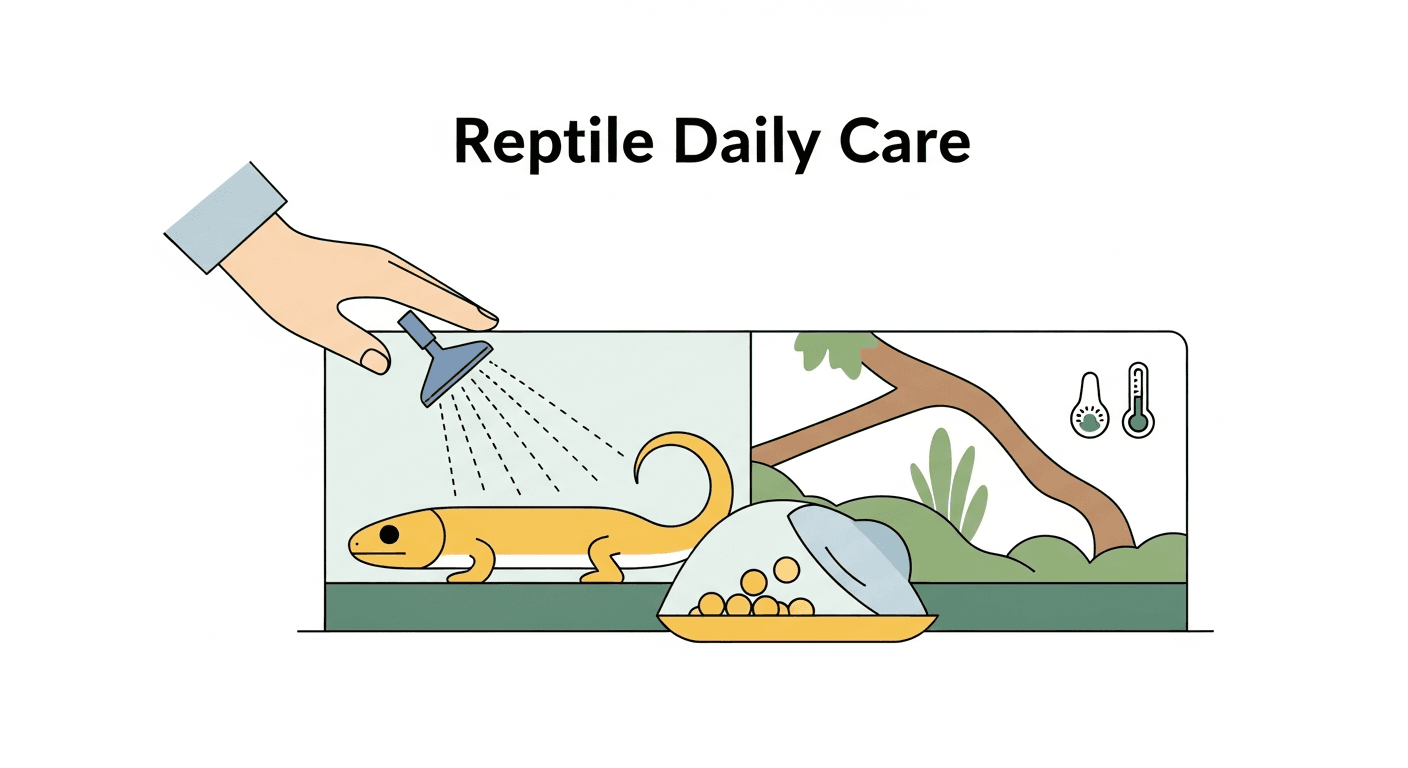
Daily Care Checklist for Reptiles: Building a Routine That Protects Your Animal's Health
A consistent daily care routine is your most powerful tool for keeping reptiles healthy and catching problems early. Use this checklist to build habits that work for any species.