
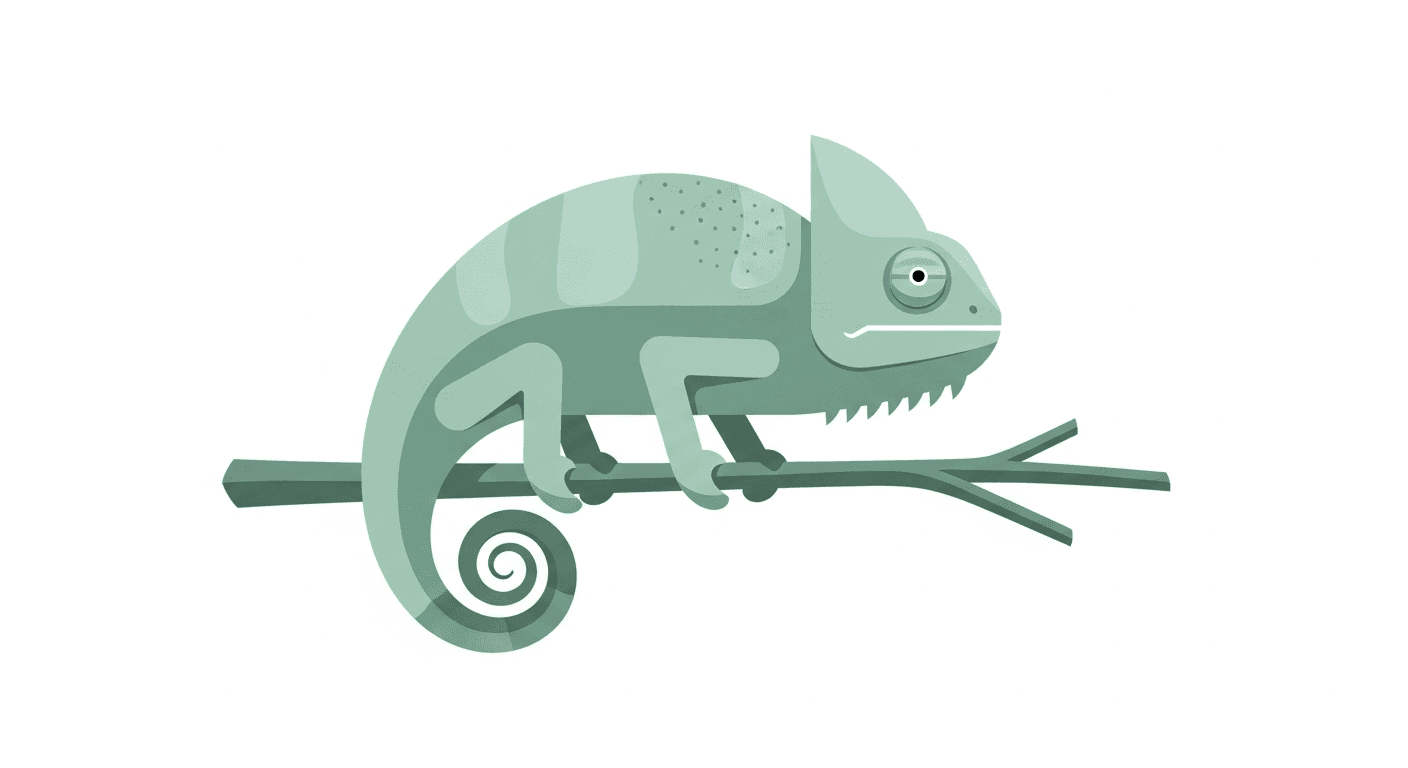
Why Chameleons Have a Reputation for Being Difficult
Chameleons are among the most demanding reptile species in captivity and have a high mortality rate in inexperienced hands. They are not difficult because they are naturally fragile — they are adaptable, robust animals in the wild. They are difficult in captivity because their requirements differ fundamentally from most other reptiles, and mistakes that a bearded dragon or corn snake would survive can kill a chameleon within days.
Understanding chameleon-specific requirements before acquiring one is the most important preparation step.
First 3 Steps at Home
- Use a screen enclosure, not glass: Chameleons require high airflow. Glass terrariums with poor ventilation rapidly accumulate respiratory pathogens and humidity that is too consistent. A screen-sided (mesh) enclosure allows the natural humidity fluctuation that chameleons require: high humidity at night (70–100%) with a daytime drop (40–60%). For veiled chameleons, minimum enclosure is 60x60x120cm (WxDxH) — vertical space is essential for arboreal species.
- Provide water via dripping or misting, not a bowl: Chameleons do not recognize still water in bowls. In the wild, they drink from dew and raindrops on leaves. Provide a drip system (a container with a pinhole that drips onto leaves) or automatic misting system that runs 2–4 times daily. The chameleon will drink from the leaves. Dehydration is one of the most common causes of death in captive chameleons.
- Minimize stress aggressively: Chameleons are highly stress-sensitive. Each stressful event suppresses immunity and contributes to long-term health decline. Minimize handling to only what is necessary. Keep the enclosure in a low-traffic area. Do not house chameleons where they can see each other — they are solitary and the sight of another chameleon causes chronic stress. Do not place the enclosure where the chameleon can see its own reflection repeatedly.
When to Go to the Vet Immediately
- Sunken eyes or cheeks — severe dehydration
- Inability to grip branches normally — possible MBD or infection
- Persistent dark coloration with no brightening throughout the day — chronic stress or illness
- Any respiratory signs: gaping, mucus, wheezing
- Female with swollen abdomen that has not laid eggs — egg binding emergency
Follow-Up Care Checklist
- Check that chameleon is drinking during misting — observe directly, do not assume
- Weigh weekly — weight loss is often the earliest objective indicator of decline
- Provide UVB (T5 HO 6%) and a separate basking light on separate fixtures
- Live plants in the enclosure provide additional hydration from plant surfaces and improve air quality
- Annual wellness exams with fecal testing — chameleons often carry parasites
Track Chameleon Health with TailRounds
Log daily misting schedule, water intake observation, color changes throughout the day, and weekly weight in the TailRounds Daily Log. Chameleons deteriorate quickly — early detection through consistent monitoring is critical.
Book a Vet Appointment
New chameleon owners should book a wellness exam within the first month. Book at Happy Paws for a husbandry review and health baseline with our exotic team.
Summary for Your Clinic Visit
Describe your full setup including enclosure type and size, UVB and basking details, misting schedule, diet and calcium supplementation, and any behavioral or physical changes you've noticed.
Continue Reading
 🦎 Reptile Health
Temperature Requirements for Reptiles: Why Getting It Right Saves Lives
Every reptile species has a specific temperature range that determines its health. Learn how to create a proper thermal gradient and the consequences of getting it wrong.
 🦎 Reptile Health
UVB Lighting for Bearded Dragons: Setup, Bulb Selection, and Common Mistakes
UVB is essential for bearded dragon health. Learn which bulb to choose, how to mount it correctly, and the mistakes that lead to metabolic bone disease.
 🦎 Reptile Health
Dehydration in Reptiles: Signs, Species Differences, and How to Rehydrate
Dehydration is a common but often missed problem in captive reptiles. Learn the species-specific signs, how to assess hydration, and when veterinary fluid therapy is needed.
 🦎 Reptile Health
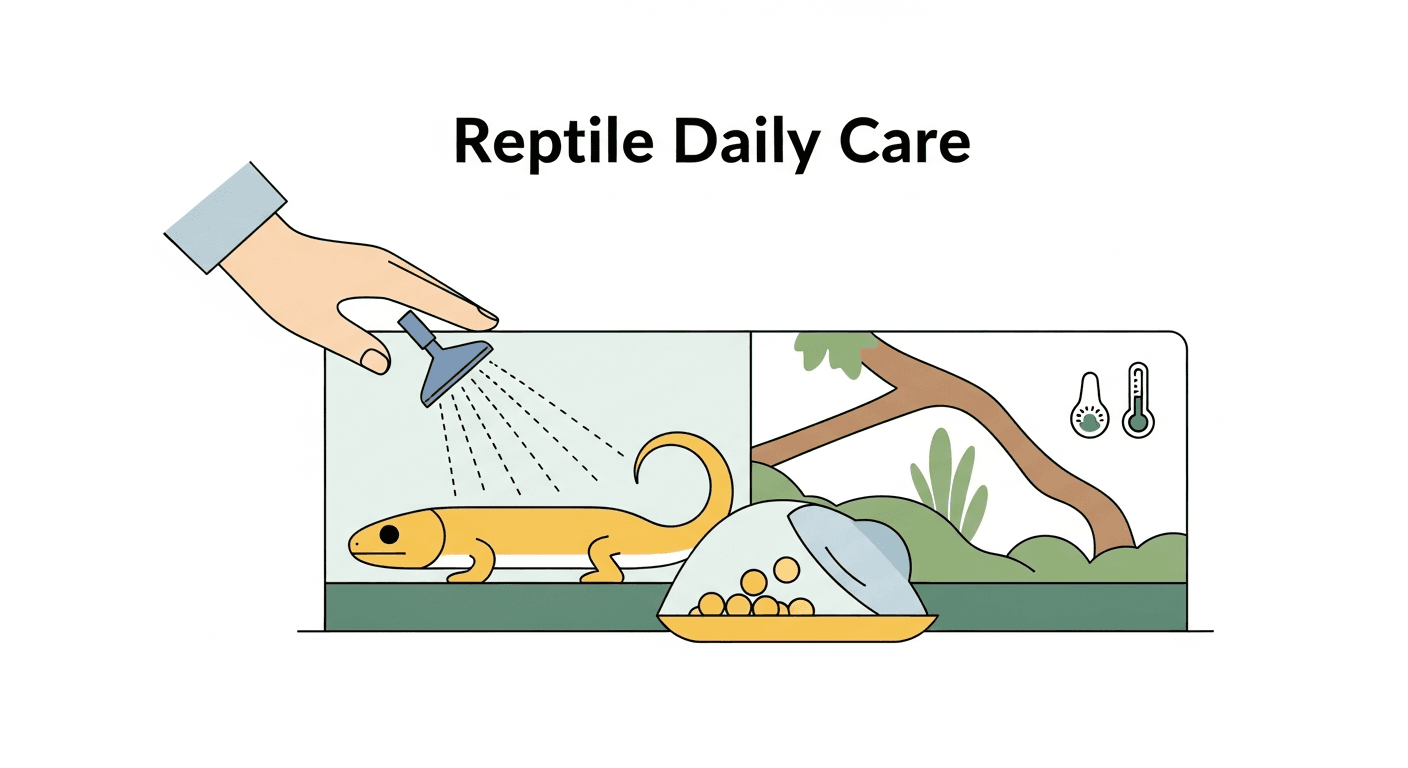
Daily Care Checklist for Reptiles: Building a Routine That Protects Your Animal's Health
A consistent daily care routine is your most powerful tool for keeping reptiles healthy and catching problems early. Use this checklist to build habits that work for any species.