
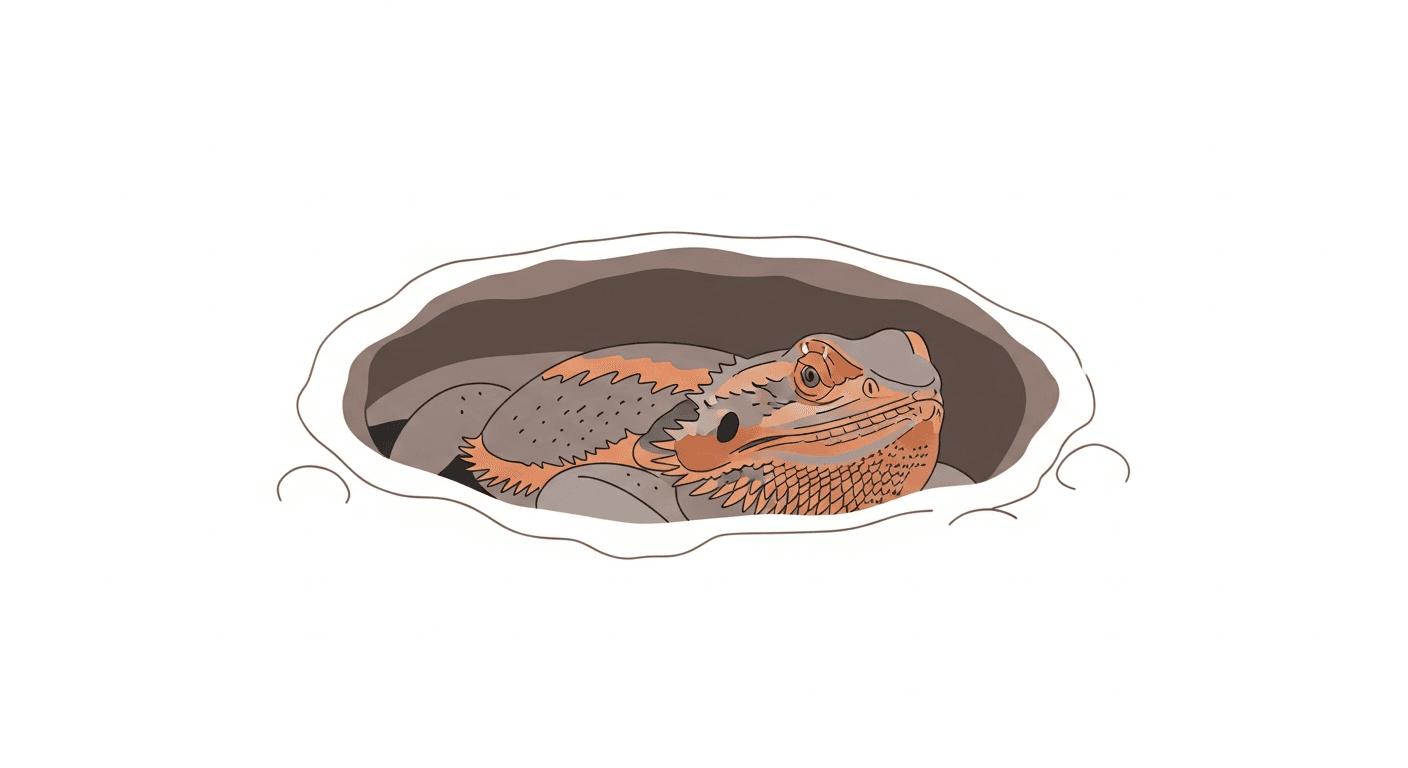
What Is Brumation in Bearded Dragons?
Brumation is a period of reduced metabolic activity that bearded dragons experience in response to shorter daylight hours and cooler temperatures — the reptile equivalent of hibernation. In captivity, bearded dragons may enter brumation from autumn through early spring even when their environment is kept consistent, because light and temperature shifts outside the home are sensed and trigger the hormonal response.
Signs include sleeping more, spending less time basking, eating less, seeking dark hiding spots, and reduced activity level. This is normal — but looks concerning to owners who don't expect it.
First 3 Steps at Home
- Distinguish brumation from illness: A brumating bearded dragon is usually still alert when disturbed, has normal skin color and hydration, responds to handling without obvious distress, and does not have concurrent physical symptoms (swelling, discharge, abnormal color). An ill bearded dragon may be lethargic but also shows weight loss, sunken eyes, abnormal feces, or physical changes. When in doubt, a vet visit is appropriate.
- Reduce but don't eliminate environmental support: During brumation, reduce the photoperiod slightly (to 10–11 hours) but do not remove UVB completely — the dragon may wake periodically and needs to maintain some vitamin D3 synthesis. Keep temperatures in the normal range. Do not attempt to force the dragon to eat if it is brumating — offer food and remove it if uneaten after 15 minutes.
- Maintain hydration: Brumating dragons do not drink much but can still become dehydrated. Offer warm soaks (15–20 minutes in 28°C water) every 2–4 weeks during brumation to prevent dehydration. Many dragons will drink during the soak even if they won't seek water normally.
When to Go to the Vet Immediately
- Weight loss of more than 10% during brumation
- Brumation-like symptoms in a dragon under 12 months old — juveniles should not brumate and lethargy in young dragons is more likely illness
- Any respiratory signs or discharge alongside reduced activity
- Dragon that cannot be roused at all after multiple gentle attempts
Follow-Up Care Checklist
- Weigh bi-weekly during brumation — acceptable weight loss is up to 10% of pre-brumation weight
- Offer warm soaks every 2–4 weeks for hydration
- On emergence, gradually increase photoperiod and temperatures to summer levels over 1–2 weeks
- Schedule a post-brumation wellness exam if any health concerns arose during the dormancy period
Track Brumation with TailRounds
Log start date, bi-weekly weight, soak dates, and any behavioral observations in the TailRounds Daily Log. This record confirms the brumation was normal and gives your vet baseline information if post-brumation health issues arise.
Book a Vet Appointment
Pre-brumation health checks are valuable for confirming the dragon is healthy enough for dormancy. Book at Happy Paws in early autumn if brumation is expected.
Summary for Your Clinic Visit
Note the start date of reduced activity, current weight versus pre-brumation weight, whether the dragon responds to gentle stimulation, and any concerning physical signs you've noticed.
Continue Reading
 🦎 Reptile Health
Bearded Dragon Not Eating: Reasons, What to Check, and When to Worry
A bearded dragon refusing food may be in brumation, shedding, or experiencing illness. Learn to distinguish normal from concerning and when to seek veterinary care.
 🦎 Reptile Health
Temperature Requirements for Reptiles: Why Getting It Right Saves Lives
Every reptile species has a specific temperature range that determines its health. Learn how to create a proper thermal gradient and the consequences of getting it wrong.
 🦎 Reptile Health
UVB Lighting for Bearded Dragons: Setup, Bulb Selection, and Common Mistakes
UVB is essential for bearded dragon health. Learn which bulb to choose, how to mount it correctly, and the mistakes that lead to metabolic bone disease.
 🦎 Reptile Health
Daily Care Checklist for Reptiles: Building a Routine That Protects Your Animal's Health
A consistent daily care routine is your most powerful tool for keeping reptiles healthy and catching problems early. Use this checklist to build habits that work for any species.