
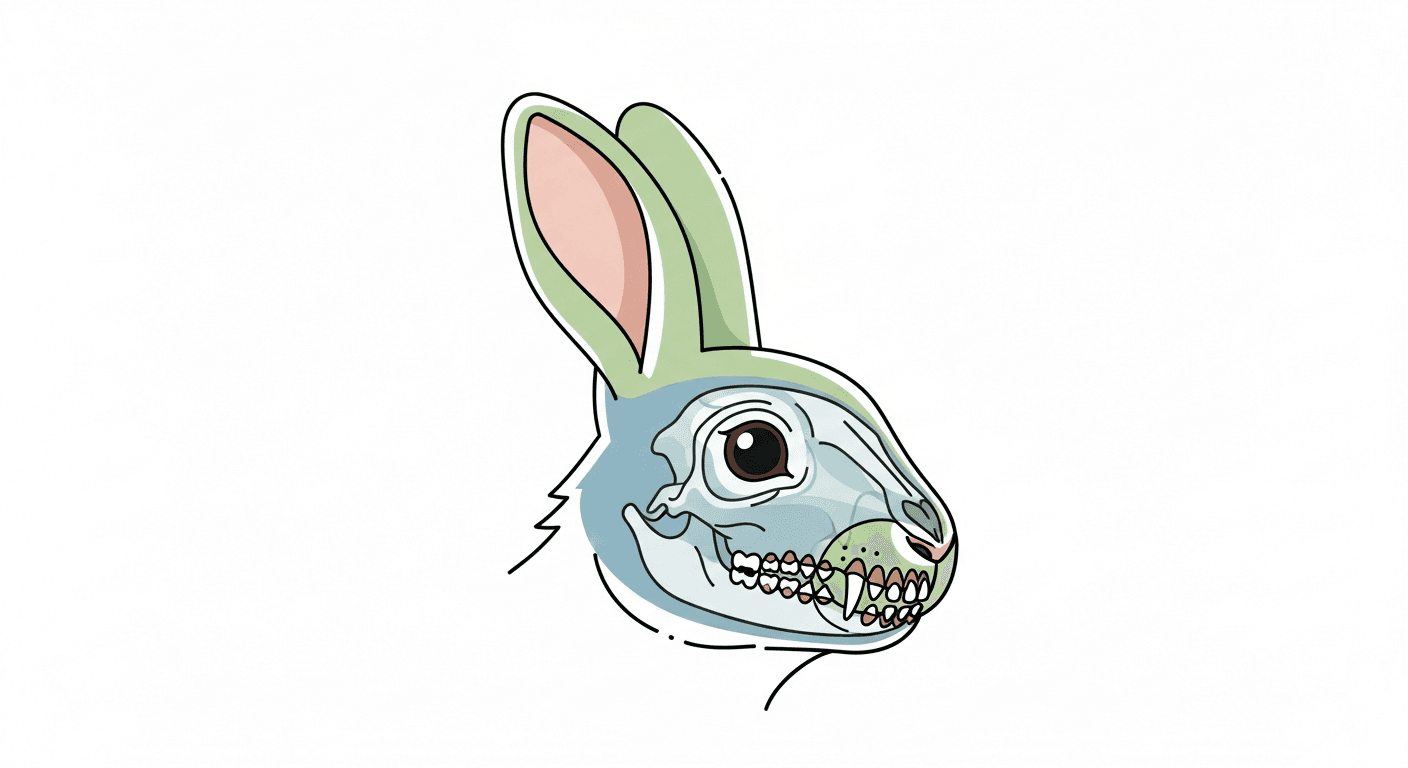
Why Are Rabbit Teeth So Prone to Problems?
Rabbits have continuously growing teeth — both the incisors (front teeth) and the molars (back cheek teeth). Proper dental health depends on the teeth wearing against each other correctly through the constant grinding motion of eating hay. When the teeth are misaligned (malocclusion) or the diet lacks sufficient fiber, teeth grow unevenly. Sharp spurs on the cheek teeth lacerate the tongue and cheeks, causing severe pain. The rabbit stops eating hay, the teeth wear even less, and the problem accelerates.
Dental disease is extremely common in dwarf breeds and lop rabbits, where the jawbone is compressed into a smaller skull — this naturally predisposes to misalignment.
First 3 Steps When Dental Problems Are Suspected
- Watch for drooling or wetness around the chin: Rabbits with mouth pain often drool or have wet fur under the chin ("slobbers"). This is one of the most visible signs of dental problems.
- Observe eating behavior: A rabbit dropping food from its mouth, chewing unevenly, or only eating soft foods while avoiding hay is likely experiencing dental pain. Hay refusal is a red flag.
- Book a dental exam promptly: You cannot adequately assess rabbit cheek teeth without sedation and specialist equipment. A visual inspection of the incisors gives limited information — the molars are where most serious disease occurs.
When to Go to the Vet Immediately
- Rabbit has stopped eating hay completely
- Weight loss is visible over 1–2 weeks
- Drooling or wet dewlap (skin under the chin)
- Facial swelling or abscess — dental abscesses in rabbits are serious and difficult to treat
- Eye discharge on one side (tooth root abscess can affect the tear duct)
Follow-Up Care Checklist
- Dental burring (filing of tooth spurs) under anesthesia is the primary treatment — this usually needs repeating every 3–6 months
- Maintain a hay-dominant diet permanently to maximize natural tooth wear
- Hard, leafy vegetables like romaine lettuce and herbs provide additional wear compared to soft foods
- Schedule dental rechecks every 3–6 months for known dental disease rabbits
Track Dental Symptoms with TailRounds
Log hay intake, drooling, and eating behavior daily in the TailRounds Daily Log. Consistent monitoring catches dental flare-ups early when treatment is simpler.
Book a Vet Appointment
Rabbit dental disease requires specialist equipment to assess properly. Book at Happy Paws for a dental assessment with our exotic animal team.
Summary for Your Clinic Visit
Tell your vet how long eating changes have been present, what foods the rabbit avoids versus accepts, whether there is drooling or face swelling, and the last dental examination date.
Continue Reading
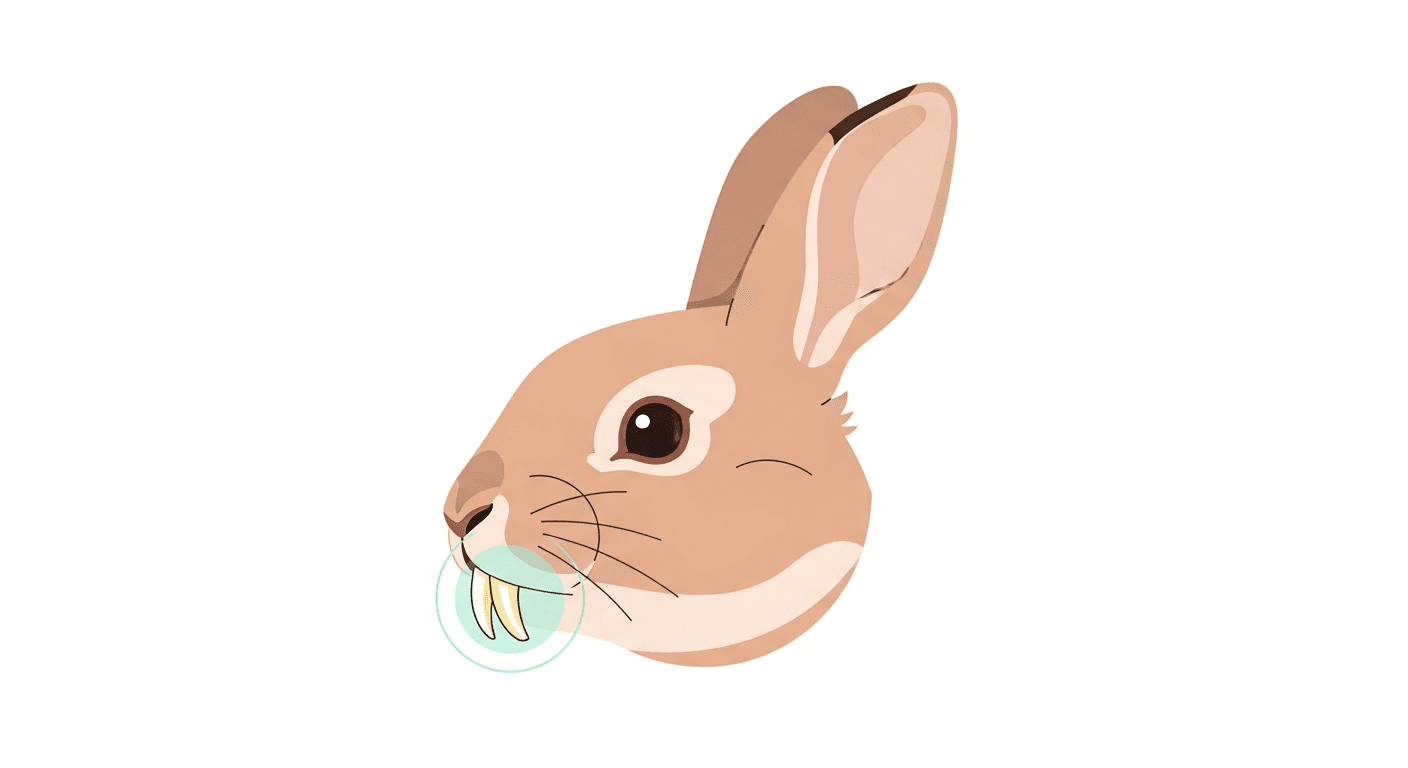 🐇 Rabbit Health
Overgrown Rabbit Incisors: Signs, Treatment, and Prevention
Overgrown front teeth are visible and painful. Learn what causes them, how they're treated, and whether extraction might be the best long-term solution.
 🐇 Rabbit Health
Rabbit Not Eating: Why It's Always Serious
Rabbits that stop eating for even a few hours can develop life-threatening GI stasis. Learn to recognize early warning signs and when to act.
 🐇 Rabbit Health
Rabbit Weight Loss: When to Be Concerned
Weight loss in rabbits often signals dental disease, GI problems, or systemic illness. Learn how to monitor weight and respond to unexpected loss.
 🐇 Rabbit Health
Complete Rabbit Diet Guide: Hay, Vegetables, and What to Avoid
The right diet is the foundation of rabbit health. Learn the correct proportions of hay, greens, and pellets — and which common foods are dangerous for rabbits.