
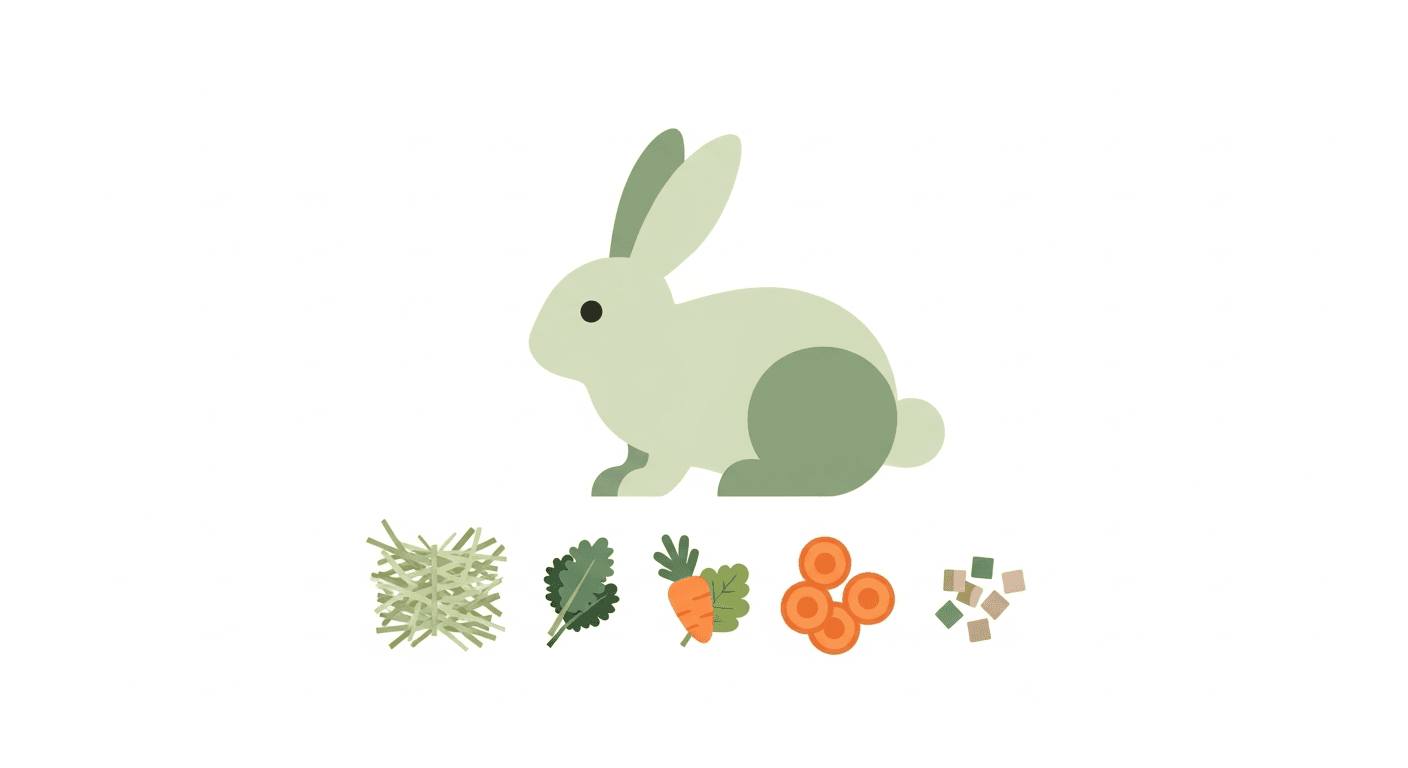
The Ideal Rabbit Diet
A proper rabbit diet is simple in concept but often misunderstood. The foundation is unlimited grass hay — timothy hay for adults, orchard grass, or meadow hay. Hay should constitute approximately 80% of the diet by volume. Fresh leafy vegetables make up the remaining 15–20%. Pellets should be a very small supplement — not the main food — and treats (fruit, sugary items) should be given rarely if at all. The diet most commonly sold in pet stores (pellet-dominant) is the opposite of what rabbits actually need.
First 3 Steps to Improve Diet
- Ensure unlimited timothy hay: Adult rabbits (over 7 months) should have a constant supply of timothy, orchard grass, or meadow hay. The hay rack should never be empty. Alfalfa hay is appropriate only for kittens under 7 months — it's too rich in calcium and protein for adult rabbits.
- Introduce leafy greens gradually: Offer 1–2 cups of leafy greens per 2 kg bodyweight daily. Safe options include romaine lettuce, cilantro, parsley, dill, basil, arugula, and leafy herbs. Introduce new greens one at a time and watch for soft stools.
- Reduce pellets significantly: Adult rabbits need only 1–2 tablespoons of plain, high-fiber pellets per 2 kg bodyweight daily. Too many pellets cause obesity, cecal dysbiosis, and dental disease by reducing hay consumption.
When to See the Vet
- After any significant diet change — digestive upset is common and can quickly escalate
- Soft stools or cecotrope accumulation after introducing new foods
- Rabbit refuses hay completely — dental investigation needed
Follow-Up Care Checklist
- Transition food changes gradually over 1–2 weeks
- Provide fresh water separately from food — water placement matters to rabbits
- Never offer: iceberg lettuce (no nutrition, causes diarrhea), avocado, onion, garlic, potatoes, grains, or anything high in sugar
Track Diet with TailRounds
Log daily hay consumption and any new foods introduced in the TailRounds Daily Log. This helps connect dietary changes to GI symptoms.
Book a Vet Appointment
Want a personalized diet plan for your specific rabbit? Book a nutrition consultation at Happy Paws with our exotic animal team.
Summary for Your Clinic Visit
Tell your vet the current diet in detail — hay type and quantity, greens offered, pellet brand and amount, and any treats given. Bring packaging if possible.
Continue Reading
 🐇 Rabbit Health
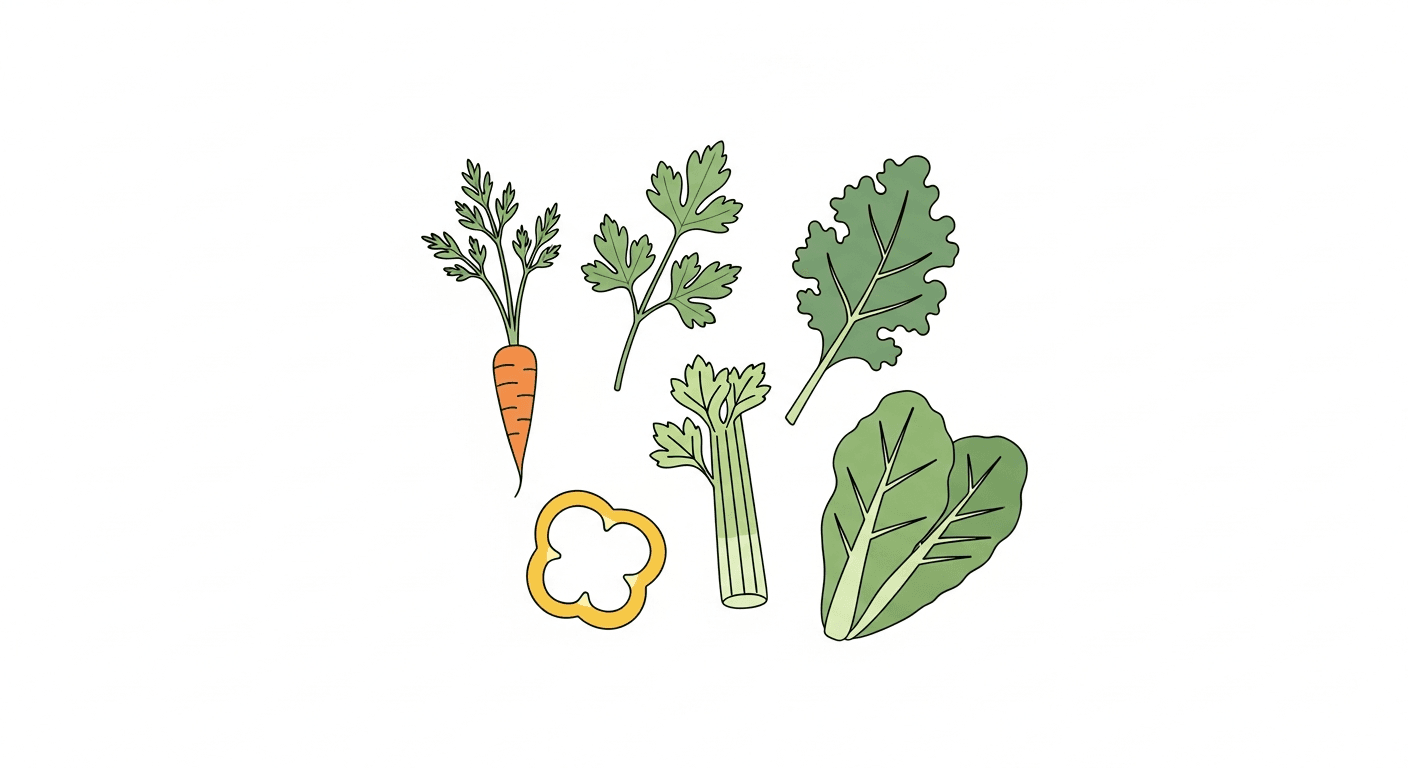
Safe Vegetables for Rabbits: A Complete Guide
Not all vegetables are created equal for rabbits. Learn which leafy greens are safe and beneficial, and how to introduce them without digestive upset.
 🐇 Rabbit Health
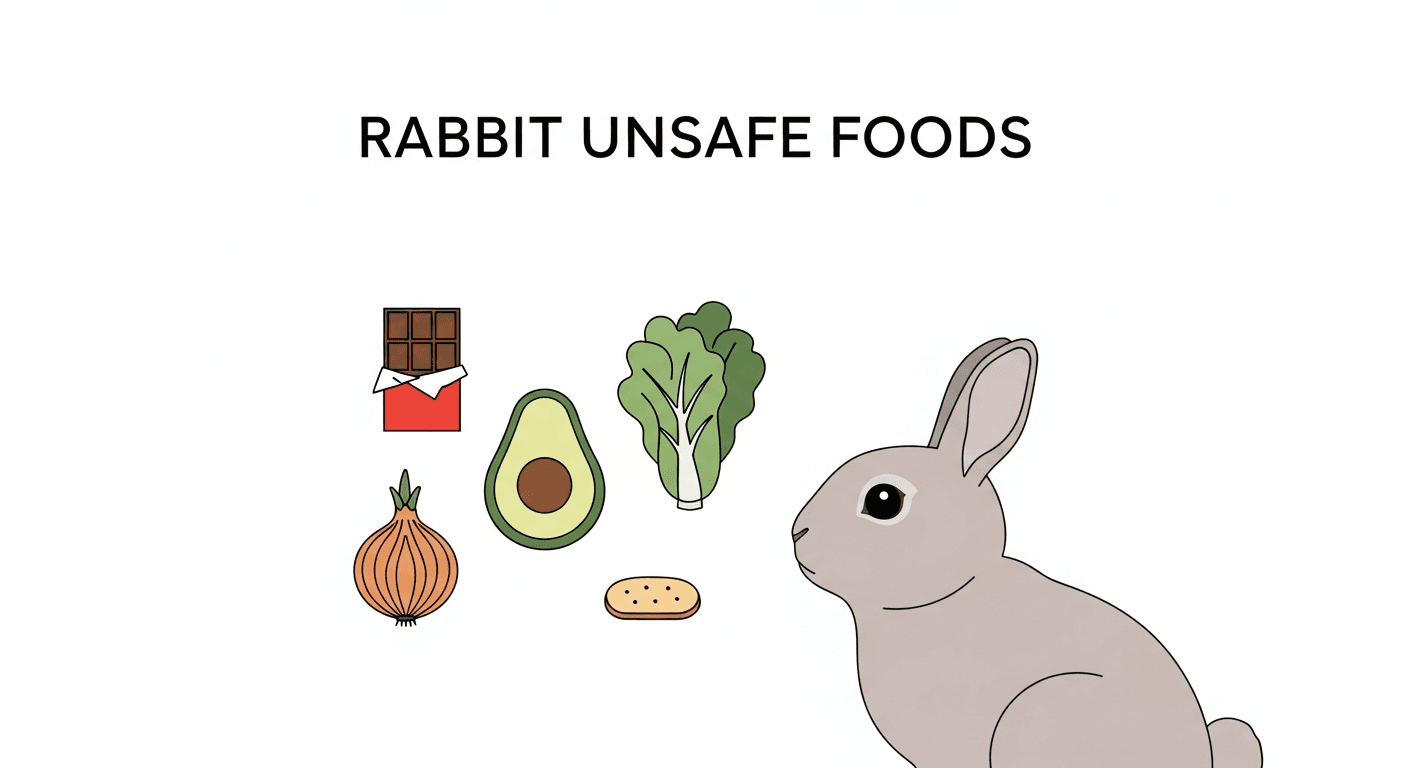
Foods That Are Dangerous or Toxic for Rabbits
Many common human foods and even some marketed "rabbit treats" are harmful to rabbits. Learn which foods to avoid entirely and which are safe only in tiny amounts.
 🐇 Rabbit Health
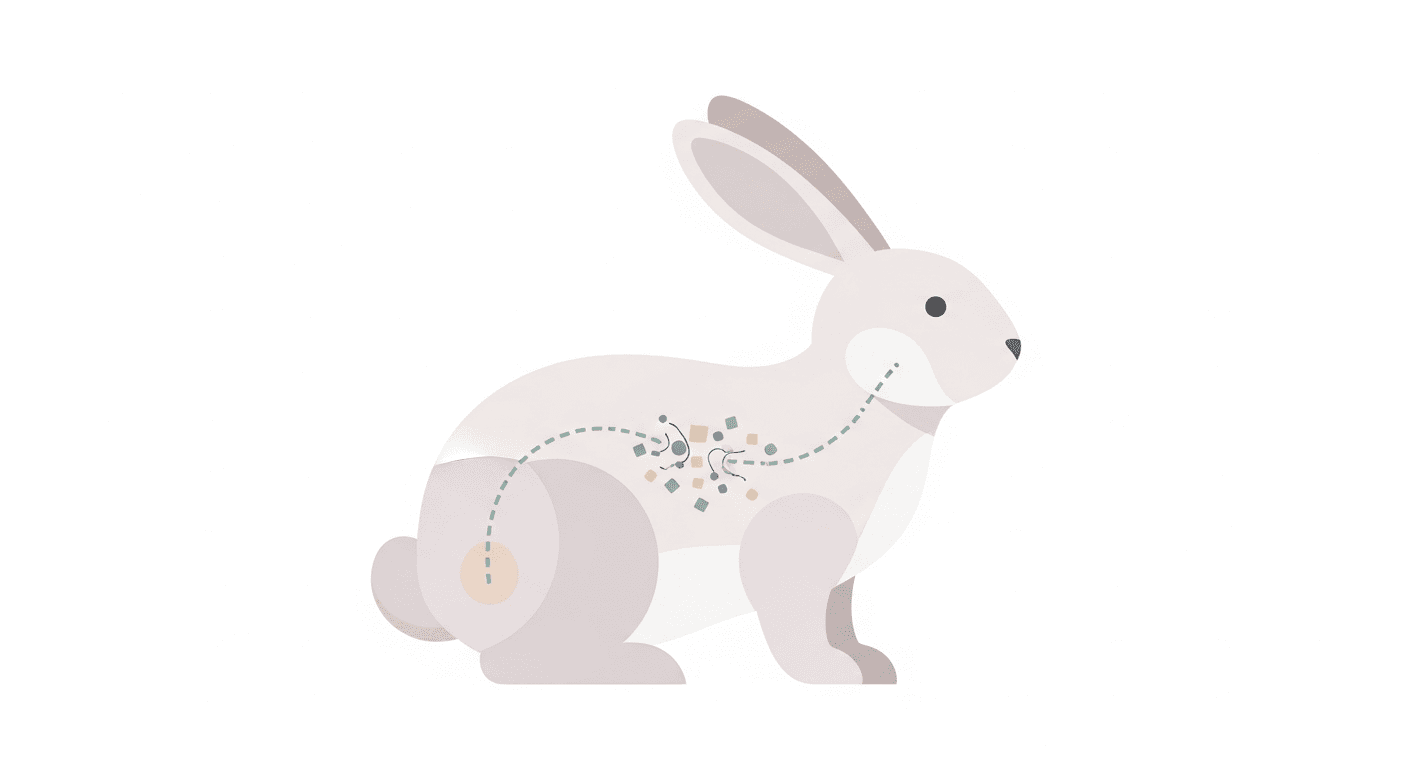
GI Stasis in Rabbits: What Every Owner Must Know
GI stasis kills rabbits within 24–48 hours if untreated. Learn to recognize the early signs, what causes it, and how treatment works.
 🐇 Rabbit Health
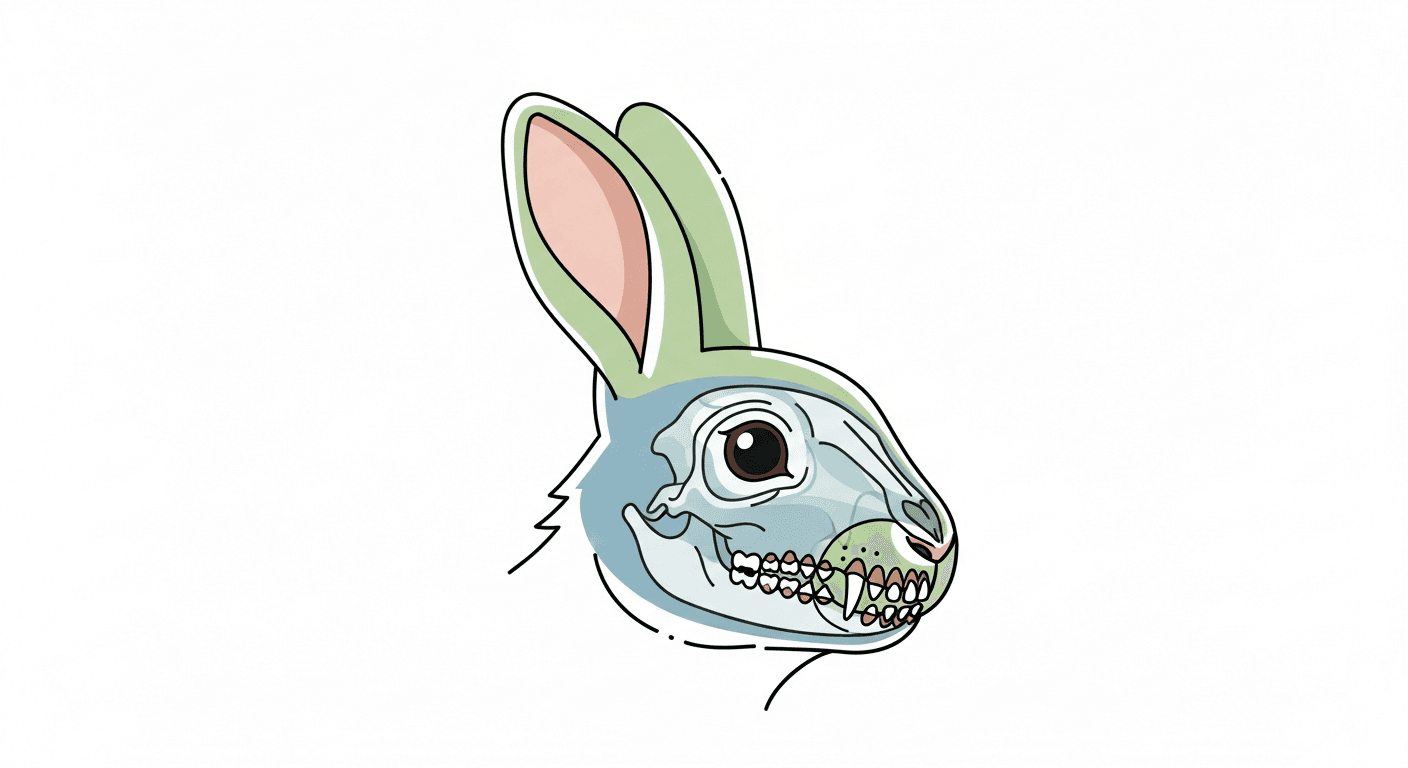
Rabbit Teeth Problems: Malocclusion, Spurs, and What to Do
Dental disease is the most common health problem in rabbits. Learn how teeth problems cause pain and what treatment looks like.