
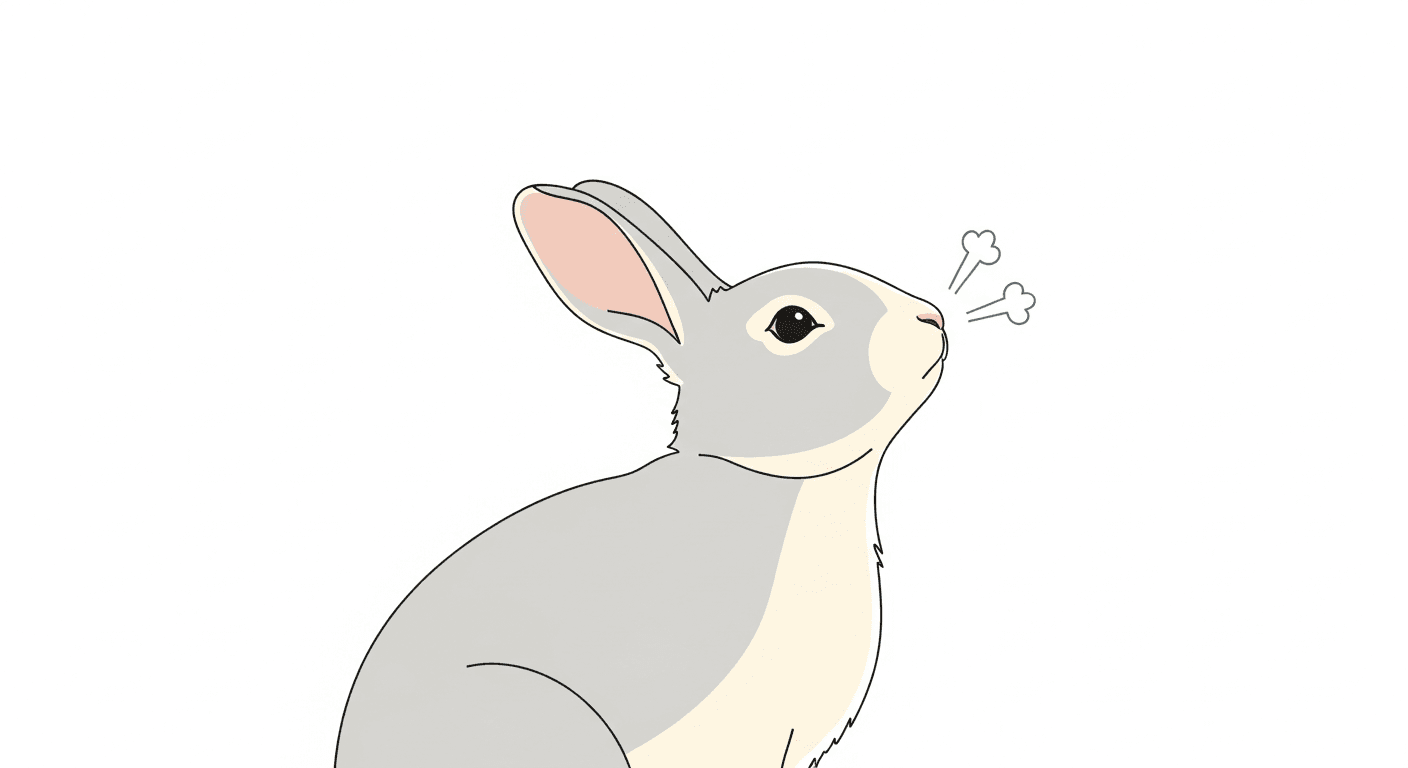
What Causes Sneezing in Rabbits?
Occasional sneezing in rabbits is normal — dust from hay, bedding, or litter can irritate the nasal passages. But persistent sneezing, especially with nasal discharge, is a sign of upper respiratory infection. The most common pathogen is Pasteurella multocida, a bacterium that resides in the nasal passages of many rabbits without causing symptoms, then flares up during stress, immune compromise, or concurrent illness. Pasteurellosis ("snuffles") causes white or yellow nasal discharge, sneezing, and potentially pneumonia or inner ear infection if untreated.
First 3 Steps to Take at Home
- Assess the nasal discharge: Clear, watery discharge during episodes of sneezing that resolve quickly is more likely dust-related. White, yellow, or thick discharge that persists warrants a vet visit.
- Reduce dust exposure: Switch to dust-extracted hay and unscented, dust-free paper litter. Many rabbits with environmental sneezing improve significantly with dust reduction alone.
- Check the eyes: Pasteurella often causes concurrent eye problems — discharge in one or both eyes alongside sneezing increases suspicion for bacterial infection.
When to Go to the Vet Immediately
- Thick colored nasal discharge (white, yellow, or green)
- Sneezing that occurs constantly or in prolonged episodes
- Labored breathing or breathing with effort through the mouth
- Head tilt developing alongside respiratory symptoms (inner ear involvement)
- Rabbit stops eating alongside respiratory signs
Follow-Up Care Checklist
- Complete the full antibiotic course (Pasteurella often requires long courses — 4–6+ weeks)
- Understand that Pasteurella cannot be permanently eliminated in most rabbits — the goal is management, not cure
- Reduce stress in the environment to minimize flare-up frequency
- Recheck in 4 weeks to assess response to treatment
Track Respiratory Symptoms with TailRounds
Log sneezing frequency and discharge character daily using the TailRounds Daily Log. This timeline helps your vet assess whether treatment is working.
Book a Vet Appointment
Colored or persistent nasal discharge in a rabbit needs antibiotic treatment. Book at Happy Paws with our exotic animal team for appropriate diagnosis and treatment.
Summary for Your Clinic Visit
Tell your vet how long sneezing has been present, discharge color and consistency, whether other symptoms are present, the rabbit's housing environment, and whether it has been in contact with new rabbits.
Continue Reading
 🐇 Rabbit Health
Rabbit Runny Eyes: Causes from Tear Ducts to Dental Disease
Eye discharge in rabbits can come from the eye itself, a blocked tear duct, or surprisingly — a dental tooth root problem. Learn the causes and treatment.
 🐇 Rabbit Health
Rabbit Breathing Fast or Labored: Emergency Signs
Abnormal breathing in rabbits — fast, effortful, or open-mouth — is always an emergency. Learn the causes and how to act quickly.
 🐇 Rabbit Health
Rabbit Not Eating: Why It's Always Serious
Rabbits that stop eating for even a few hours can develop life-threatening GI stasis. Learn to recognize early warning signs and when to act.
 🐇 Rabbit Health
Daily Rabbit Care Routine: A Complete Health Checklist
A healthy rabbit requires daily observation and specific care tasks. This routine helps you catch health problems early and keep your rabbit thriving.