
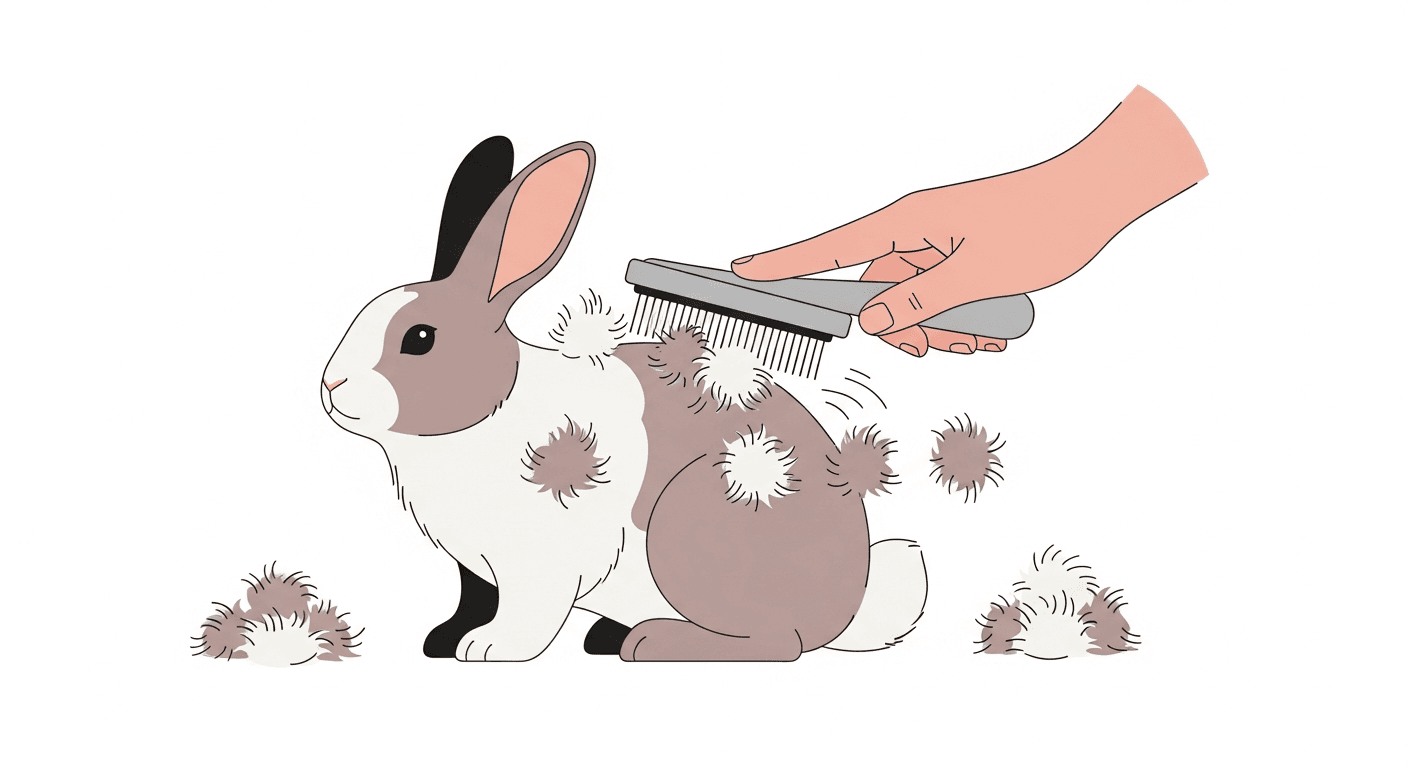
Why Is Molting Dangerous for Rabbits?
Rabbits molt (shed their coat) 2–4 times per year, with major molts occurring in spring and autumn. During molts, a rabbit can swallow significant amounts of loose fur during self-grooming. Unlike cats, rabbits cannot vomit — they have a very strong cardiac sphincter that prevents vomiting. Fur that accumulates in the stomach cannot be expelled and can contribute to GI slowing or true hair blockage, although the latter is less common than in cats. The primary risk during molt is that reduced gut motility from any cause (including pain or stress) combined with high fur intake leads to stasis.
First 3 Steps During Molting
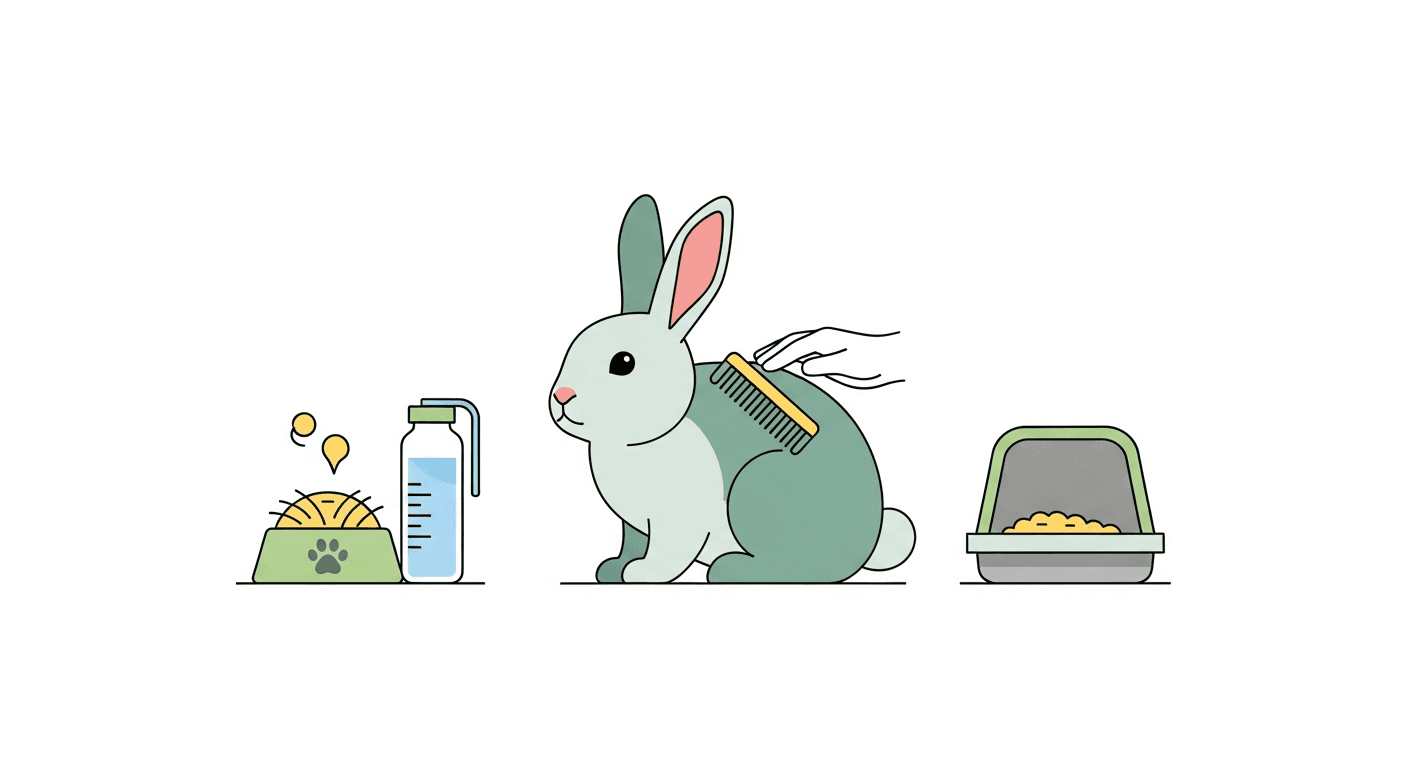
- Increase brushing dramatically during molt: Daily brushing during heavy molt removes loose fur before the rabbit can swallow it. Use a soft slicker brush or a rubber grooming mitt. Start gently and increase pressure as the rabbit becomes comfortable.
- Increase hay availability: Fiber from hay is the best natural way to move fur through the digestive system. During molt, ensure hay is unlimited and fresh. This is not the time to experiment with new foods.
- Monitor droppings for fur: During molt, it's normal to see fur strings connecting droppings. This is fine. What's not fine: no droppings, or very small, dry droppings, which suggest the gut is slowing.
When to Go to the Vet Immediately
- Rabbit stops eating during a heavy molt
- Dramatic reduction in droppings during molt period
- Visible bloating or signs of abdominal pain
Follow-Up Care Checklist
- Long-haired breeds (Angora, Lion Head) require daily grooming year-round — their fur mats easily and ingestion risk is higher
- Check for wool block (felt-like hairballs in the stomach) if a long-haired rabbit shows GI symptoms
- Keep the living area cool during molt — heat stress combined with molt suppresses eating
Track Molting and Gut Health with TailRounds
Log when molts begin and end, brushing frequency, and dropping quality in the TailRounds Daily Log. Correlating molt timing with GI symptoms helps predict and prevent future problems.
Book a Vet Appointment
If your rabbit has stopped eating during a heavy molt, don't wait. Book at Happy Paws immediately for stasis evaluation.
Summary for Your Clinic Visit
Tell your vet when the molt started, grooming frequency, hay intake during the molt, and dropping observations over the past 24–48 hours.
Continue Reading
 🐇 Rabbit Health
GI Stasis in Rabbits: What Every Owner Must Know
GI stasis kills rabbits within 24–48 hours if untreated. Learn to recognize the early signs, what causes it, and how treatment works.
 🐇 Rabbit Health
Rabbit Not Eating: Why It's Always Serious
Rabbits that stop eating for even a few hours can develop life-threatening GI stasis. Learn to recognize early warning signs and when to act.
 🐇 Rabbit Health
Complete Rabbit Diet Guide: Hay, Vegetables, and What to Avoid
The right diet is the foundation of rabbit health. Learn the correct proportions of hay, greens, and pellets — and which common foods are dangerous for rabbits.
 🐇 Rabbit Health
Daily Rabbit Care Routine: A Complete Health Checklist
A healthy rabbit requires daily observation and specific care tasks. This routine helps you catch health problems early and keep your rabbit thriving.