
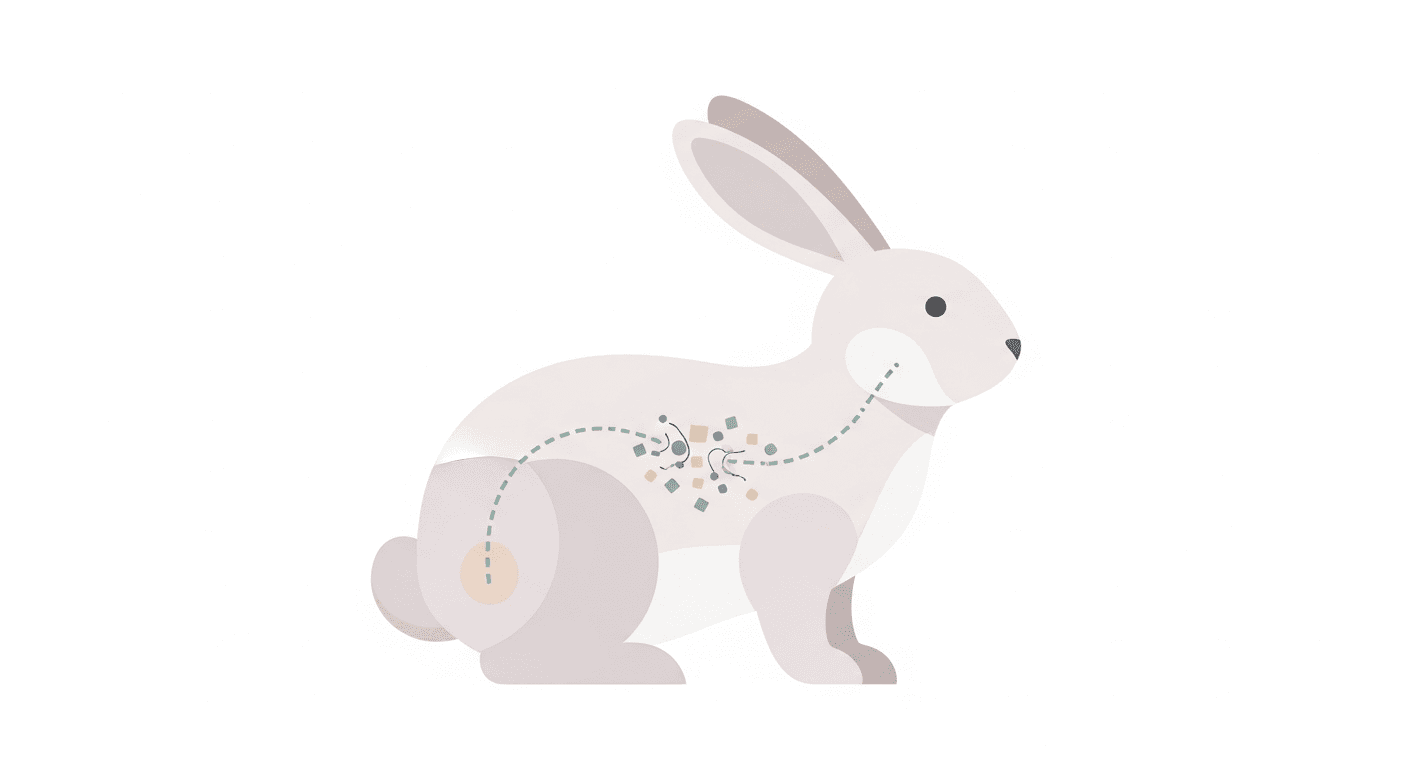
What Is GI Stasis?
Gastrointestinal stasis is the slowing or complete cessation of gut motility in rabbits. Unlike other species, the rabbit's gastrointestinal tract relies on constant fiber intake and movement to prevent bacterial overgrowth and gas accumulation. When the gut slows, bacteria in the cecum (a large fermentation chamber in the rabbit's abdomen) produce excess gas. This gas causes severe pain, which further suppresses eating, which worsens stasis — creating a rapidly deteriorating cycle.
Causes include low-fiber diet (insufficient hay), dehydration, pain from any source, stress, and underlying conditions like dental disease or uterine cancer in females.
First 3 Steps to Take at Home
- Recognize the early signs: Reduced hay intake, fewer or smaller droppings, droppings strung together with hair, hunched posture, reluctance to move, and a tucked-up abdomen are early indicators. Don't wait for the rabbit to be collapsed or clearly in pain — that's late-stage stasis.
- Keep the rabbit warm and moving: Place the rabbit in a warm, quiet environment (not hot — rabbits overheat easily). Encourage gentle exercise by letting the rabbit move around — physical activity stimulates gut motility. Don't force movement if the rabbit is in severe pain.
- Do not give simethicone (gas drops) without vet guidance: While sometimes recommended online, the primary problem in stasis is gut motility, not just gas. Simethicone may have limited value without addressing the motility issue. Call your exotic/rabbit vet immediately.
When to Go to the Vet Immediately
- No droppings for 4+ hours
- Visible signs of pain: teeth grinding (bruxism), hunching, reluctance to move, labored breathing
- Abdomen feels hard, drum-like, or the rabbit reacts to gentle touch on the belly
- Rabbit has not eaten hay in 8+ hours
- Rabbit is fully unresponsive or collapsed
Follow-Up Care Checklist
- Administer gut motility drugs (e.g., metoclopramide or cisapride) as prescribed — timing is critical
- Pain management is essential — pain suppresses eating and worsens stasis
- Subcutaneous fluids (given at the vet or at home as taught) help restart gut movement
- Critical care feeding (syringe feeding a hay-based liquid supplement) if the rabbit isn't eating voluntarily
- Monitor droppings every 2 hours during recovery
Track Recovery with TailRounds
During stasis recovery, hourly monitoring of droppings and hay intake is essential. Use the TailRounds Daily Log to record every feeding and dropping observation and share with your vet.
Book a Vet Appointment
GI stasis is always an emergency. Book at Happy Paws immediately — do not wait overnight to see if the rabbit improves.
Summary for Your Clinic Visit
Tell your vet the exact timeline: when the rabbit last ate normally, last dropping observed, any possible stress triggers, and current gut sounds. Bring a fresh stool sample if any droppings are present.
Continue Reading
 🐇 Rabbit Health
Rabbit Not Eating: Why It's Always Serious
Rabbits that stop eating for even a few hours can develop life-threatening GI stasis. Learn to recognize early warning signs and when to act.
 🐇 Rabbit Health
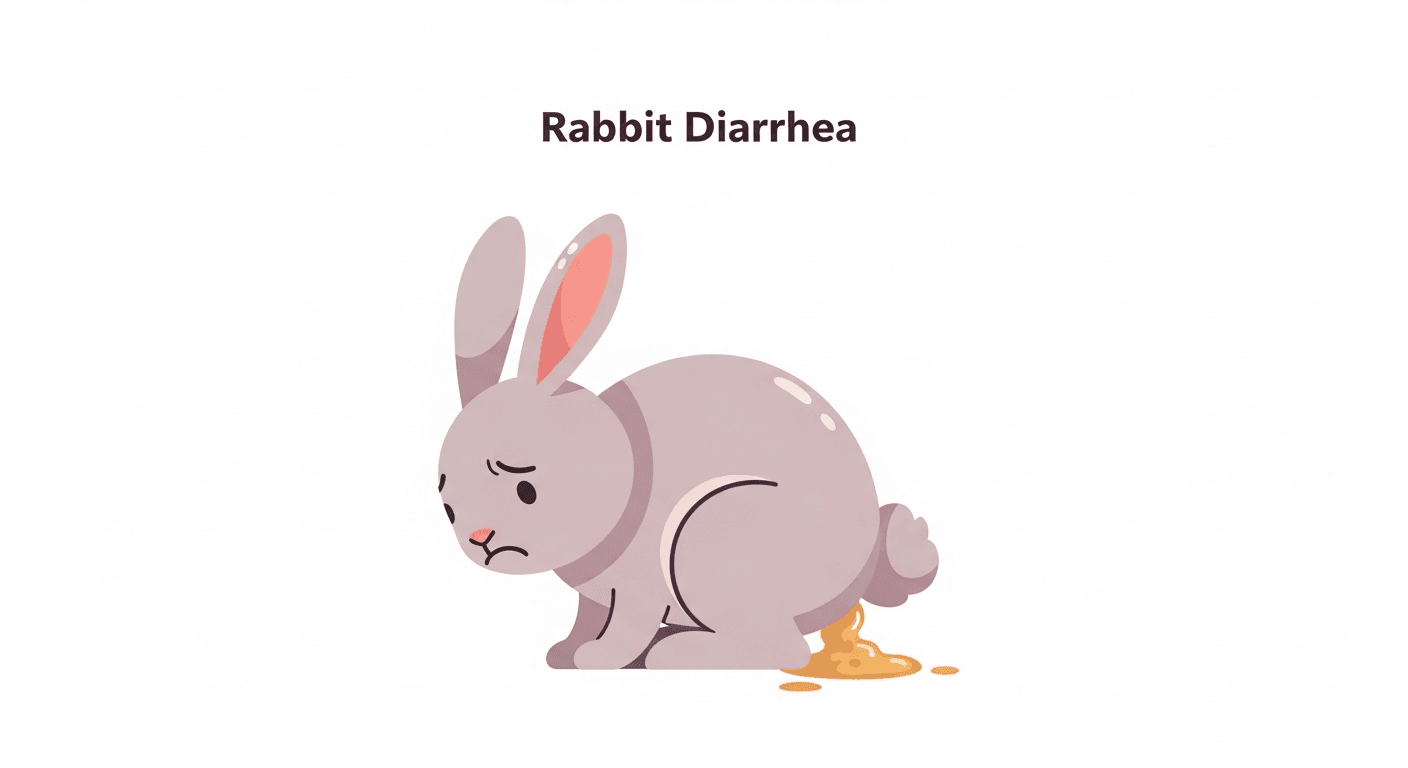
Rabbit Diarrhea vs. Soft Cecotropes: Know the Difference
True diarrhea in rabbits is a medical emergency. Learn to distinguish it from normal cecotropes and understand what genuine diarrhea means for rabbit health.
 🐇 Rabbit Health
Rabbit Not Drinking Water: Causes and Hydration Tips
Dehydration in rabbits accelerates GI stasis and kidney stress. Learn why rabbits sometimes refuse water and how to ensure adequate hydration.
 🐇 Rabbit Health
Complete Rabbit Diet Guide: Hay, Vegetables, and What to Avoid
The right diet is the foundation of rabbit health. Learn the correct proportions of hay, greens, and pellets — and which common foods are dangerous for rabbits.