
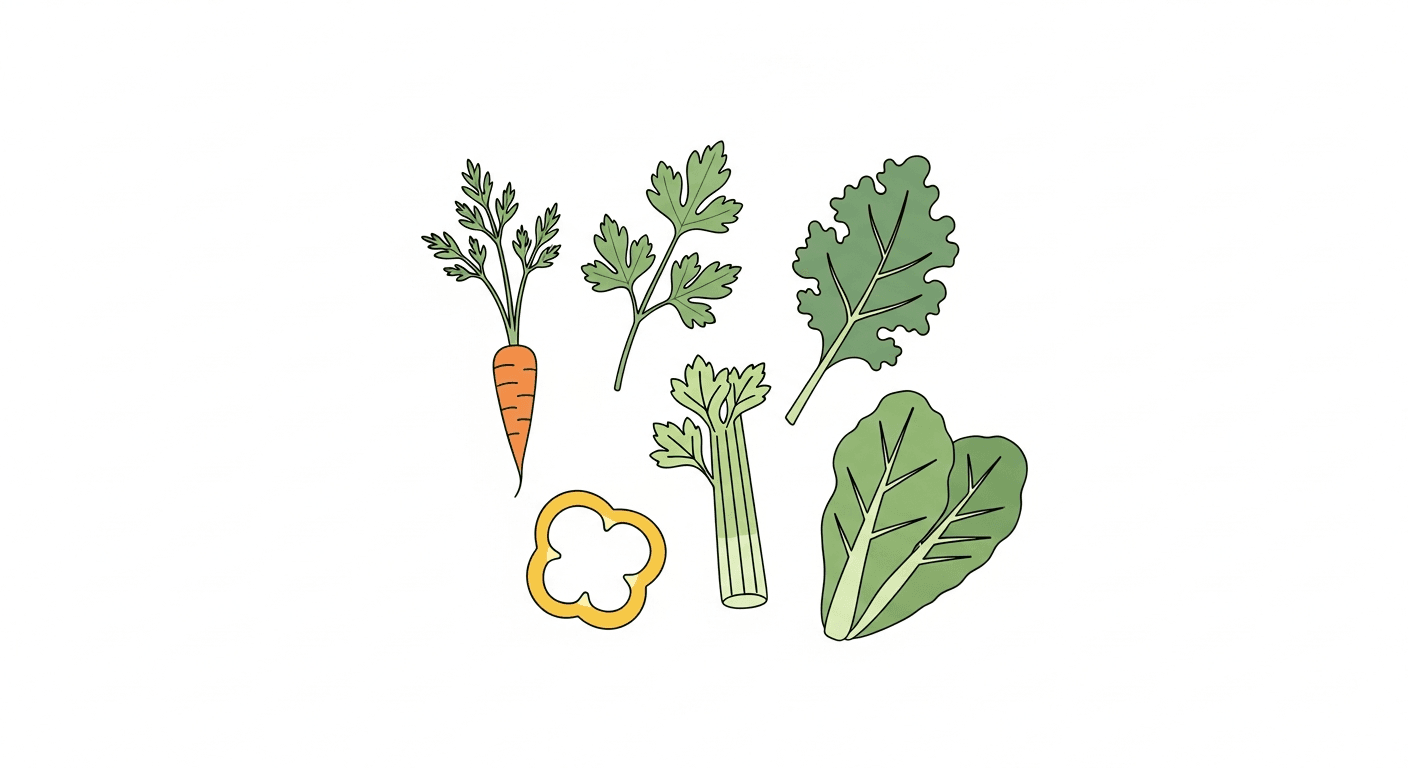
How to Introduce Vegetables to Rabbits
Fresh vegetables are an important and enriching part of the rabbit diet — but they must be introduced carefully and in the right quantities. Rabbits that haven't had vegetables before can develop diarrhea if given large amounts suddenly. Introduce one new vegetable at a time, in small amounts (a few leaves), and wait 24 hours to assess digestive response before giving more or adding another type.
The daily vegetable ration for an adult rabbit is 1–2 cups of mixed leafy greens per 2 kg of body weight. Variety is nutritionally beneficial — rotating between 3–5 types provides a broader nutrient profile than always feeding the same greens.
Safe Vegetables for Rabbits
- Excellent daily options: Romaine lettuce, cos lettuce, cilantro, parsley (in moderation — high in calcium), dill, basil, mint, oregano, arugula (rocket), endive, escarole
- Good options in rotation: Bok choy, watercress, fennel (leaves and stalks), radish tops, beet greens, carrot tops (the leaves, not the root), raspberry leaves, strawberry leaves
- Offer in small amounts: Kale, spinach, Swiss chard — these are nutritious but high in oxalates or calcium; limit to 2–3 times per week at most
- Root vegetables as occasional treats only: Carrot pieces (small, infrequent — high in sugar), bell pepper strips (no seeds)
When to See the Vet
- Soft stools or diarrhea after introducing new vegetables — remove the new vegetable and return to known safe options
- GI symptoms persist more than 48 hours after removing the new food
Follow-Up Care Checklist
- Wash all vegetables thoroughly to remove pesticide residue
- Offer vegetables dry, not sopping wet — too much moisture can contribute to soft stools
- Remove uneaten fresh greens after 4–6 hours to prevent spoiling
Track New Foods with TailRounds
Log each new vegetable introduced and the rabbit's digestive response over the following 24 hours using the TailRounds Daily Log.
Book a Vet Appointment
For personalized dietary advice for a rabbit with a specific health condition, book a nutrition consultation at Happy Paws.
Summary for Your Clinic Visit
Tell your vet what vegetables you're currently offering, any new foods recently introduced, and any digestive changes observed after dietary additions.
Continue Reading
 🐇 Rabbit Health
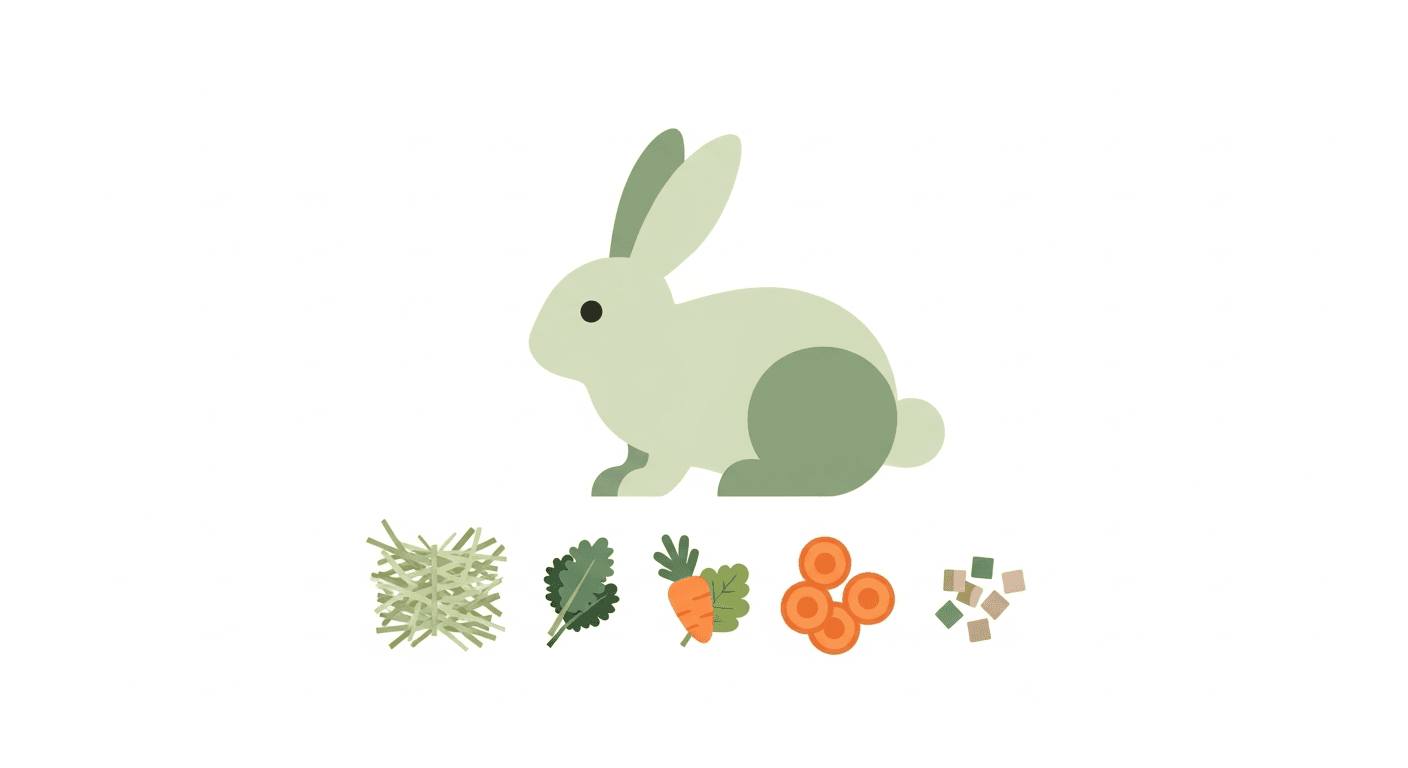
Complete Rabbit Diet Guide: Hay, Vegetables, and What to Avoid
The right diet is the foundation of rabbit health. Learn the correct proportions of hay, greens, and pellets — and which common foods are dangerous for rabbits.
 🐇 Rabbit Health
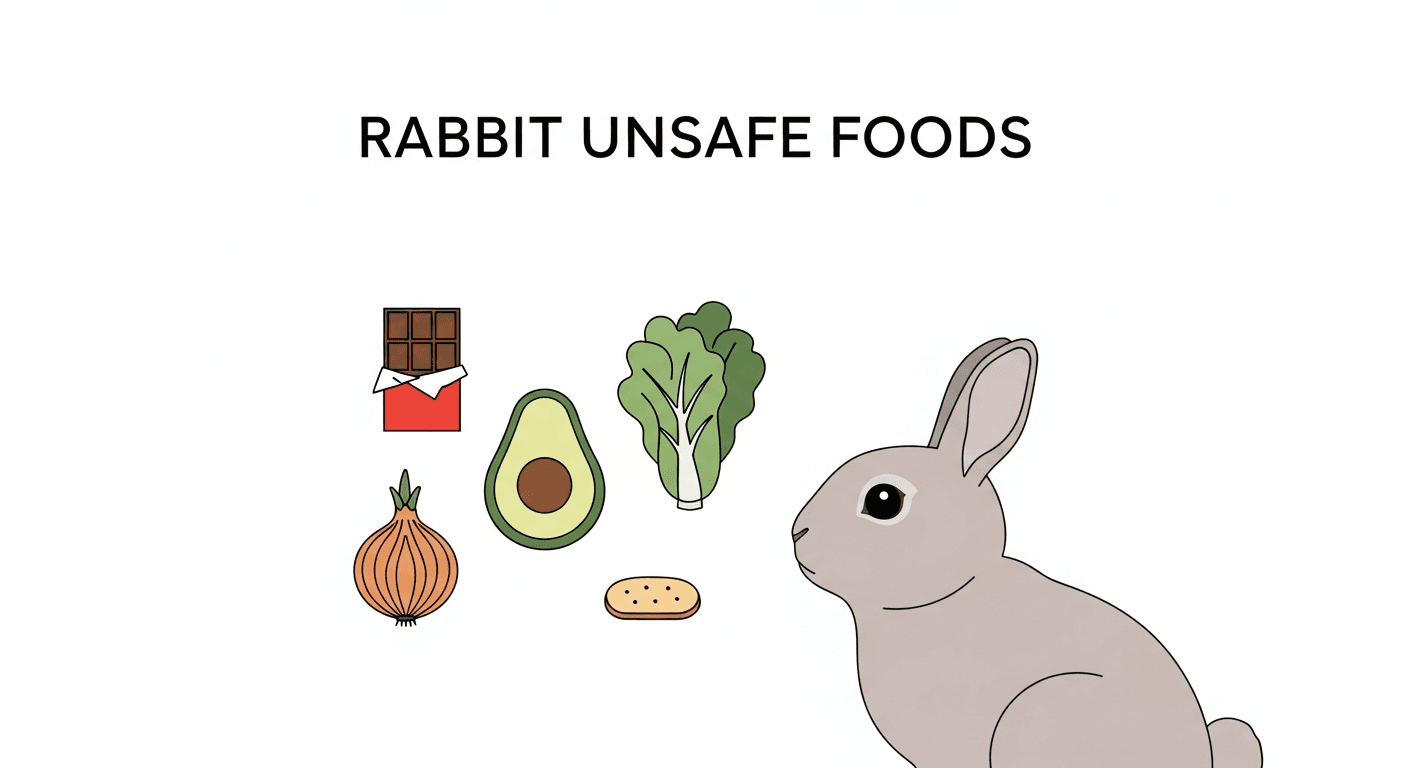
Foods That Are Dangerous or Toxic for Rabbits
Many common human foods and even some marketed "rabbit treats" are harmful to rabbits. Learn which foods to avoid entirely and which are safe only in tiny amounts.
 🐇 Rabbit Health
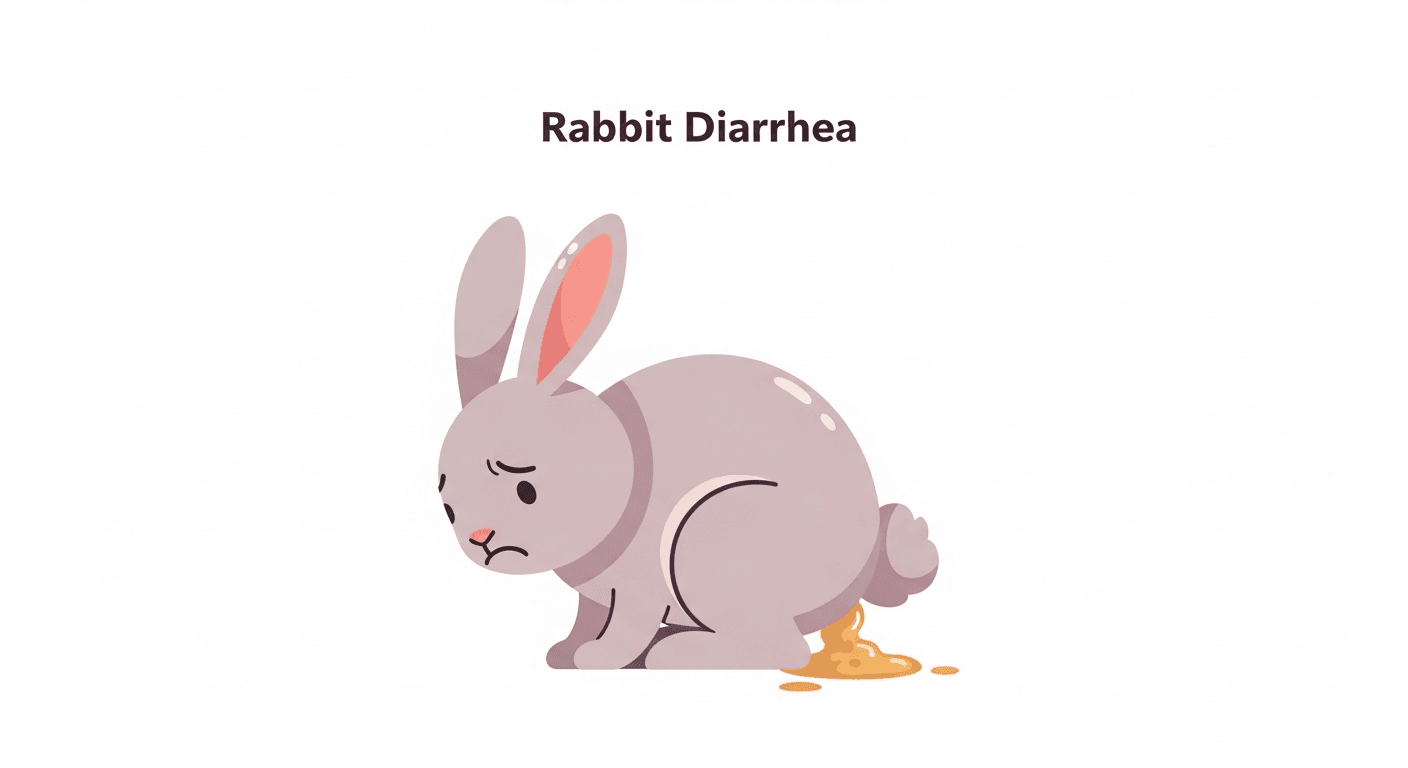
Rabbit Diarrhea vs. Soft Cecotropes: Know the Difference
True diarrhea in rabbits is a medical emergency. Learn to distinguish it from normal cecotropes and understand what genuine diarrhea means for rabbit health.
 🐇 Rabbit Health
GI Stasis in Rabbits: What Every Owner Must Know
GI stasis kills rabbits within 24–48 hours if untreated. Learn to recognize the early signs, what causes it, and how treatment works.