
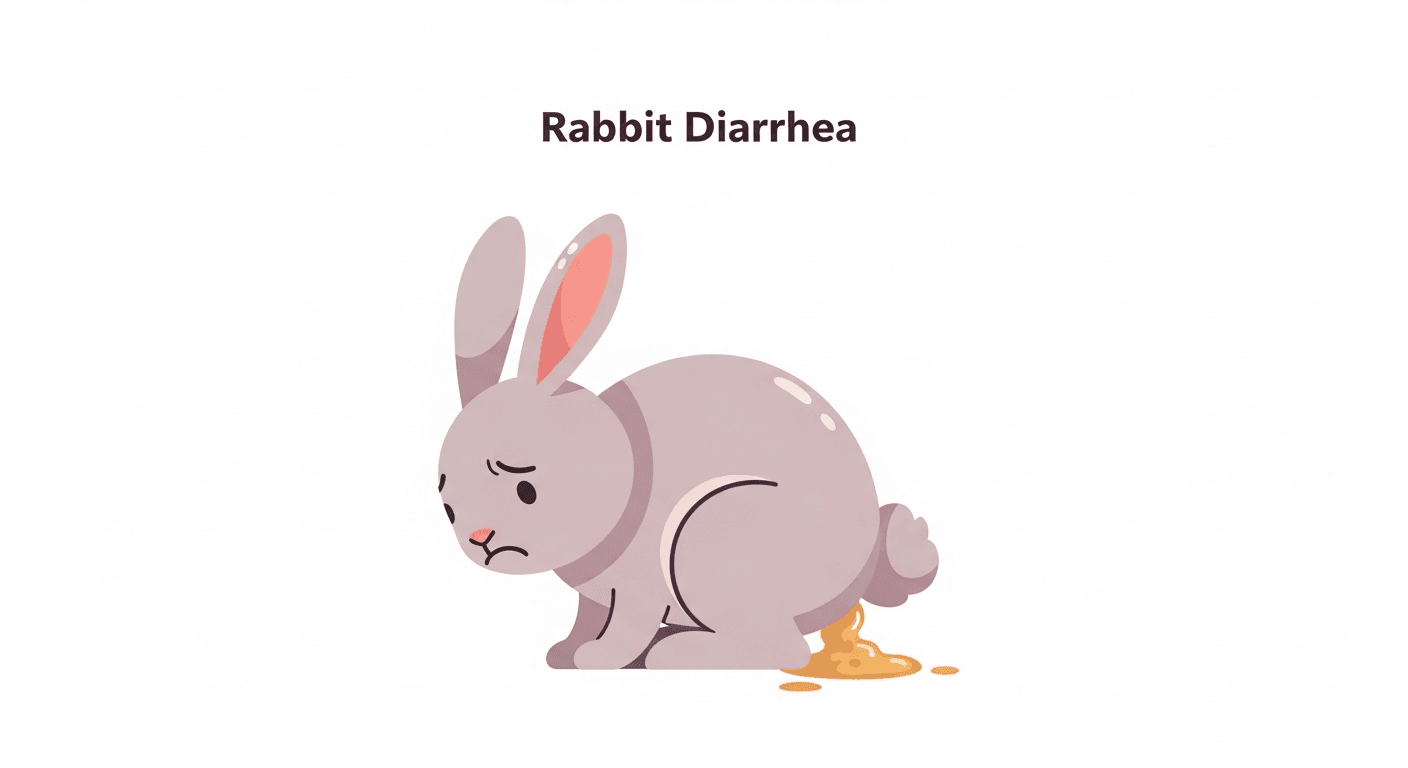
True Diarrhea vs. Cecotrope Accumulation
Not all "soft poop" in rabbits is diarrhea. Rabbits produce two types of droppings: hard, round fecal pellets (which you see in the litter box) and soft, grape-cluster cecotropes (which the rabbit eats directly from the anus, usually at night). Finding cecotropes stuck to the rabbit's bottom or in the litter box is common in overweight rabbits or those eating too many pellets — this is cecotrope accumulation, not diarrhea.
True diarrhea in rabbits — watery, liquid stool — is very different and very dangerous, particularly in young rabbits. It indicates severe gut disruption and causes rapid dehydration. Any rabbit with liquid diarrhea needs emergency veterinary care.
First 3 Steps to Take at Home
- Distinguish the type of soft stool: Cecotropes are dark, soft, grape-cluster-shaped, and smell strongly. True diarrhea is watery, unformed, and may contain mucus. This distinction changes urgency completely.
- Check hydration immediately: In true diarrhea, dehydration can develop within hours, especially in young rabbits. Pinch the skin gently — it should snap back immediately. Tacky gums and sunken eyes indicate serious dehydration requiring IV fluids.
- Remove pellets and treats immediately: If cecotrope accumulation (not true diarrhea) is the issue, reduce or eliminate pellets for 48 hours and increase hay to 100% of the diet. This often resolves within a few days.
When to Go to the Vet Immediately
- True liquid diarrhea — always an emergency in rabbits
- Young rabbit (under 6 months) with any soft stool — kits are extremely fragile
- Diarrhea with blood or mucus
- Rabbit showing signs of dehydration alongside soft stools
Follow-Up Care Checklist
- For cecotrope accumulation: reduce pellets to 1 tablespoon per 2 kg bodyweight, increase hay to unlimited, eliminate all treats
- Keep the perineal area clean — accumulated cecotropes attract flystrike-causing flies
- Check for obesity and dental issues as underlying causes of cecotrope accumulation
Track Droppings with TailRounds
Monitoring dropping type, quantity, and appearance daily is the most important health surveillance tool for rabbits. Log daily using the TailRounds Daily Log.
Book a Vet Appointment
True diarrhea or cecotrope accumulation that doesn't resolve with hay increase in 48 hours needs veterinary evaluation. Book at Happy Paws for examination and parasite testing.
Summary for Your Clinic Visit
Describe the stool appearance (bring a photo or sample), when it started, the rabbit's diet, age, and whether other pets in the same household are affected.
Continue Reading
 🐇 Rabbit Health
Why Is My Rabbit Leaving Soft Poop? Cecotrope Issues Explained
Soft cecotropes left in the litter box instead of eaten are a sign of dietary imbalance. Learn what causes it and how to correct the problem.
 🐇 Rabbit Health
GI Stasis in Rabbits: What Every Owner Must Know
GI stasis kills rabbits within 24–48 hours if untreated. Learn to recognize the early signs, what causes it, and how treatment works.
 🐇 Rabbit Health
Rabbit Not Eating: Why It's Always Serious
Rabbits that stop eating for even a few hours can develop life-threatening GI stasis. Learn to recognize early warning signs and when to act.
 🐇 Rabbit Health
Complete Rabbit Diet Guide: Hay, Vegetables, and What to Avoid
The right diet is the foundation of rabbit health. Learn the correct proportions of hay, greens, and pellets — and which common foods are dangerous for rabbits.