
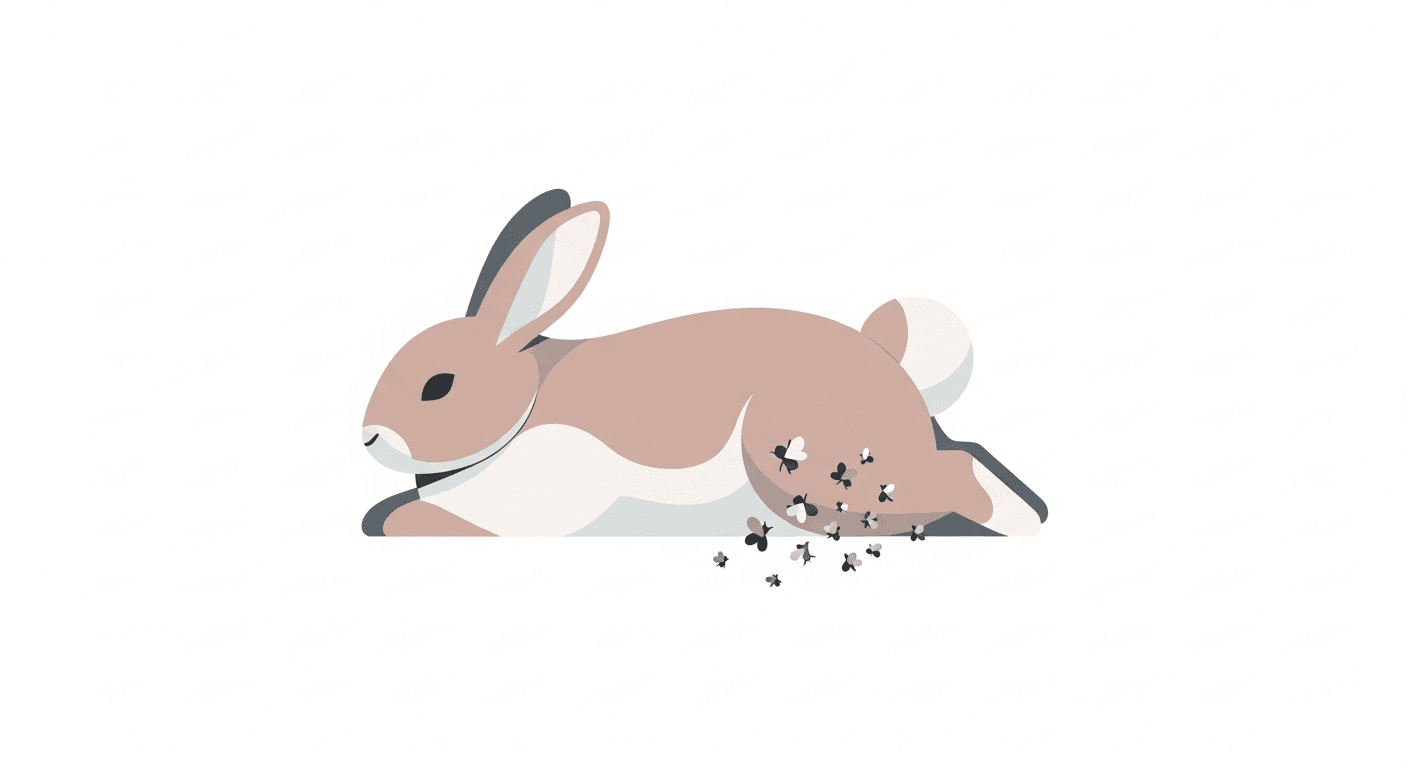
What Is Flystrike and Why Is It So Dangerous?
Flystrike (myiasis) occurs when flies — most commonly Lucilia sericata (green bottle fly) — lay eggs on the rabbit's skin, particularly around the perineal area (bottom). The eggs hatch into maggots within 12–24 hours and begin eating the rabbit's tissue. A rabbit can be overwhelmed by maggots within hours — the condition progresses from early infestation to shock and death incredibly fast. Flystrike requires immediate emergency veterinary care. It is entirely preventable with daily checks and appropriate management of risk factors.
Risk Factors That Increase Flystrike Risk
- Soft cecotropes accumulating on the perineum — attracts flies immediately
- Wet or soiled fur around the bottom
- Wounds, skin infections, or urine scald
- Overweight or disabled rabbits that cannot groom their hindquarters
- Outdoor housing in warm weather (fly season: spring through autumn)
- Long-haired breeds with matting around the perineum
First 3 Steps to Prevent Flystrike
- Check the rabbit's bottom twice daily during fly season: Part the fur and visually inspect the perineal area for any signs of eggs (small white clusters) or maggots every morning and evening. This check takes 30 seconds and can save the rabbit's life.
- Keep the perineal area clean and dry: If cecotropes accumulate, clean daily with a damp cloth and address the dietary cause. If urine scalds from urinary issues — treat the urinary problem. No moist, soiled area means no fly attraction.
- Use a veterinary fly repellent product: Products like Rearguard (cyromazine) are licensed fly-strike prevention for rabbits and prevent larval development in the wool for up to 10 weeks. Apply at the start of fly season and reapply as directed.
When to Go to the Vet Immediately
- Any maggots found on the rabbit — emergency, treat as critical
- Rabbit is suddenly lethargic and hunched during warm weather — flystrike may already be advanced
- Any wound or urine-soiled area during fly season — high-risk situation needing prevention measures immediately
Follow-Up Care Checklist
- After flystrike treatment, the rabbit needs wound care, antibiotics, pain management, and supportive care
- Eliminate the underlying risk factor to prevent recurrence
- Consider indoor housing during peak fly season for high-risk rabbits
Track Daily Bottom Checks with TailRounds
Log each daily check result in the TailRounds Daily Log during fly season. This record confirms the check was done and notes any early signs before they become emergencies.
Book a Vet Appointment
Any signs of flystrike are an emergency — contact Happy Paws immediately. For prevention products and risk assessment, book a routine appointment at the start of warm weather each year.
Summary for Your Clinic Visit
Tell your vet the rabbit's housing situation, risk factors identified, and what prevention measures are currently in place.
Continue Reading
 🐇 Rabbit Health
Common Rabbit Housing Mistakes That Harm Health
Many popular rabbit enclosures sold in pet stores are actually harmful. Learn what space, flooring, temperature, and social needs rabbits truly require.
 🐇 Rabbit Health
Why Is My Rabbit Leaving Soft Poop? Cecotrope Issues Explained
Soft cecotropes left in the litter box instead of eaten are a sign of dietary imbalance. Learn what causes it and how to correct the problem.
 🐇 Rabbit Health
Daily Rabbit Care Routine: A Complete Health Checklist
A healthy rabbit requires daily observation and specific care tasks. This routine helps you catch health problems early and keep your rabbit thriving.
 🐇 Rabbit Health
Rabbit Parasite Prevention: Fleas, Mites, and E. Cuniculi
Rabbits can carry parasites that affect their health and can spread to other pets. Learn what prevention looks like for indoor and outdoor rabbits.