
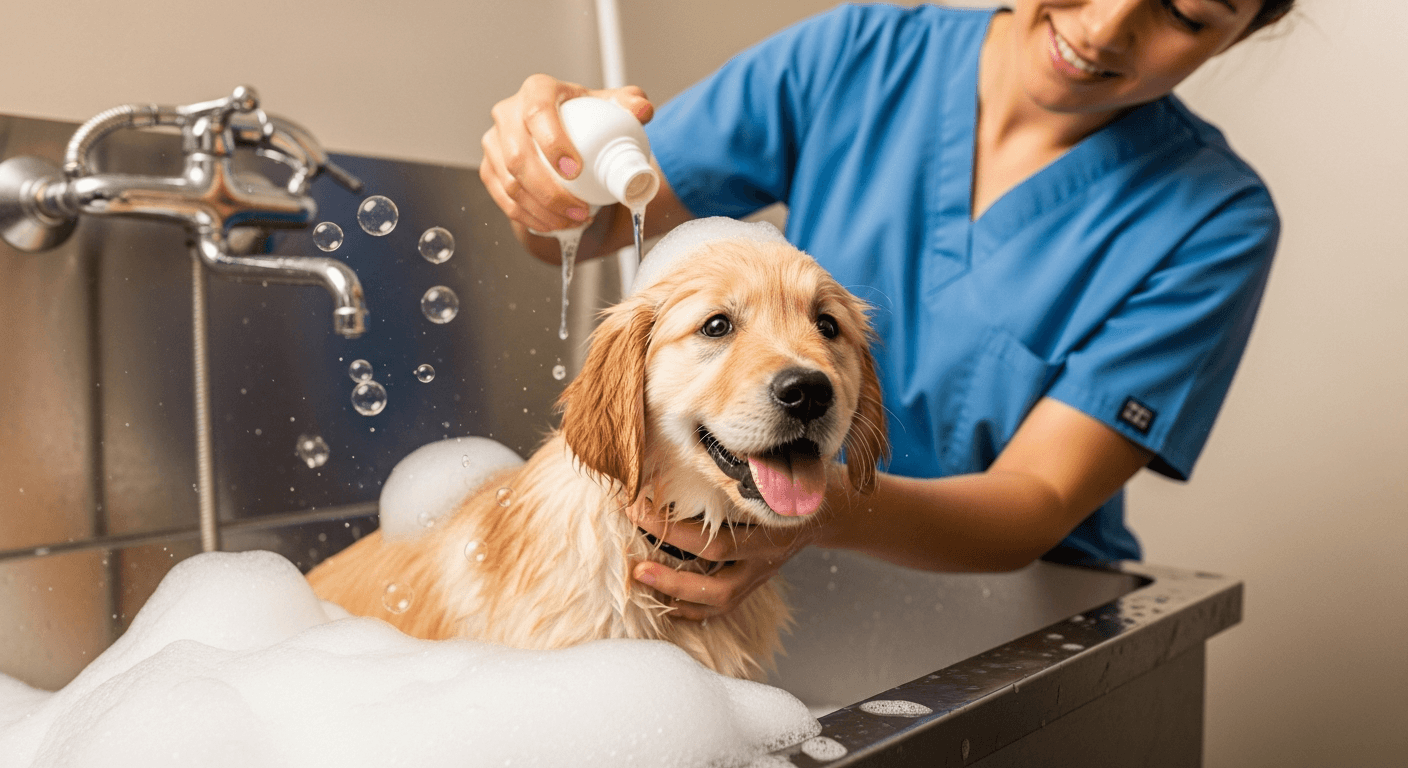
What Is Paw Licking in Dogs?
If your dog constantly licks and chews at their paws — especially between the toes — you're not imagining a problem. Persistent paw licking is a red flag for underlying issues ranging from allergies and yeast infections to anxiety and pain. The fur between the toes often becomes reddish-brown (a staining from saliva), the skin between pads may look raw and irritated, and the smell can become yeasty or funky. Occasional licking after a walk to clean the paws is normal. The obsessive, round-the-clock kind is the signal to investigate.
First 3 Steps You Can Take at Home
- Rinse paws after every outdoor trip: Environmental allergens — pollens, mold spores, grass, road salt, and chemicals — cling to your dog's feet during walks. A quick rinse in a foot bath or with a damp cloth removes these triggers before your dog starts licking. This single habit can dramatically reduce allergy-driven paw licking. Use plain water or a dilute apple cider vinegar rinse (1:10 ratio) for light antifungal benefit.
- Smell and look between the toes: Separate each toe and look at the skin in the webbing. Redness, swelling, dark brown discharge, or a distinct yeasty, corn-chip smell (oddly common and easy to recognize) strongly suggests a yeast infection (Malassezia) — the most common cause of chronic paw licking in dogs. Yeast loves warm, moist environments, which is exactly what dogs create by licking their paws obsessively.
- Rule out pain or a foreign object: Before assuming allergy, check for anything embedded in the paw — grass seeds, thorns, small stones, or cracked pads. If your dog is licking only one paw and flinches when you handle it, pain is the more likely cause. Check for cuts, raw spots, broken nails, or any swelling. A lame dog licking one specific foot needs a vet check to rule out joint pain or injury in that limb.
When to Go to the Vet Immediately
- Visibly infected, swollen, or open wound on the paw
- Limping alongside the licking — could signal a deeper infection or injury
- Licking so relentless it breaks the skin or prevents rest
- Suddenly started after exposure to a specific place or substance
Follow-Up Care Checklist
- ☐ Rinse paws daily after outdoor walks, especially during pollen season
- ☐ Keep the fur between toes trimmed short to reduce moisture trapping
- ☐ Apply pet-safe paw balm if pads appear cracked or dry
- ☐ Consider an Elizabethan collar (cone) short-term to break the lick cycle if skin is damaged
- ☐ Log the pattern: is it year-round or seasonal? After walks or random?
- ☐ Ask your vet about antifungal wipes or sprays if yeast infection is suspected
📋 Log This With TailRounds
Track paw licking frequency and any changes in the TailRounds daily log. Noting walk routes alongside symptom severity can reveal an environmental trigger your vet can target with treatment.
Start Free →Book a Vet Appointment
If paw licking has been going on for more than two weeks or the skin is broken and discolored, a vet check is essential. Yeast and bacterial infections require specific treatments — antifungal medications, medicated wipes, or oral antibiotics — that don't work if you're treating the wrong cause. Book an appointment at Happy Paws Veterinary Clinic — same-week slots are usually available.
Summary for Your Clinic
Pet concern: Dog Licking Paws
Symptoms: Constant paw licking, [one or all four paws], reddish-brown staining, [yeasty smell or not], [skin breakdown or intact]
Home steps taken: Daily paw rinse, checked for foreign objects
Duration: Approximately [X weeks/months]
Questions for vet: Is this yeast or bacteria? Should we do allergy testing? Is a dietary change worth trying?
Related Articles
Continue Reading
 🐕 Dog Health
Dog Itching and Scratching: Likely Reasons
Discover why your dog keeps scratching — from fleas and allergies to dry skin and infections. Practical home care and vet advice.
 🐕 Dog Health
Dog Skin Allergies: Signs and Home Support
How to recognize dog skin allergies, tell them apart from infections, and support your dog at home while working toward a diagnosis.
 🐕 Dog Health
Dog Hot Spots: Early Treatment Steps
What dog hot spots are, why they happen, and the step-by-step approach to treating them at home before they spread.
 🐕 Dog Health
Dog Anxiety When Left Alone: Practical Solutions
Understanding and managing dog separation anxiety — from mild distress to severe panic, with practical strategies that actually work.