
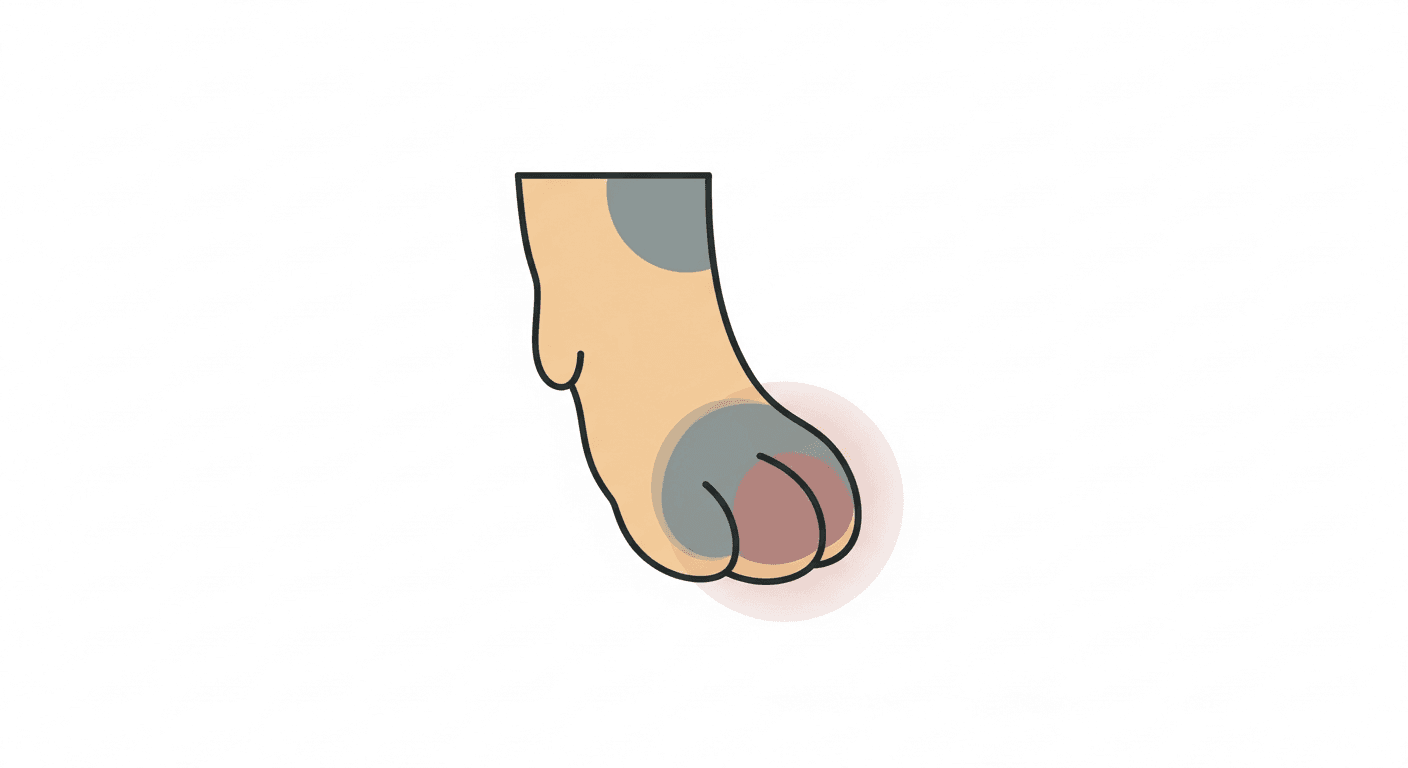
What Causes a Swollen Paw in Dogs?
Paw swelling in dogs has a wide range of causes, from minor to serious. Common culprits include: foreign bodies (grass seeds, thorns, glass), insect stings between the toes, interdigital cysts (benign fluid-filled lumps between the toes, often linked to allergies), bacterial or yeast infections of the paw skin, contact allergies to grass or chemicals, fractured toes, broken or torn nails, and rarely, immune-mediated disease. The pattern of swelling — one toe vs. the whole paw, which paw, whether the dog is licking it constantly — helps narrow down the cause before you even visit the vet.
First 3 Steps You Can Take at Home
- Examine every part of the paw carefully: Separate each toe, look between the pads, check under and around every nail, and examine the entire pad surface. Feel gently for anything embedded. Foreign bodies like grass seeds can enter through tiny wounds and be almost invisible from the surface. Look for: a small puncture wound with swelling around it (foreign body or sting), a soft, red, fluid-filled bump between the toes (interdigital cyst), cracked or bleeding skin between pads (contact dermatitis or infection), or visible nail trauma.
- Soak the paw in warm salt water: A 10-minute foot soak in warm water with a small amount of table salt (approximately half a teaspoon per cup) can help draw out minor infections, soothe inflammation, and clean the paw gently. This is safe and helpful while you assess whether a vet visit is needed. Dry the paw thoroughly afterward — leaving moisture between the toes makes yeast and bacterial infections worse.
- Prevent licking while you monitor: Licking makes almost every paw problem worse by introducing more bacteria, keeping the area moist, and preventing any healing. A cone or paw bootie is your friend here. Even a few hours without licking can visibly improve mild paw problems.
When to Go to the Vet Immediately
- Your dog won't put any weight on the paw at all
- Visible wound with discharge, pus, or obvious deep trauma
- Suspected foreign body that you can't easily see or remove
- Swelling extending up the leg rather than confined to the paw
Follow-Up Care Checklist
- ☐ Daily paw rinse to keep clean during recovery
- ☐ Cone or bootie to prevent licking
- ☐ Monitor swelling daily — is it improving, stable, or worsening?
- ☐ Trim long inter-toe hair to improve airflow and reduce moisture trapping
- ☐ Review flea and allergy management if interdigital cysts are recurring
📋 Log This With TailRounds
Log paw check results and treatment dates in the TailRounds daily log. For dogs with recurrent interdigital cysts, a log often reveals seasonal or dietary patterns that help target the underlying cause.
Start Free →Book a Vet Appointment
Paw swelling that doesn't improve after 48 hours of home care, or that returns in the same spot repeatedly, needs investigation. Interdigital cysts in particular can become severely infected if left untreated. Book an appointment at Happy Paws Veterinary Clinic — same-week slots are usually available.
Summary for Your Clinic
Pet concern: Dog Swollen Paw
Which paw and location: [specific toe/whole paw], weight-bearing: [yes/no]
Appearance: [cyst/wound/diffuse swelling], licking: [constant/occasional]
Home steps: [soak/cone/clean]
Questions for vet: Is this an interdigital cyst? Is there a foreign body? Could allergies be the underlying cause?
Related Articles
Continue Reading
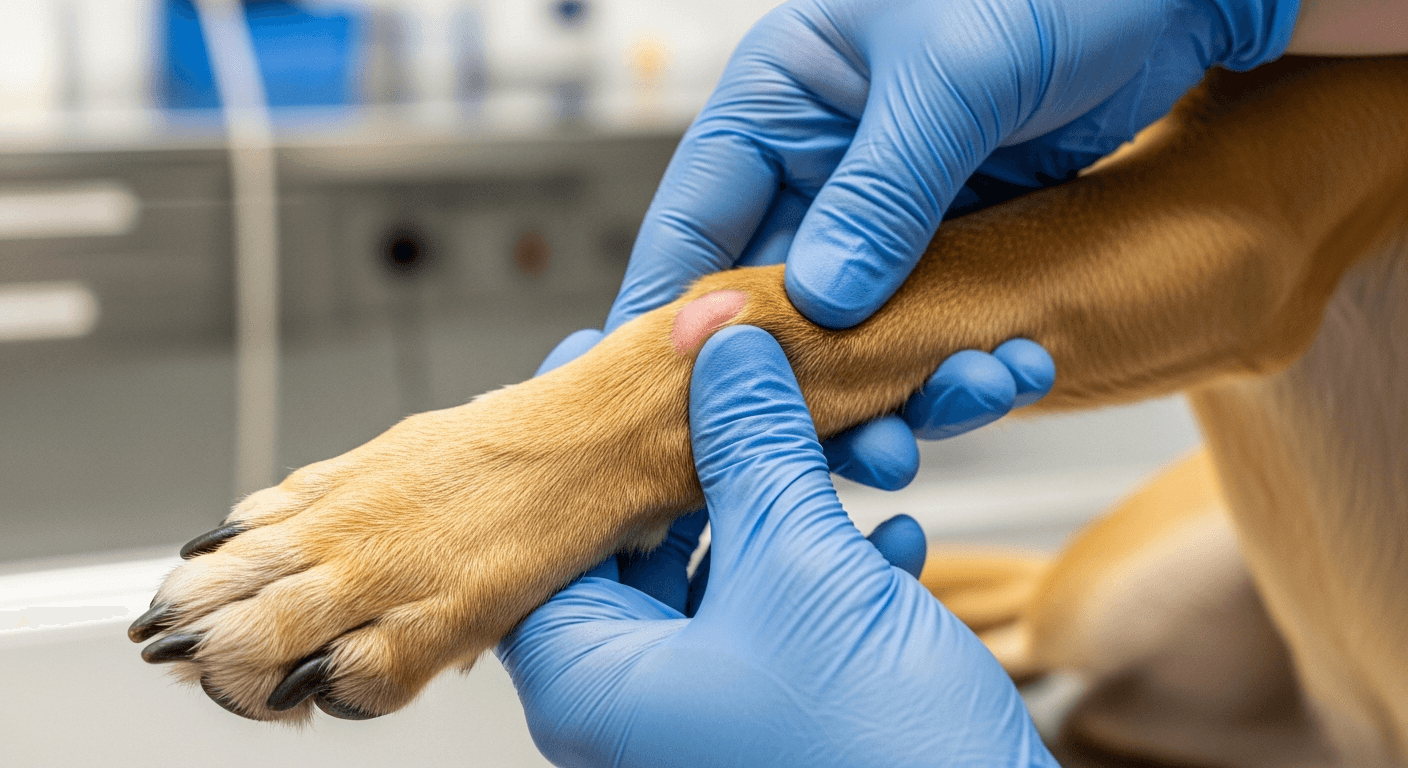 🐕 Dog Health
Dog Limping Suddenly: Causes and What to Do
Sudden limping in dogs — from paw injuries to joint problems. How to assess severity at home and when to go to the vet.
 🐕 Dog Health
Dog Licking Paws Constantly: Causes and Care
Why dogs obsessively lick their paws, what it usually means, and how to get them to stop — with home care and vet guidance.
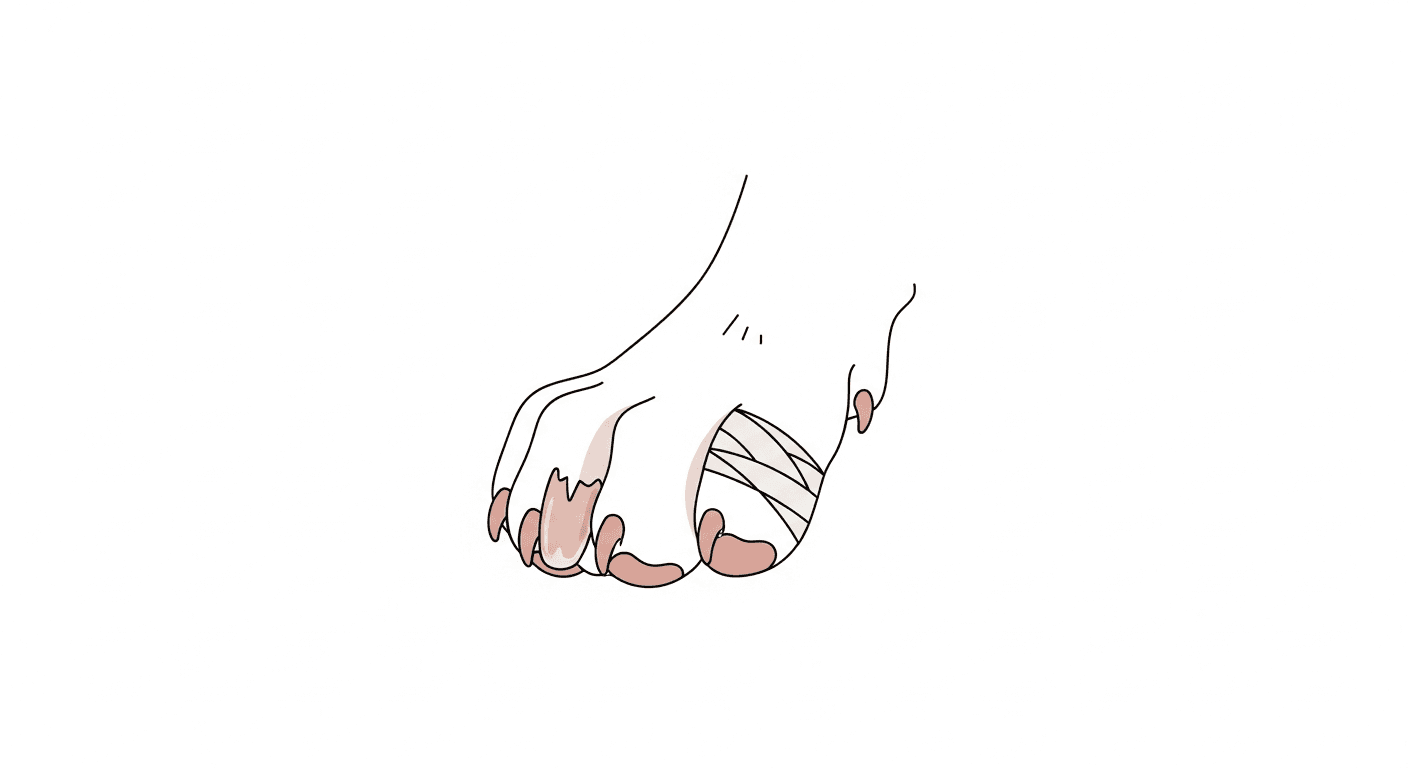 🦴 Dog Care
Dog Broken Nail Home Care
What to do when your dog breaks a nail — how to manage pain, stop bleeding, prevent infection, and when a vet visit is needed.