
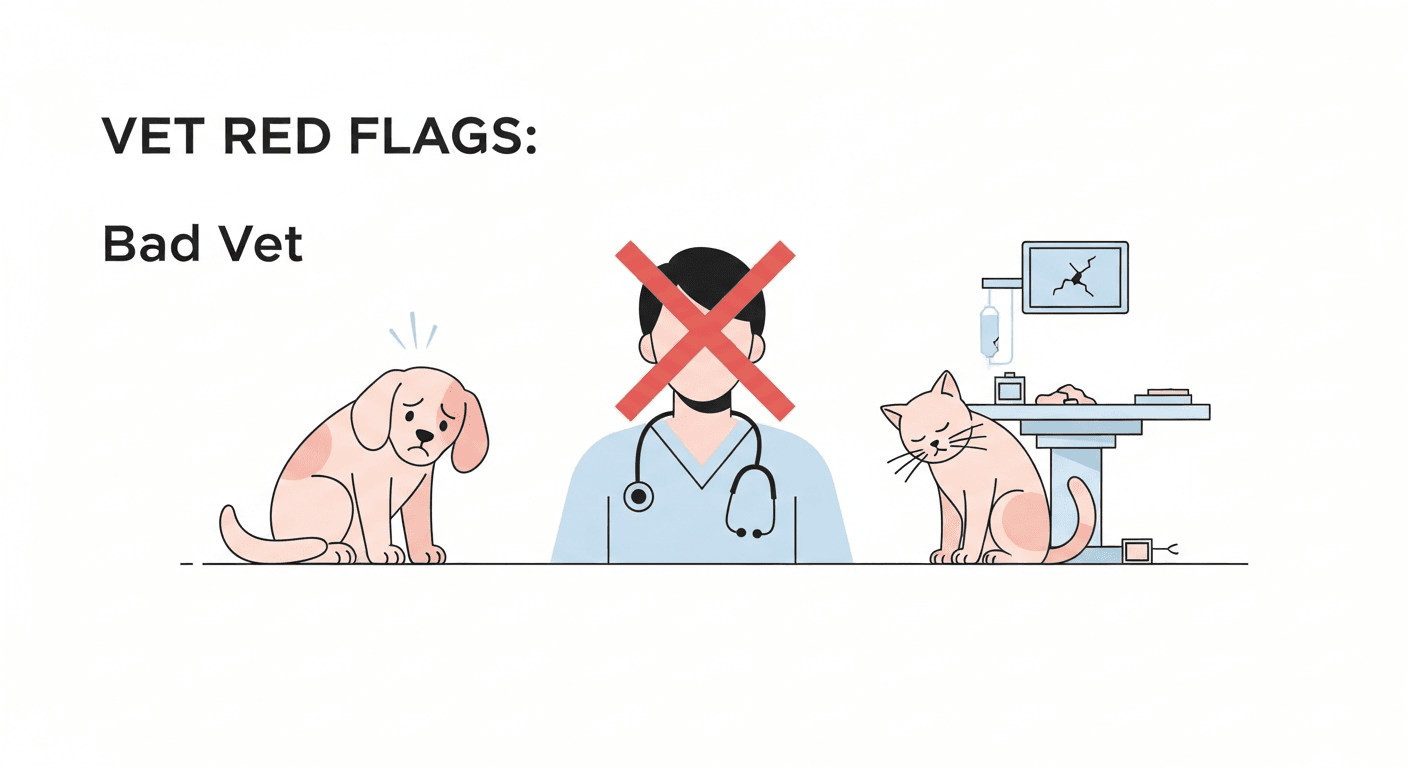
Why This Matters
The vast majority of veterinarians are dedicated, skilled professionals who genuinely care about animal welfare. However, like any profession, veterinary medicine includes practitioners who are poorly trained, burned out, unethical, or simply not a good fit for your needs. Knowing the warning signs helps you protect your pet and find care that truly serves them.
This article is not about a vet who gave you bad news, recommended an expensive test, or used terms you did not understand. These are not red flags. The red flags below are about clinical standards, communication, and ethics. Find a clinic near you if you decide a change is needed.
Clinical Red Flags
These are concerns about the quality of medical care itself:
- Diagnosis without examination: A vet who prescribes medication or makes a diagnosis over the phone without ever examining the pet — or while barely examining them — is practicing below standard.
- No pre-anesthetic bloodwork or monitoring: Any clinic that performs surgery without pre-anesthetic screening and continuous anesthesia monitoring is cutting corners that put your pet at risk.
- Dismissing your concerns without investigation: "He's just old" or "She's probably just stressed" said without any diagnostic workup when real symptoms are present is not acceptable clinical care.
- Refusal to provide a diagnosis or treatment rationale: You deserve to know what your vet thinks is wrong and why they are recommending a specific treatment. Refusal to explain is a serious problem.
- Consistently failed diagnoses: No vet is infallible, but a pattern of missing diagnoses that another vet identifies is a meaningful concern.
- No pain management offered post-procedure: Any clinic performing surgery or dental extraction without providing appropriate post-operative pain control is not meeting the standard of care.
Communication and Ethics Red Flags
- Refusing to release medical records: You are legally entitled to your pet's records. A clinic that resists, delays unreasonably, or charges excessive fees for records access is behaving unethically.
- High-pressure sales tactics: A vet who applies strong emotional pressure to immediately purchase expensive treatments or supplements without allowing time for consideration or second opinions.
- Dismissive or condescending communication: A vet who makes you feel stupid for asking questions, laughs at your concerns, or is impatient with your anxiety about your pet.
- Surprise charges without prior estimate: Significant charges for services not discussed in advance — especially with no prior estimate provided — signal poor transparency.
- Discouraging second opinions: A confident, ethical vet will not object to you seeking a second opinion. Actively discouraging this is a major red flag.
- Prescribing medications without a valid VCPR: Prescribing drugs for a pet they have never examined violates the veterinarian-client-patient relationship requirement.
What to Do If You Spot Red Flags
- Trust your instincts — if something feels wrong, it often is
- Request your pet's complete records immediately and store them safely in My Pets on TailRounds
- Seek a second opinion before agreeing to expensive treatments recommended by a vet you are uncertain about
- If you believe serious harm occurred, contact your state or national veterinary regulatory body to file a complaint
- Leave honest, factual reviews on credible platforms to help other pet owners
See our guide on how to choose the right vet to find a practice that earns your trust from the start.
Continue Reading
 🏥 Vet Guide
How to Choose the Right Vet
Choosing the right veterinarian is one of the most important decisions you will make for your pet. Here is a practical framework for making a great choice.
 🏥 Vet Guide
When and How to Get a Second Vet Opinion
Getting a second opinion is a responsible thing to do for major diagnoses or treatments. Here is how to approach it professionally without damaging the vet relationship.
 🏥 Vet Guide
How to Communicate Effectively With Your Vet
Great communication with your vet leads to better care for your pet. Learn how to describe symptoms accurately, ask productive questions, and advocate confidently.
 🏥 Vet Guide
Understanding Your Vet Bill
Vet bills can feel overwhelming and confusing. Learn how to read an itemized invoice, what drives costs, and how to manage veterinary expenses responsibly.