
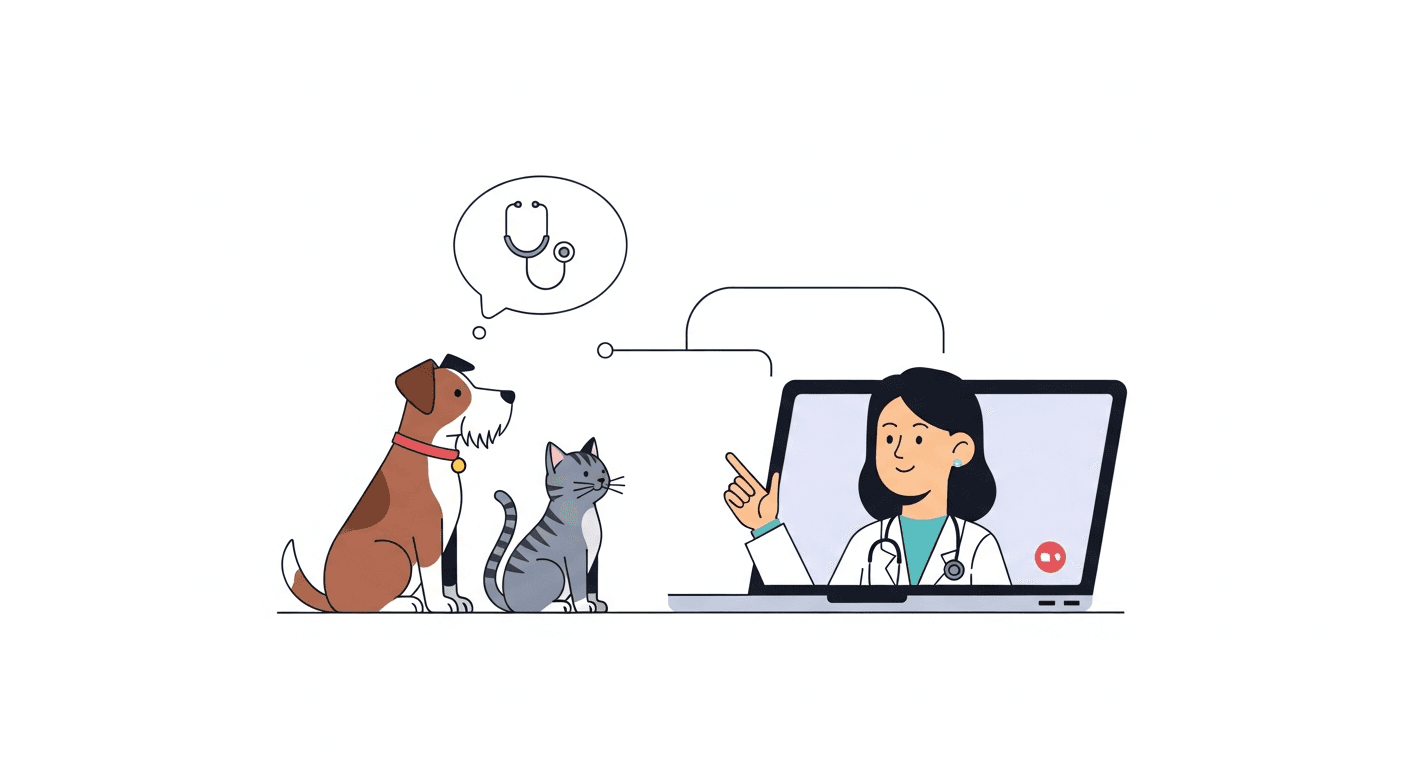
What Is Veterinary Telehealth?
Veterinary telehealth encompasses a range of remote services: video consultations, text-based advice platforms, and AI-powered triage tools. These services have expanded dramatically in recent years, driven by consumer demand for convenient access to veterinary guidance outside of clinic hours and geography. They fill a genuine gap — particularly for behavior questions, minor symptom assessment, and non-urgent guidance when a clinic appointment is not immediately available.
The TailRounds AI Triage tool is an example of this kind of digital health support — helping you assess whether symptoms you are observing are urgent, warrant a same-day call, or can wait for a scheduled appointment.
What Telehealth Can Help With
Online vet services are genuinely useful for:
- Triage and urgency assessment: "My dog is limping — does this need emergency care tonight or can it wait until morning?" is exactly the kind of question telehealth handles well.
- Behavioral questions: Aggression, separation anxiety, house training, destructive behavior — behavioral guidance works well without physical examination.
- Nutrition and diet questions: Food recommendations, ingredient questions, weight management guidance.
- Post-visit follow-up: "The incision looks like this (photo) — is this normal healing?" is an excellent use of telehealth.
- Medication questions: Missed dose guidance, side effect questions, interaction concerns.
- Managing known chronic conditions: If your pet has a diagnosed condition and you need guidance on a specific symptom change, telehealth with a vet who can access your pet's history can be very valuable.
- Mental health support for pet owners: End-of-life decisions, grief support — some telehealth services specifically offer these.
What Telehealth Cannot Replace
Online consultations have clear and important limitations:
- Physical examination — a vet cannot feel an abdomen, listen to a heart, or assess pain response remotely
- Diagnostics — no blood work, X-rays, urinalysis, or cultures can be performed
- Legally valid prescriptions in most jurisdictions require an established VCPR (Veterinarian-Client-Patient Relationship), which typically requires at least one in-person examination
- Emergency assessment — no remote service should replace going to an emergency clinic when life-threatening signs are present
Be skeptical of any online service that promises diagnosis, prescriptions, or definitive answers without examining your pet. A good telehealth service knows its limits and directs you to in-person care when needed.
How to Use Telehealth Effectively
- Have clear, well-lit photos or short videos of the symptom ready before the consultation
- Know your pet's weight, current medications, and any relevant history
- Be specific — describe when symptoms started, how they have changed, and any potential exposures or triggers
- Follow up with your regular vet if the telehealth consultation recommends an in-person visit
The best use of telehealth is as a supplement to — not a replacement for — your established relationship with a regular clinic. Use Book a vet appointment at Happy Paws for in-person care, and use telehealth tools like the TailRounds AI Triage for guidance between visits.
Continue Reading
 🏥 Vet Guide
When to Go to an Emergency Vet
Knowing which symptoms require emergency veterinary care versus monitoring at home can save your pet's life. Learn the clear warning signs that demand immediate action.
 🏥 Vet Guide
How to Communicate Effectively With Your Vet
Great communication with your vet leads to better care for your pet. Learn how to describe symptoms accurately, ask productive questions, and advocate confidently.
 🏥 Vet Guide
What to Expect at Your First Vet Visit
New pet? First vet visit does not need to be stressful. Here is exactly what happens, what information to bring, and how to get the most from the appointment.
 🏥 Vet Guide
When and How to Get a Second Vet Opinion
Getting a second opinion is a responsible thing to do for major diagnoses or treatments. Here is how to approach it professionally without damaging the vet relationship.