
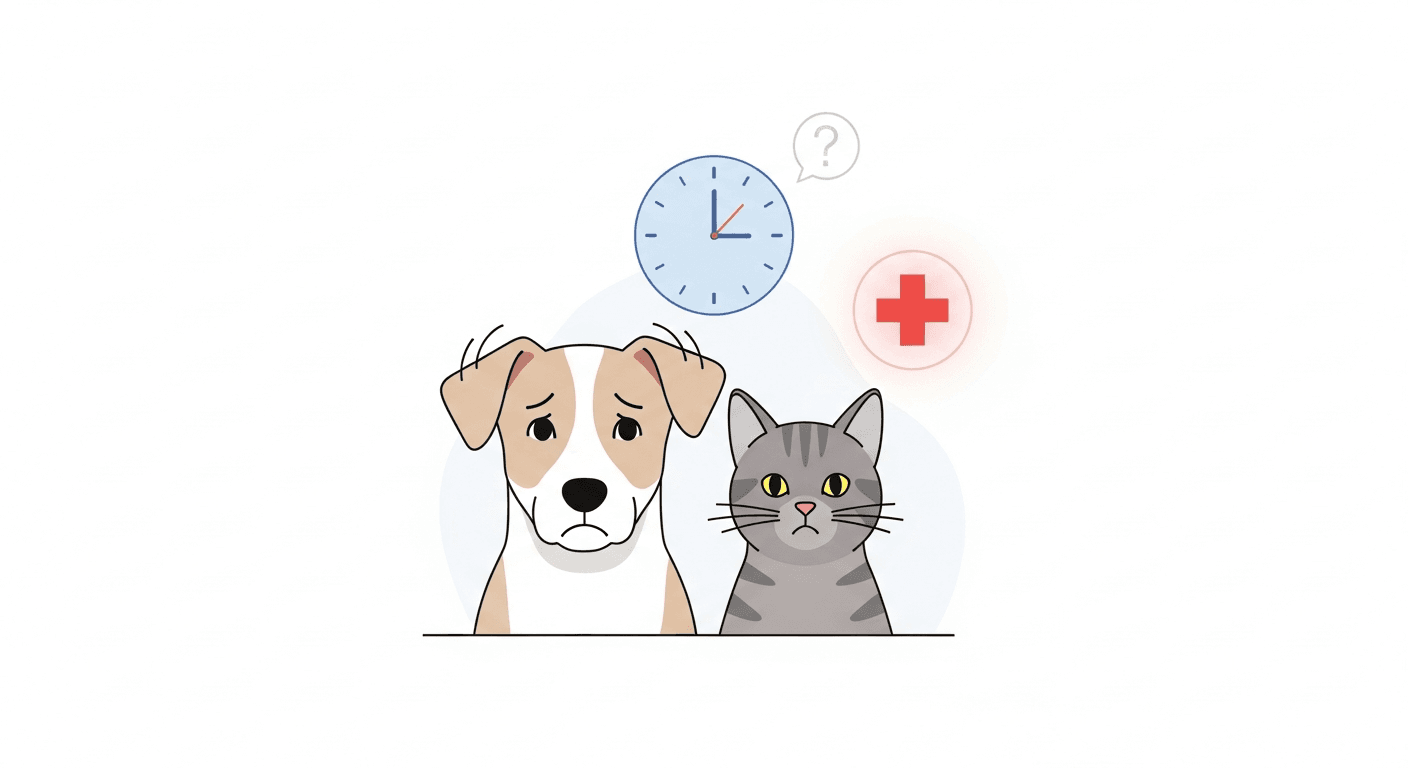
The Life-or-Death Decision
Every pet owner will face moments of uncertainty: is this serious enough to go to the emergency vet now, or can it wait until morning? Getting this judgment wrong in either direction has consequences — waiting too long when your pet is critically ill, or making multiple unnecessary emergency visits that drain finances and create unnecessary stress for your pet.
The following guide is designed to help you make this call with more confidence. When genuinely uncertain, always err toward going — most emergency vets would rather see a pet that turns out to be fine than have an owner describe a preventable death. You can also use the TailRounds AI Triage tool for rapid symptom assessment before making your decision.
Go to an Emergency Vet Immediately: No Exceptions
These situations are life-threatening and require immediate emergency care. Do not call ahead to ask — go directly:
- Respiratory distress: Labored breathing, open-mouth breathing in cats, gasping, blue or purple gums or tongue
- Collapse or inability to stand: Sudden weakness, falling over, unresponsiveness
- Bloated, hard abdomen with unproductive retching (dogs): Classic signs of gastric dilatation-volvulus (GDV/bloat) — can be fatal within hours
- Suspected poisoning or toxin ingestion: Rat poison, human medications, chocolate, xylitol, grapes/raisins, certain plants, antifreeze
- Seizures lasting more than 5 minutes, or multiple seizures in 24 hours
- Severe trauma: Hit by a car, fall from height, animal attack, crush injury
- Suspected broken bones
- Urinary blockage (especially male cats): Straining to urinate, crying out, no urine production — this is fatal within 24–48 hours
- Severe eye injury: Lacerations, protrusion, sudden vision loss
- Pale, white, or gray gums — indicates shock or severe anemia
- Prolonged vomiting or diarrhea with blood
- Snake bite or suspected venomous insect sting with rapid swelling
- Dystocia (difficulty giving birth) — mother straining without delivering for more than 1 hour
Call Your Vet or Use Triage: Same-Day or Next-Day Attention Needed
These situations are serious but may allow time to call your regular vet first (during business hours) or an emergency line:
- Vomiting or diarrhea more than 2–3 times in a few hours, without blood
- Limping that does not improve after rest, or sudden severe lameness
- Eye redness, discharge, or squinting
- Suspected ear infection (head shaking, scratching at ear, odor)
- Suspected ingestion of a non-toxic but potentially obstructing foreign body
- Loss of appetite for more than 24 hours
- Mild swelling or a new lump you have not seen before
Can Wait for a Scheduled Appointment
- Mild sneezing or minor eye discharge without distress
- Very mild limping that resolves with rest
- Slight coat changes or minor skin irritation without self-trauma
- Minor behavior changes without physical symptoms
Know the location of your nearest 24-hour emergency veterinary hospital before you ever need it — look it up today and save the number in your phone. Store it in the My Pets on TailRounds emergency contact section for each of your pets.
Continue Reading
 🏥 Vet Guide
Pet Health Insurance: Is It Worth It?
Pet insurance can protect you from financial disaster when your pet gets sick or injured. Here is how it works, what to look for, and how to decide if it is right for you.
 🏥 Vet Guide
How to Communicate Effectively With Your Vet
Great communication with your vet leads to better care for your pet. Learn how to describe symptoms accurately, ask productive questions, and advocate confidently.
 🏥 Vet Guide
Recognizing and Managing Pain in Pets
Pets hide pain instinctively. Learn the subtle signs of pain in dogs and cats, what options exist for management, and how to advocate effectively for your pet.
 🏥 Vet Guide
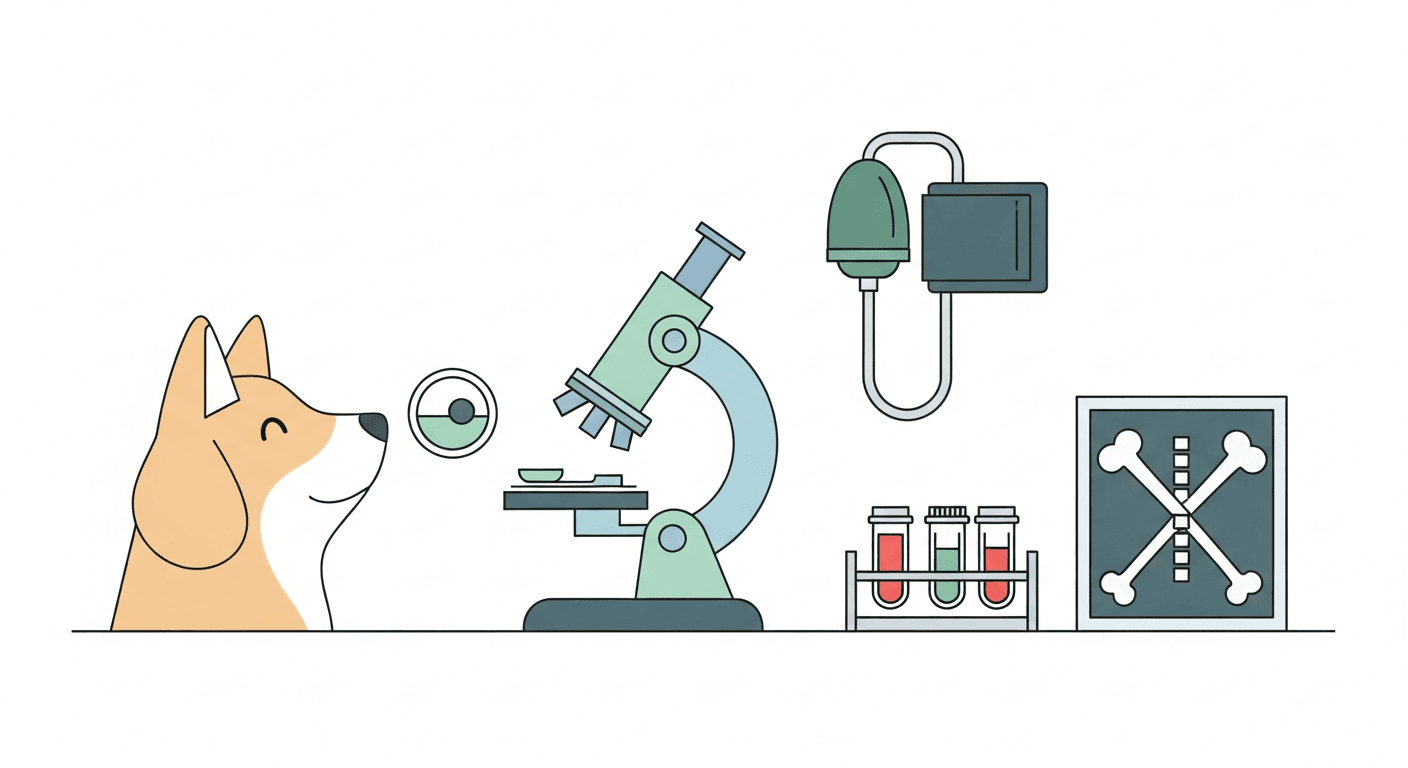
Common Diagnostic Tests: Blood Work, X-Rays, Ultrasound
Understanding what your vet is looking for with each diagnostic test helps you make informed decisions. Here is a plain-language guide to the most common tests.