
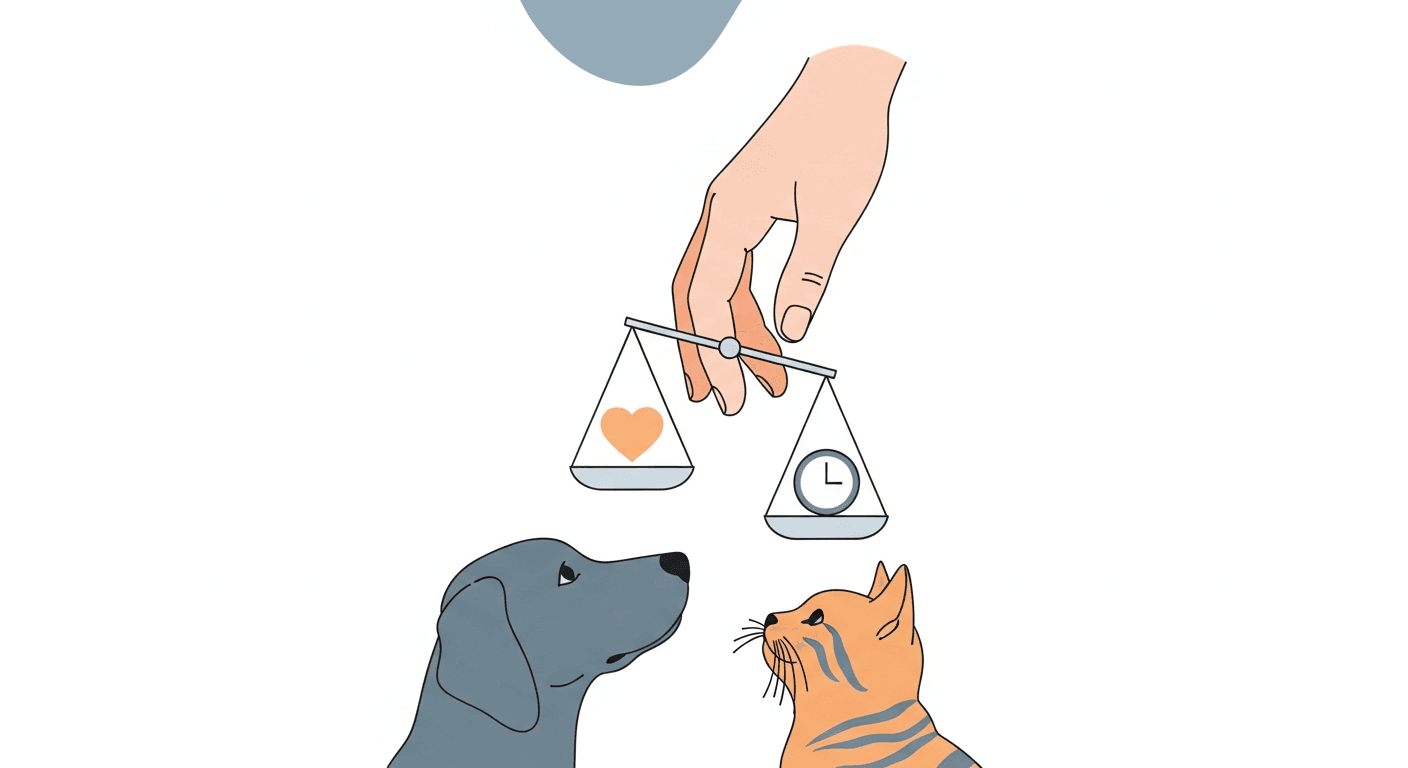
The Burden of This Decision
No part of pet ownership is harder than deciding when it is time to say goodbye. Unlike human end-of-life situations, pet owners hold the unique responsibility — and the unique gift — of being able to choose a peaceful, humane death for their companion when suffering becomes the predominant experience. This is both a profound responsibility and, many argue, the final act of love for a pet whose quality of life has irrevocably declined.
There is no single right answer or perfect timing. The goal is to make this decision thoughtfully, with your pet's experience as the primary guide — neither extending life beyond when it is still truly life, nor ending it before that threshold has been crossed. Your veterinarian is your most important partner in this process. Book a vet appointment at Happy Paws to have an honest, compassionate conversation about your pet's prognosis and quality of life.
Quality of Life Assessment Frameworks
Several quality-of-life scales have been developed to give structure to an inherently difficult assessment. The most widely used is the HHHHHMM scale (developed by Dr. Alice Villalobos), which evaluates:
- Hurt: Is pain adequately controlled? Is the pet breathing comfortably?
- Hunger: Is the pet eating enough to sustain body weight?
- Hydration: Is the pet adequately hydrated?
- Hygiene: Can the pet be kept clean and comfortable, free from wounds, pressure sores, or infections from incontinence?
- Happiness: Does the pet express interest in life — in their family, favorite activities, or sensory pleasures?
- Mobility: Can the pet move enough to satisfy basic needs — shifting position, eliminating without falling into waste, moving to food and water?
- More good days than bad: Overall, does the pet experience more comfortable, engaged days than suffering, confused, or distressed ones?
Each category is scored 1–10. A total above 35 generally indicates acceptable quality of life; below 35 suggests suffering is outweighing wellbeing. This is a guide, not a formula — no number overrides clinical judgment and your intimate knowledge of your pet.
The Role of the Calendar
Many palliative care vets recommend keeping a journal or calendar during the end-of-life period: mark each day as a "good day" (comfortable, engaged, enjoying some pleasure) or a "bad day" (pain, distress, no interest in surroundings). Use the TailRounds Daily Log for this purpose. When bad days begin to consistently outnumber good days, that pattern — more than any single moment — often signals that the time has come.
What the Process Involves
Veterinary euthanasia is a peaceful, painless process:
- An IV catheter is placed (ideally with sedation given first to ensure the pet is calm and comfortable)
- A sedative may be given to create profound relaxation before the final injection
- An overdose of a barbiturate (pentobarbital) is administered IV — it acts within seconds, causing unconsciousness and then cardiorespiratory arrest
- The pet experiences no pain and no distress — they simply go to sleep, quickly and gently
You may choose to be present or not — both choices are valid. Many owners feel strongly that being present is the final act of love, ensuring their pet feels safe and not alone. Others find they cannot be in the room and that is equally valid. Discuss in advance what options the clinic offers — some vets provide home euthanasia, which spares the stress of a clinic visit for the pet and allows the family to be in a familiar, peaceful environment.
Continue Reading
 🏥 Vet Guide
Palliative and Hospice Care for Pets
When a pet has a life-limiting illness, palliative and hospice care shift focus to quality of life and comfort. Here is what this care involves and how to navigate it.
 🏥 Vet Guide
Recognizing and Managing Pain in Pets
Pets hide pain instinctively. Learn the subtle signs of pain in dogs and cats, what options exist for management, and how to advocate effectively for your pet.
 🏥 Vet Guide
How to Communicate Effectively With Your Vet
Great communication with your vet leads to better care for your pet. Learn how to describe symptoms accurately, ask productive questions, and advocate confidently.
 🏥 Vet Guide
Managing Your Pet's Medical Records
A complete, organized medical record protects your pet at every life stage. Here is how to collect, store, and use your pet's health records effectively.