
Why Cats Hate Vet Visits (and What You Can Do About It)
Cats are territorial animals whose sense of security is tied to familiar scents, environments, and routines. A vet visit violates all of these: the carrier appears without warning, the car journey introduces strange motion and sounds, and the clinic assaults them with unfamiliar smells (including other animals and clinical chemicals), novel people handling them in ways they did not consent to, and the sounds of other stressed animals.
The good news is that much of this distress is not inevitable. With the right approach, you can significantly reduce your cat's fear response — making vet visits safer, more accurate, and far less stressful for everyone involved. Many cats that are labeled "aggressive at the vet" are simply terrified, and reducing fear changes behavior dramatically.
Carrier Training: The Foundation
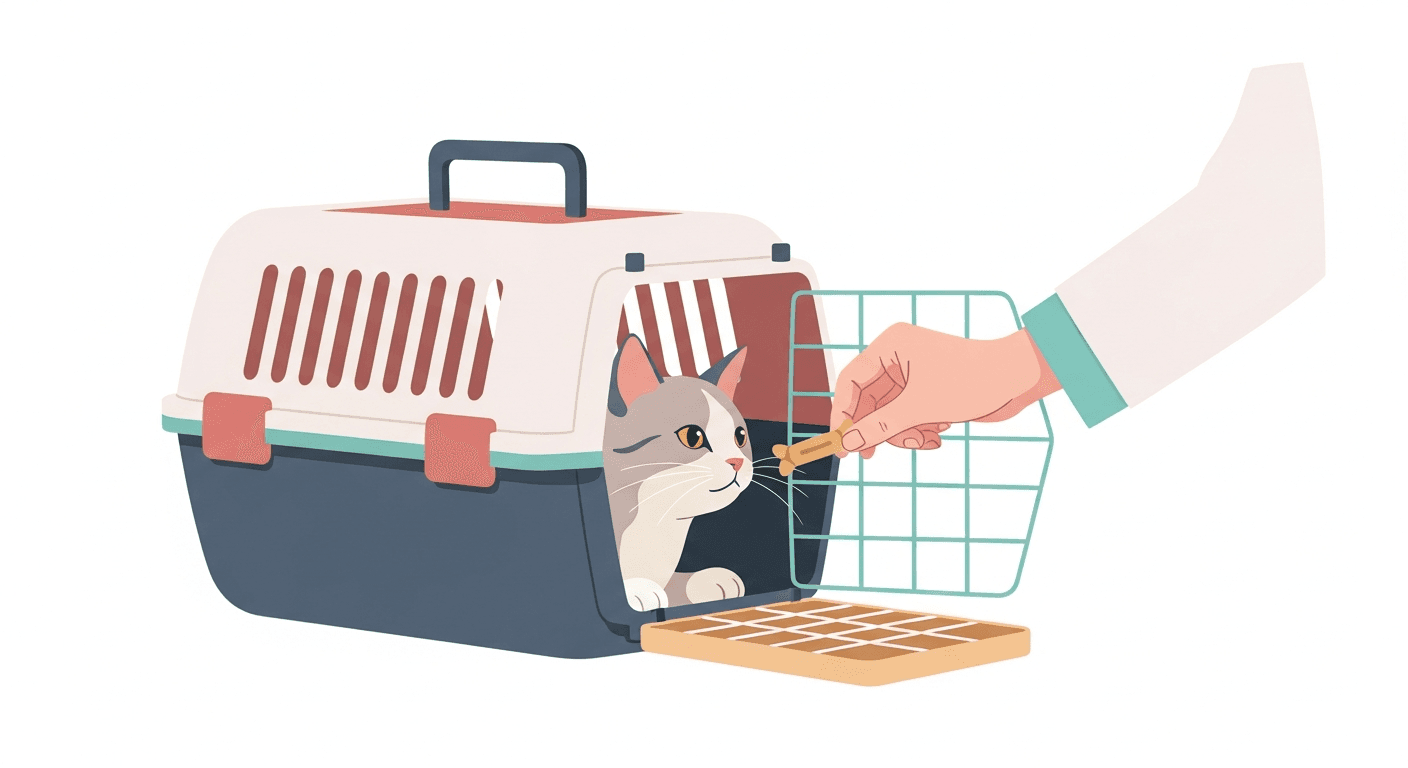
The carrier should never only appear on vet visit days. A cat that sees the carrier only as a threat signal will be difficult to load and already anxious before leaving the house. The solution is carrier desensitization:
- Leave the carrier out in the home permanently — in a room where the cat spends time
- Line it with a familiar, unwashed blanket or piece of your clothing
- Place treats inside the carrier regularly — let the cat choose to enter and investigate on their own terms
- Feed meals inside or near the carrier
- Practice closing the carrier door with the cat inside for brief periods, starting with seconds and building to minutes, then carrying it short distances around the house before any car trip
This process takes weeks to months but is transformative. A cat that chooses to enter their carrier voluntarily is a fundamentally different patient from one that is wrestled in at the last minute.
Choosing the Right Carrier
- Top-loading carriers: Allow the vet or technician to examine the cat from above, lifting the top off and assessing the cat in the bottom half without requiring forcible removal. Many fearful cats are significantly calmer when they can stay in the familiar-smelling carrier bottom during examination.
- Sturdy construction: Soft carriers that collapse under a cat's weight create instability that increases stress.
- Secure latching: The carrier must not open under impact or stress — an escaped cat in a car or clinic is dangerous.
- Appropriate size: Large enough for the cat to turn around and lie down comfortably; not so large that they slide around during transport.
Pre-Visit Medication: Gabapentin Is a Game Changer
For cats with significant vet visit anxiety, gabapentin given 1.5–2 hours before the appointment produces notable anxiolytic (anxiety-reducing) effects without sedation. The cat remains awake and responsive but is calmer and less reactive to handling. Studies have demonstrated reduced fear scores and improved exam quality in cats given gabapentin before veterinary appointments.
Ask your vet at a routine appointment about gabapentin for pre-visit use. A prescription can be filled in advance and kept on hand for all future appointments. Some vets now routinely prescribe this for any cat with a history of vet anxiety.
In the Clinic: Strategies That Help
- Cover the carrier with a towel to reduce visual stimulation in the waiting room
- Spray the carrier interior with Feliway (feline synthetic facial pheromone) 30 minutes before placing the cat inside — not all cats respond, but many do
- Ask the receptionist if you can wait in the car rather than the waiting room and be called when the exam room is ready
- Bring a towel with home scent that can be placed on the exam table — the unfamiliar cold steel surface adds stress
- Bring high-value treats to use during the exam — many cats will accept treats even when slightly stressed, helping create positive associations
- Request that minimal restraint techniques be used — a calm cat handled gently is safer than a terrified cat forcibly restrained
Track how each vet visit goes in the TailRounds Daily Log — noting what preparation strategies worked — so you can refine your approach over time.
Continue Reading
 🏥 Vet Guide
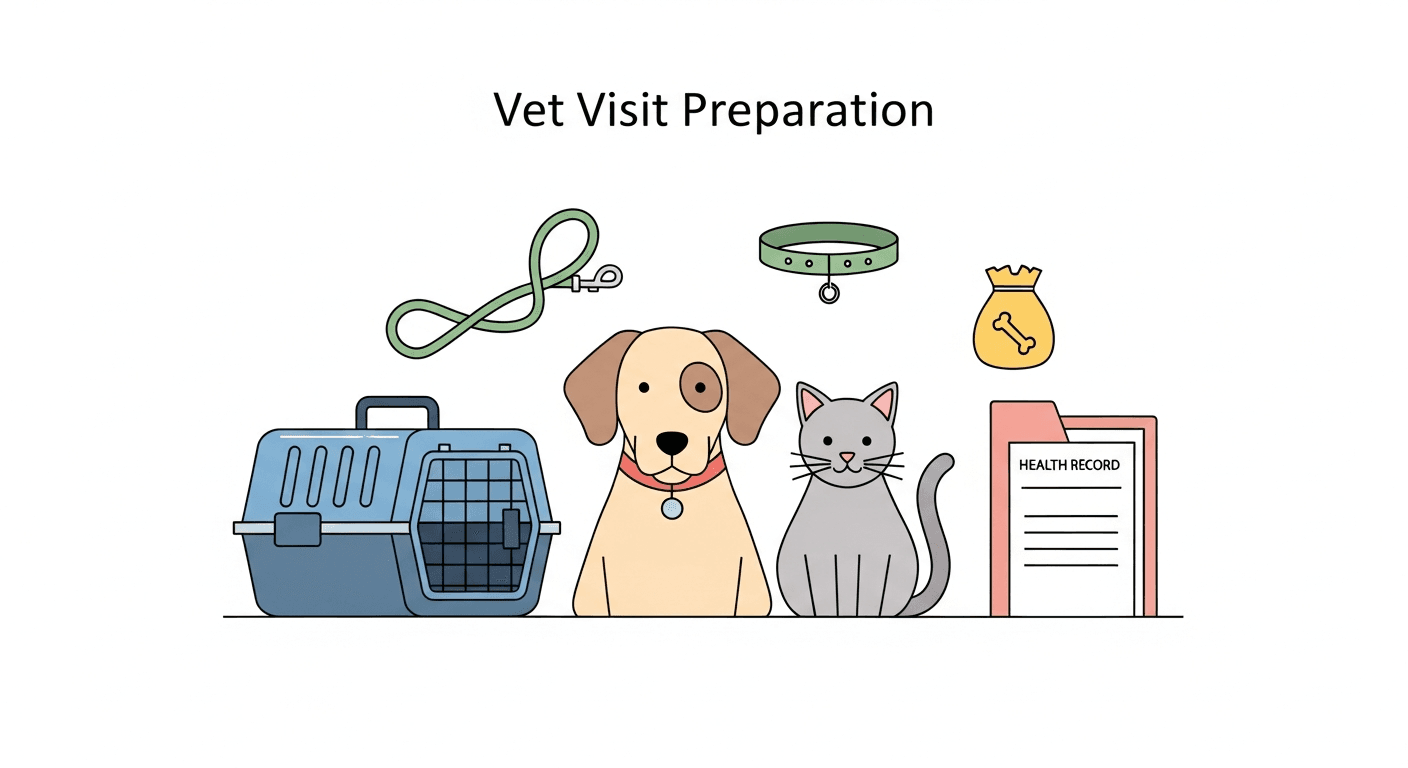
How to Prepare Your Pet for a Vet Visit
Reduce stress for your pet and yourself at every vet appointment. Practical preparation strategies for dogs, cats, and anxious pets of any species.
 🏥 Vet Guide
What to Expect at Your First Vet Visit
New pet? First vet visit does not need to be stressful. Here is exactly what happens, what information to bring, and how to get the most from the appointment.
 🏥 Vet Guide
Dog Anxiety at the Vet: Tips That Work
Many dogs dread vet visits. Learn how to reduce anxiety before and during appointments so your dog is calmer, safer, and easier to examine.
 🏥 Vet Guide
How to Communicate Effectively With Your Vet
Great communication with your vet leads to better care for your pet. Learn how to describe symptoms accurately, ask productive questions, and advocate confidently.