
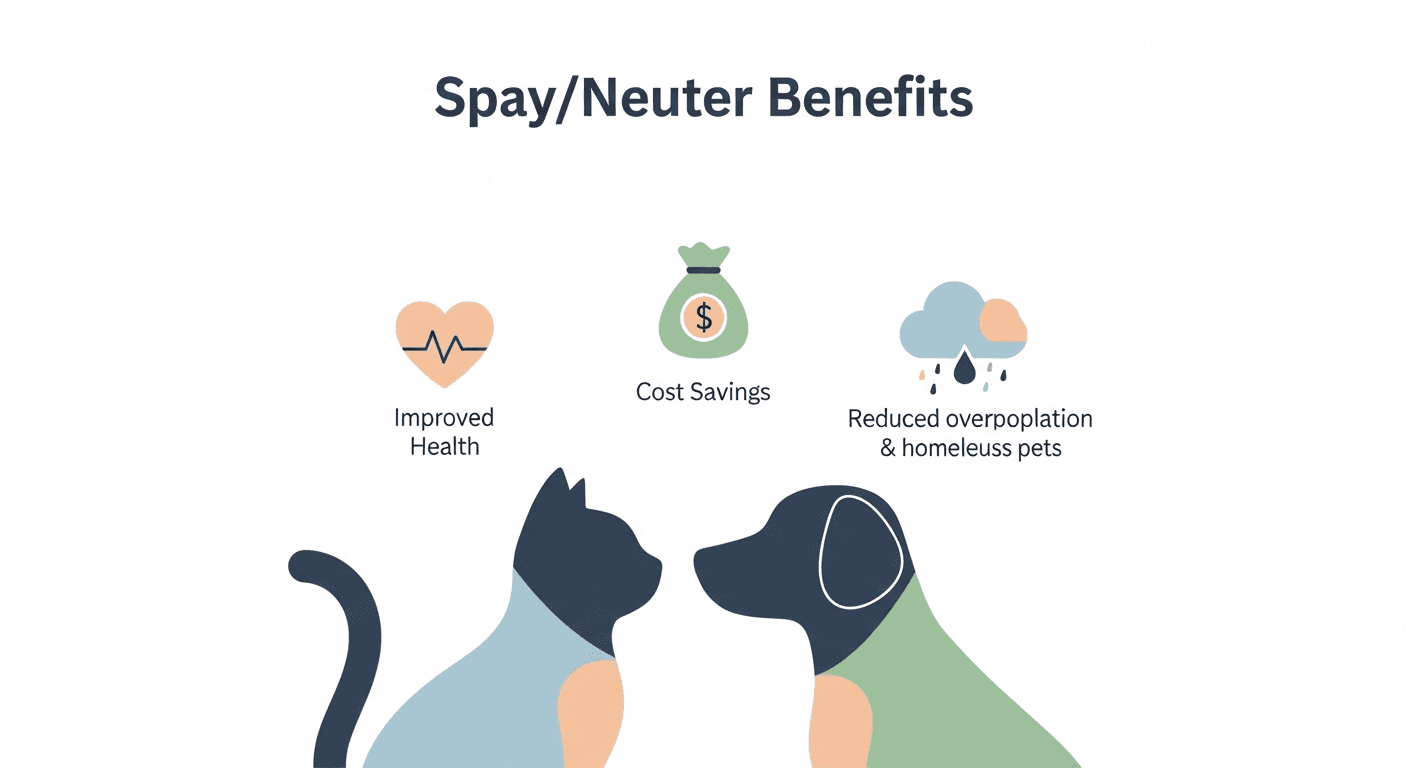
What Spaying and Neutering Mean
Spaying (ovariohysterectomy) is the surgical removal of a female pet's ovaries and usually the uterus, eliminating reproductive capability. Neutering (orchidectomy) is the removal of a male pet's testicles. Both procedures require general anesthesia and are among the most commonly performed veterinary surgeries in the world, with excellent safety records when done by a qualified veterinarian.
Beyond population control, these procedures deliver measurable health and behavioral benefits that extend the quality and potentially the length of your pet's life. If you are considering spaying or neutering your pet, book a vet appointment at Happy Paws to discuss timing and what to expect.
Health Benefits of Spaying (Female Pets)
- Eliminates uterine infection (pyometra): Pyometra is a life-threatening infection of the uterus that occurs in unspayed females. It often requires emergency surgery. Spaying eliminates this risk entirely.
- Dramatically reduces mammary tumor risk: Dogs spayed before their first heat have less than a 0.5% risk of mammary cancer. After two heats, the risk rises to about 26%. Early spaying is one of the most effective cancer prevention strategies available.
- Prevents ovarian and uterine cancers: Organs removed cannot develop cancer.
- Eliminates heat cycles: Heat cycles cause behavioral changes, attract unneutered males, and can result in unintended pregnancy.
Health Benefits of Neutering (Male Pets)
- Eliminates testicular cancer: Testicular cancer is common in intact male dogs, particularly those with retained testicles (cryptorchidism). Neutering removes this risk.
- Reduces prostate disease risk: Benign prostatic hyperplasia and prostatitis are common in intact male dogs. Neutering dramatically reduces both.
- Reduces roaming and fighting behavior: Testosterone drives males to roam in search of mates, increasing risks of road accidents, fights, and exposure to infectious disease.
- May reduce marking and humping behavior: Especially effective when done before these behaviors are established.
When to Spay or Neuter: Timing Matters
Timing recommendations have evolved as research on the long-term hormonal effects of early spay/neuter has accumulated. Current guidance by breed and size:
- Small and medium dogs (under 25 kg): Traditional timing of 5–6 months remains appropriate. Spaying before the first heat maximizes cancer prevention.
- Large and giant breed dogs (over 25 kg): Growing evidence suggests waiting until 12–18 months or even 2 years allows growth plate closure and may reduce risk of orthopedic problems and certain cancers. Discuss with your vet.
- Cats: 4–6 months is the standard recommendation. Cats can become pregnant as early as 4 months of age.
Your vet will consider breed, size, health status, and lifestyle when advising on the right timing. This conversation is best had at a wellness exam — log the outcome and set follow-up reminders in TailRounds Daily Log.
Recovery: What to Expect After the Procedure
Most pets go home the same day as surgery. Typical recovery looks like:
- Grogginess for the remainder of the surgery day — normal from anesthesia
- Reduced appetite the first evening; return to normal by the next morning
- Minor swelling and tenderness at the incision site for a few days
- Activity restriction for 10–14 days to allow incision healing — no running, jumping, or swimming
- An e-collar (cone) to prevent licking and chewing at the incision
- Suture removal at 10–14 days if non-dissolvable sutures were used
Contact your vet immediately if you notice excessive swelling, redness spreading from the incision, discharge with odor, the wound opening, or your pet in obvious pain. Use TailRounds AI Triage to assess any post-operative concern.
Continue Reading
 💉 Vaccines & Preventive Care
Microchipping Your Pet: Benefits and Process
A permanent ID that cannot fall off or fade. Learn how microchipping works, what the process involves, and why every pet should have one.
 💉 Vaccines & Preventive Care
Annual Vet Checkup: What Happens
Demystify your pet's annual wellness visit. Here is exactly what the vet checks, why each part matters, and how to get the most from the appointment.
 💉 Vaccines & Preventive Care
Professional Dental Cleaning for Pets
Dental disease affects most adult pets and causes serious systemic health problems. Here is what professional dental cleaning involves and why it matters.
 💉 Vaccines & Preventive Care
Pet Wellness Exam: What Happens at Each Visit
A thorough look at what veterinarians check during a wellness exam, why each component matters, and how to prepare your pet for a smooth visit.