
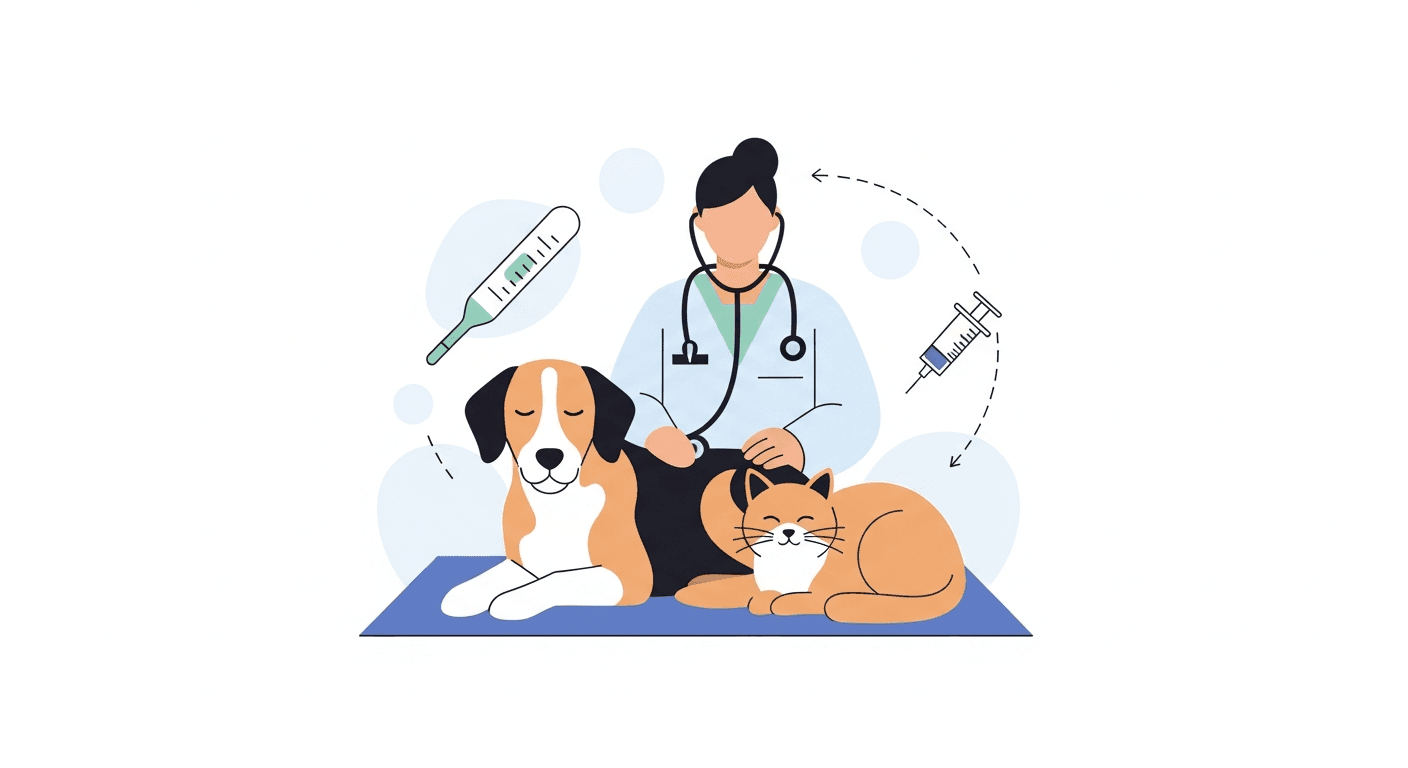
What Is a Wellness Exam?
A wellness exam (also called a preventive care visit or health check) is a scheduled appointment in which a veterinarian performs a comprehensive physical assessment of a healthy or apparently healthy pet. The goal is not to diagnose and treat illness — it is to confirm health, detect subclinical problems before they become clinical problems, and ensure preventive care is current.
Think of it as the veterinary equivalent of a human annual physical. Even if your pet seems perfectly well, these visits protect health and save money in the long run — conditions caught early are almost always cheaper and easier to treat than conditions discovered late. Book a vet appointment at Happy Paws to schedule your pet's next wellness visit.
Before the Visit: How to Prepare
- Collect a fresh fecal sample (within 4–6 hours of the appointment is ideal) — your vet may request one for parasite screening
- Bring previous vaccination records, especially if visiting a new clinic
- Write down any questions, behavior changes, or physical observations you have noticed since the last visit
- Note all current medications, supplements, and the doses
- If your cat is very anxious, ask your vet in advance about pre-visit gabapentin — evidence supports its use to reduce feline stress
- Bring your dog's leash and a secure collar; cats should be in a carrier
The Examination: What the Vet Does and Why
The physical exam proceeds systematically from nose to tail:
- Vital signs: Temperature, pulse rate, respiratory rate, and weight. Abnormal vitals trigger further investigation.
- Body condition score (BCS): A standardized 9-point scale assessing muscle mass and fat reserves. More informative than weight alone.
- Eyes: Clarity of cornea and lens, discharge, symmetry, response to light, signs of pressure changes.
- Ears: Odor, discharge, inflammation, foreign material, eardrum visibility.
- Oral cavity: Teeth (tartar, fractures, missing teeth), gums (color, moisture, capillary refill time), throat.
- Heart: Rate, rhythm, murmur grading if present (scale 1–6), point of maximum intensity.
- Lungs: Breath sounds in all lobes, rate, effort.
- Abdomen: Organ size, shape, and position by palpation; pain response; intestinal motility sounds.
- Skin and coat: Lumps and bumps (charted by location and size for tracking over time), coat quality, parasites.
- Lymph nodes: Submandibular, prescapular, axillary, inguinal, popliteal nodes — enlargement may indicate infection or neoplasia.
- Musculoskeletal: Joint range of motion, muscle mass symmetry, gait assessment.
Vaccines, Parasite Prevention, and Diagnostics
After the physical exam, the vet reviews your pet's vaccine history and recommends any due or overdue vaccines. Fecal test results are reviewed. Heartworm test results are reviewed. The vet will discuss parasite prevention products — this is the ideal time to confirm that what you are using is still the best choice for your pet's current lifestyle and local parasite pressures.
For senior pets, blood work and urinalysis are typically recommended at every wellness visit. For younger healthy pets, these may only be needed every few years — or if the exam reveals a concern. Track all results and upcoming due dates in My Pets on TailRounds. You can also use the TailRounds Daily Log to record daily health observations between visits so you arrive with accurate, detailed information.
After the Visit: Follow-Through
A wellness exam is only as valuable as the follow-through it generates. If your vet recommends a dental cleaning, schedule it. If bloodwork flagged a mild elevation, book the recheck. If a new lump was found and monitoring was recommended, set a calendar reminder. Use TailRounds AI Triage between visits if new symptoms concern you and you want guidance before calling the clinic.
Continue Reading
 💉 Vaccines & Preventive Care
Annual Vet Checkup: What Happens
Demystify your pet's annual wellness visit. Here is exactly what the vet checks, why each part matters, and how to get the most from the appointment.
 💉 Vaccines & Preventive Care
Preventive Care for Senior Pets
Older pets need more frequent exams, senior bloodwork, and targeted prevention. Here is what changes in preventive care when your pet enters their senior years.
 💉 Vaccines & Preventive Care
Professional Dental Cleaning for Pets
Dental disease affects most adult pets and causes serious systemic health problems. Here is what professional dental cleaning involves and why it matters.
 💉 Vaccines & Preventive Care
Why Pet Vaccine Records Matter
Vaccine records protect your pet, your household, and your legal standing. Learn why keeping accurate records matters and how to organize them.