
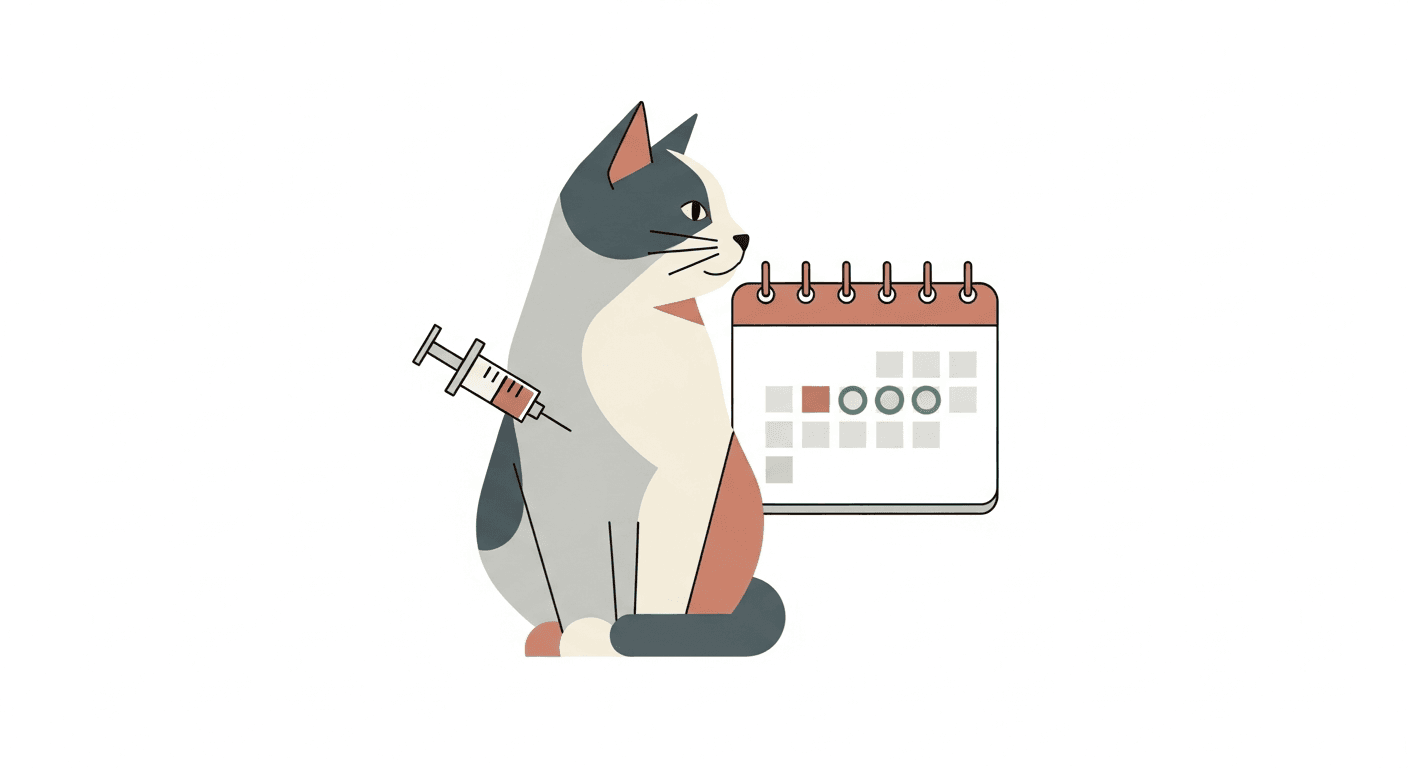
Why Cats Need a Structured Vaccine Schedule
Cats are susceptible to several infectious diseases that spread easily, progress rapidly, and can be fatal. A structured vaccination schedule — starting in kittenhood and continuing through adulthood — gives your cat the best chance of lifelong immunity. The American Association of Feline Practitioners (AAFP) publishes updated feline vaccine guidelines that most veterinarians follow.
Even indoor cats are not fully isolated from risk. Owners can track in pathogens on clothing and shoes, new pets can be introduced, and cats occasionally escape outside. Building and maintaining immunity is always the safer choice. Book a vet appointment at Happy Paws to start your cat's vaccine schedule today.
Core Vaccines for All Cats
The AAFP designates the following as core — meaning every cat, regardless of lifestyle, should receive them:
- Feline Herpesvirus-1 (FHV-1): Causes feline viral rhinotracheitis, a severe upper respiratory infection.
- Feline Calicivirus (FCV): Another major cause of upper respiratory disease and oral ulcers.
- Feline Panleukopenia (FPV): Also called feline distemper — a highly contagious and often fatal disease.
- Rabies: Fatal, legally required in most areas, and a public health concern since it can infect humans.
FHV-1, FCV, and FPV are typically delivered together in a combination vaccine labeled FVRCP. Rabies is always a separate injection.
The Standard Schedule by Age
- 6–8 weeks: First FVRCP combination vaccine.
- 10–12 weeks: Second FVRCP booster. First FeLV (feline leukemia) vaccine if cat has any outdoor or multi-cat exposure risk.
- 14–16 weeks: Third FVRCP booster. Rabies vaccine. Second FeLV booster if started.
- 12–16 months: FVRCP booster one year after final kitten dose. Rabies booster (1-year or 3-year product).
- Every 1–3 years (adult): FVRCP every 3 years in low-risk cats; annually in high-risk. Rabies per local law. FeLV annually for cats with outdoor access.
As with puppies, kittens need a series because maternal antibodies can block the vaccine response. The final dose should be given at or after 16 weeks to ensure full effectiveness.
Non-Core Vaccines for Cats
- Feline Leukemia Virus (FeLV): Recommended for all kittens and for adult cats with outdoor access or exposure to other cats. Considered core for kittens by many practitioners.
- Feline Immunodeficiency Virus (FIV): Available in some countries, recommended for outdoor cats at high risk of bite wounds.
- Bordetella bronchiseptica: For cats in multi-cat environments or shelters.
- Chlamydia felis: For cats in multi-cat households where the infection has been confirmed.
Tracking Records and Staying Current
Vaccine records matter for boarding, travel, and pet insurance claims. Keep digital copies in the My Pets on TailRounds section so you always have them accessible. If your cat is overdue for a booster, do not assume immunity has fully lapsed — your vet can assess whether a single booster or a full restart is appropriate.
Use the TailRounds AI Triage tool if your cat shows symptoms like sneezing, discharge, or lethargy after a vaccine. Mild reactions are common, but some signs warrant prompt attention.
Continue Reading
 💉 Vaccines & Preventive Care
Kitten Vaccination Guide
A complete guide to kitten vaccines: what is given, when, how many boosters are needed, and how to keep your kitten comfortable afterward.
 💉 Vaccines & Preventive Care
Feline Leukemia (FeLV) Vaccine
FeLV is a leading infectious killer of cats. Learn who should be vaccinated, how the vaccine works, and what protection it provides.
 💉 Vaccines & Preventive Care
Rabies Vaccine for Dogs and Cats
Why the rabies vaccine is legally required, how often pets need it, and what to expect from the shot. Essential reading for all pet owners.
 💉 Vaccines & Preventive Care
Do Indoor Cats Need Vaccines?
Many owners assume indoor cats are fully protected from disease. Here is what the evidence says about which vaccines are still essential for stay-at-home cats.