
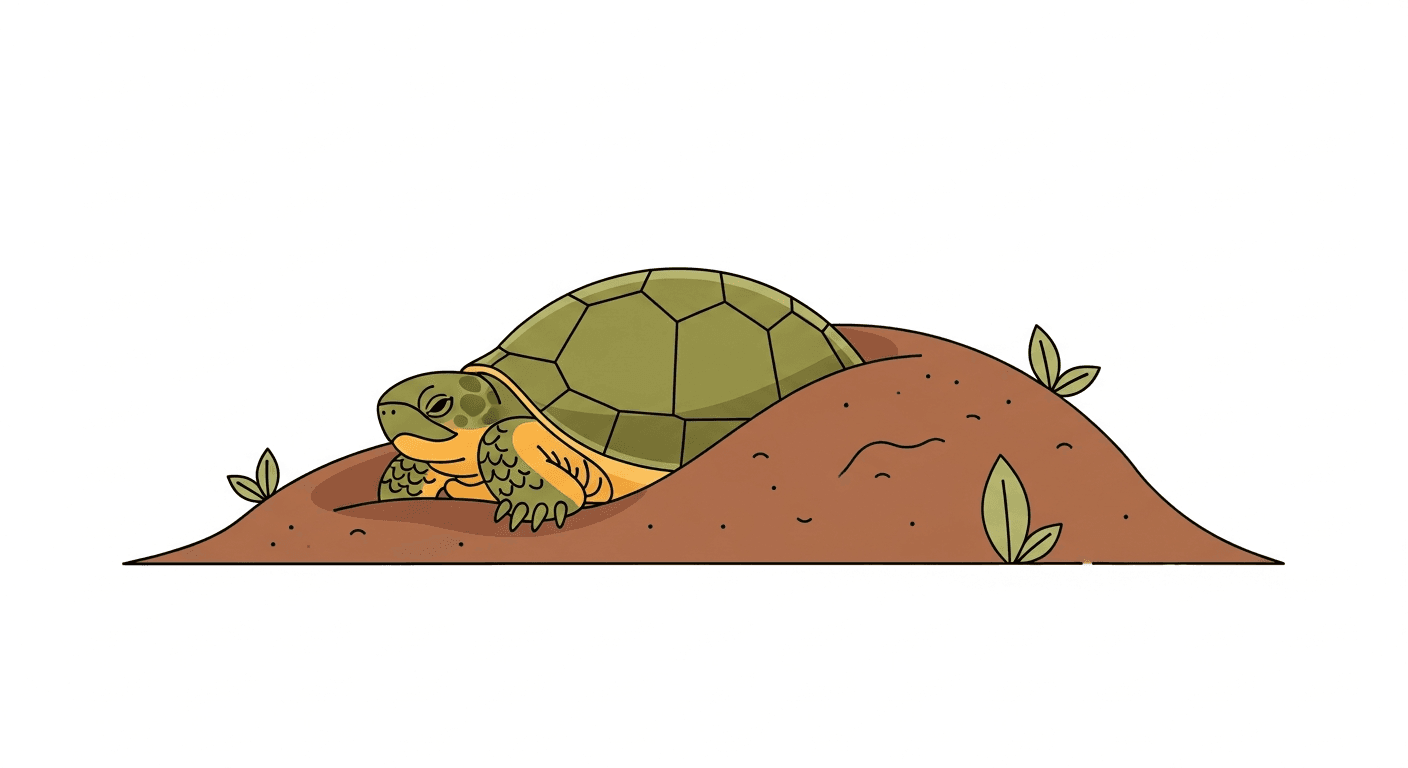
What Is Brumation and Why Does It Matter?
Brumation is the reptilian equivalent of hibernation — a period of significantly reduced metabolic activity during cold months that evolved to help turtles and tortoises survive winter when food is unavailable. In captivity, whether to allow brumation is a decision that depends on species, the individual turtle's health status, and your ability to provide appropriate conditions.
A healthy turtle that brumated in the wild can safely brumate in captivity with good management. An underweight, ill, young (under 3 years), or recently sick turtle should not brumate — the physiological stress can be fatal.
First 3 Steps at Home
- Assess suitability for brumation: Before allowing your turtle to enter brumation, the animal must have been healthy for the entire preceding year, have a healthy body weight (assess using the Jackson ratio for tortoises or visual assessment for aquatic turtles), be free from parasites (fecal test in autumn), and have no pending health concerns. A pre-brumation vet check is strongly recommended.
- Fast the animal properly before brumation: A tortoise that enters brumation with undigested food in the gut will develop potentially fatal gut bacterial overgrowth as the gut slows. Stop feeding 4–6 weeks before the expected start of brumation (for Mediterranean tortoises) and offer warm baths to encourage the animal to empty its bladder and bowel.
- Prepare appropriate brumation conditions: For tortoises, a refrigerator set to 4–8°C, a wooden box, or a cool garage in an appropriate enclosure are options depending on species and local climate. For aquatic turtles, brumation occurs underwater at temperatures around 4–10°C with adequate oxygen. Monitor temperatures throughout — too cold causes frostbite and death; too warm means the animal uses fat reserves while staying semi-awake.
When to Go to the Vet Immediately
- Tortoise that wakes up mid-brumation and cannot go back to sleep — possible infection, insufficient fat reserves
- Any turtle that does not wake up when expected in spring
- Cold tortoise or turtle that appears limp and non-responsive after being warmed — possible death or severe hypothermia complication
- Any turtle attempting brumation that has been recently treated for illness
Follow-Up Care Checklist
- Weigh weekly during brumation — weight loss greater than 10% of initial brumation weight is a warning sign
- Warm up gradually in spring over 2–4 weeks matching natural seasonal temperature rise
- Offer a warm bath on emergence before food — rehydration is the first priority
- Schedule post-brumation vet check if the animal lost significant weight or had any abnormal awakening
Track Brumation with TailRounds
Record start date, temperature readings throughout brumation, weekly weights, and emergence date and condition in the TailRounds Daily Log. This information is essential for year-to-year comparison and vet reference.
Book a Vet Appointment
A pre-brumation health check is one of the most important vet visits in your tortoise's year. Book at Happy Paws in late summer or early autumn for a full health assessment before the brumation season.
Summary for Your Clinic Visit
Bring the tortoise's weight record for the preceding year, note current weight, describe the planned brumation setup, and raise any health concerns from the previous season.
Continue Reading
 🐢 Turtle & Tortoise Health
My Turtle Won't Eat: Causes, What to Check at Home, and When to See a Vet
A turtle refusing food may be hibernating, stressed, or ill. Learn how to tell the difference and when refusal to eat requires immediate veterinary attention.
 🐢 Turtle & Tortoise Health
Vitamin Deficiencies in Turtles: Vitamin A, D3, and Calcium Explained
Nutritional deficiencies cause most preventable illness in captive turtles. Learn which vitamins matter most, how deficiency presents, and how to correct it safely.
 🐢 Turtle & Tortoise Health
Monitoring Your Turtle's Weight: Why It Matters and How to Do It Right
Regular weight monitoring is the most reliable way to catch health problems early in turtles. Learn how often to weigh, what changes mean, and the Jackson Ratio for tortoises.
 🐢 Turtle & Tortoise Health
Daily Care Checklist for Turtles and Tortoises: Building Habits That Prevent Disease
Consistent daily care prevents most common turtle health problems. Use this checklist to build a daily routine that catches problems early and maintains long-term health.