
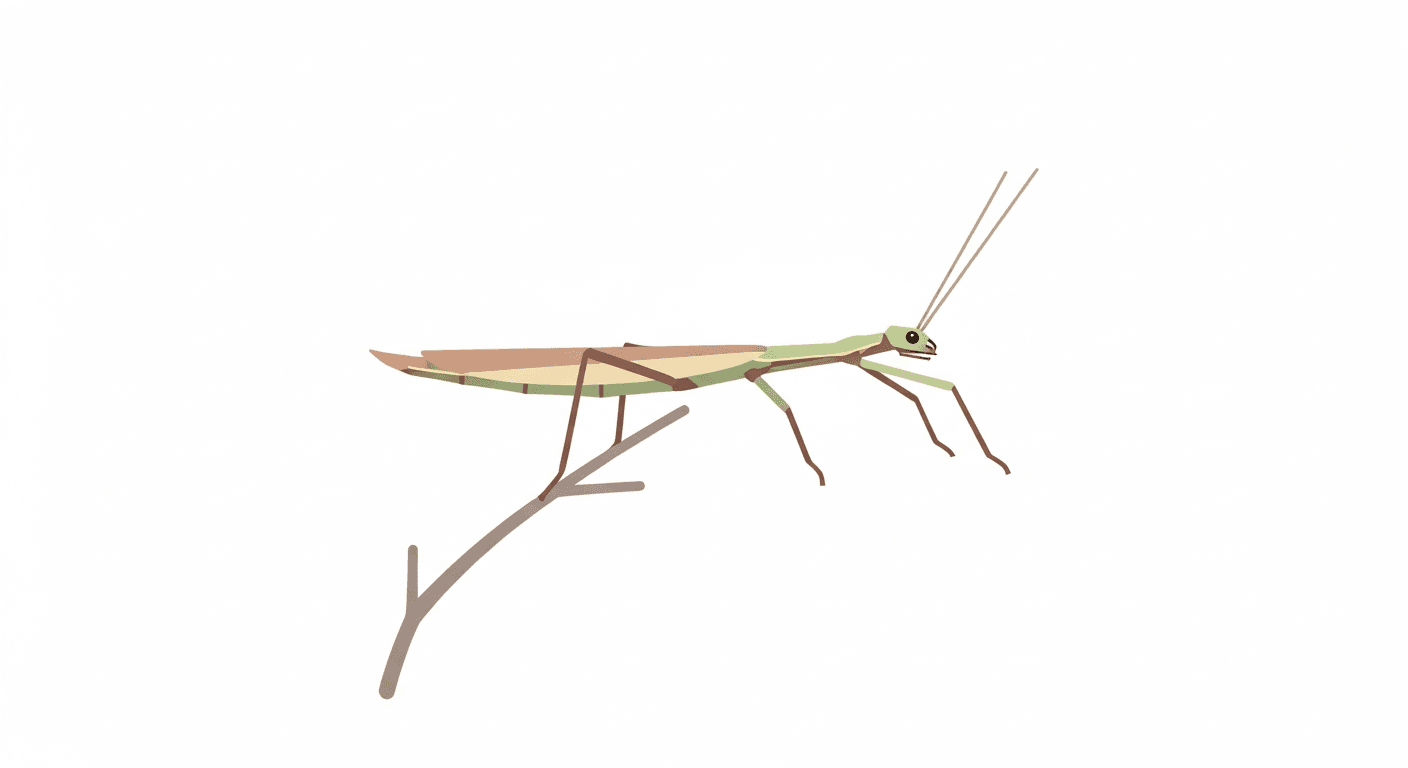
Why Stick Insects Are Wonderful Beginner Invertebrates
Stick insects (phasmids) are among the easiest and most low-cost exotic pets to keep. They require minimal space, no specialized heating in most temperate climates, produce no noise or odor, and are completely harmless. Many species reproduce parthenogenetically — females lay fertile eggs without males — making them self-sustaining populations in captivity. Children and adults alike find their extraordinary camouflage and slow, deliberate movements endlessly fascinating.
Common species kept as pets include the Indian stick insect (Carausius morosus), the Thai stick insect (Baculum extradentatum), and the thorny stick insect (Extatosoma tiaratum). Each has slightly different care requirements, but the principles in this guide apply broadly to most beginner species.
Enclosure Setup
- Size: The enclosure should be at least 3× the body length of the insect in height. Stick insects need height for hanging, climbing, and molting — they hang from the ceiling to shed their skin. A 30cm × 30cm × 45cm mesh enclosure is suitable for most smaller species.
- Material: Mesh or well-ventilated containers are best. Stick insects need good airflow — stagnant humid air causes respiratory and mold problems.
- Substrate: 2–3 inches of moist paper towel, coconut fiber, or soil on the floor — this keeps eggs viable if you choose to hatch them, and maintains some ambient humidity.
- Food plant container: Place fresh food plant cuttings in a small bottle of water, covered with plastic wrap or foil with a hole to prevent insects from drowning. Replace plant cuttings every 2–3 days.
- Humidity: Lightly mist the enclosure every other day. This provides drinking water (stick insects drink droplets from leaves) and maintains appropriate humidity.
Food: Species-Specific Plant Preferences
- Indian stick insect: Privet, ivy, bramble (blackberry), hawthorn, and rose leaves. Very adaptable eaters.
- Thai stick insect: Bramble, oak, hawthorn, raspberry.
- Thorny stick insect (Extatosoma tiaratum): Eucalyptus, rose, bramble.
- Always offer fresh, pesticide-free leaves. Forage from areas away from roads and agricultural land, or grow your own supply.
- Remove wilted or moldy leaves promptly.
Molting
Stick insects molt 4–9 times before reaching adulthood, hanging upside down from a branch or the enclosure ceiling. Never disturb a molting insect. Ensure there are always suitable hanging spots at height. After molting, the insect may eat its shed exoskeleton (ecdysis) — this is normal and provides important nutrients. Failed molts where the insect becomes stuck in its old skin are usually caused by insufficient humidity — misting around (not directly on) the insect can help, but gentle intervention risks injury. Provide adequate humidity to prevent this.
Eggs and Reproduction
Most captive species produce eggs prolifically. Eggs look like small seeds and are dropped by females onto the enclosure floor. Incubate on moist (not wet) vermiculite or coconut fiber at room temperature. Many species take 3–6 months to hatch. Hatchling care requires smaller, appropriately sized food plant material. Log your colony size, molts, and egg production in the TailRounds Daily Log. For health concerns, use TailRounds AI Triage. Find an exotic vet at the clinic finder.
Continue Reading
 🐇 Small Pets
Pet Tarantula Care Guide: Setup, Feeding, and Handling
A beginner-friendly guide to keeping a pet tarantula — enclosure requirements, feeding live insects, humidity and temperature needs, and molting explained.
 🐇 Small Pets
Land Hermit Crab Care: The Truth About These Misunderstood Pets
Land hermit crabs live 20+ years and need far more than a small plastic tank. The complete guide to proper housing, humidity, diet, and shell selection.
 🐇 Small Pets
Exotic Pet Ownership Laws: What's Legal and What Isn't
An overview of exotic pet laws in the US, UK, EU, and Australia — which animals require permits, which are banned outright, and how to stay legally compliant.
 🐇 Small Pets
When Does a Small Pet Need a Vet? Signs You Shouldn't Ignore
How to know when a small animal — bird, rodent, reptile, fish, or invertebrate — needs veterinary care, and how to find an exotic-experienced vet near you.