
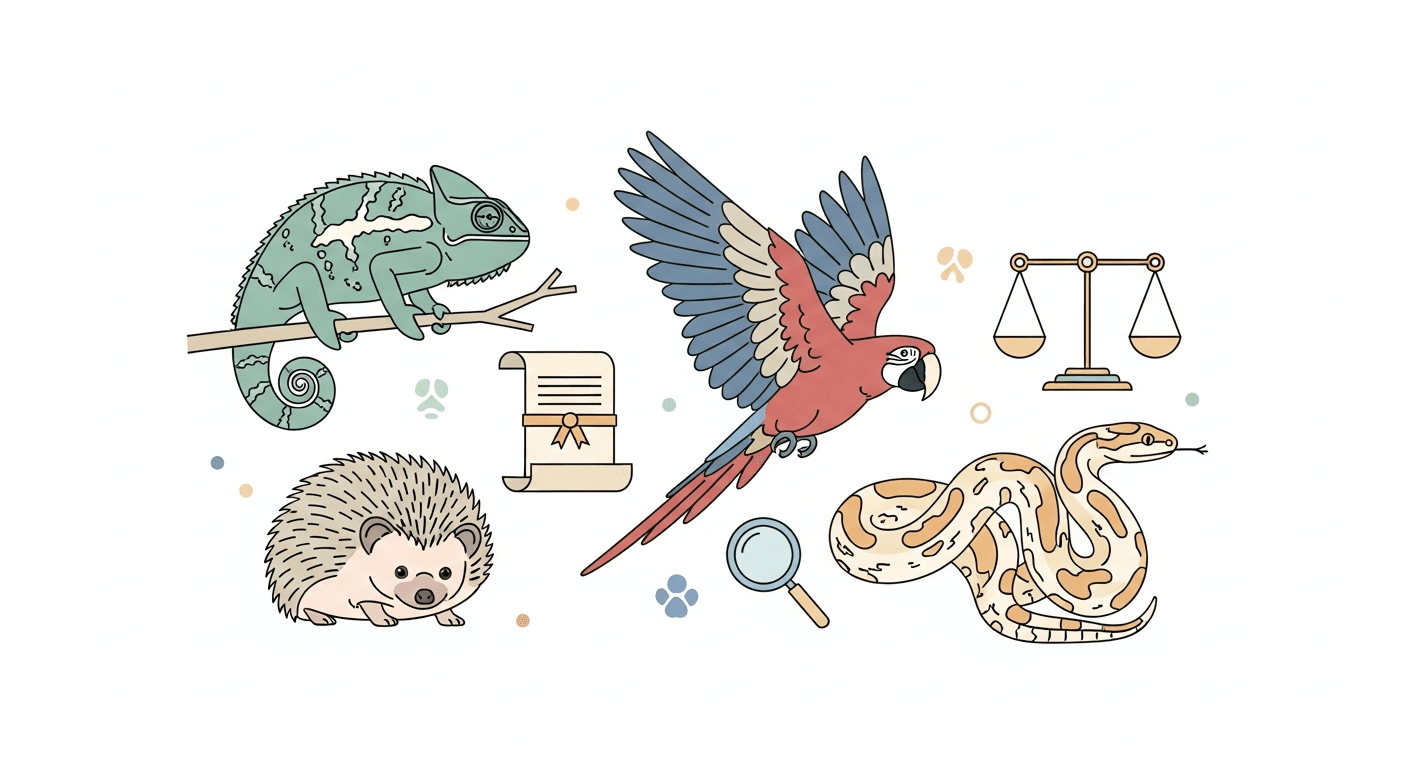
Why Exotic Pet Laws Matter
Exotic pet ownership is regulated for several reasons: protecting endangered wildlife populations from poaching and illegal trade (CITES), preventing invasive species from establishing in non-native habitats, protecting public safety from dangerous animals, and preventing zoonotic disease introduction. Laws vary enormously by country, state, province, and even municipality — what is perfectly legal in one place may be a criminal offense 50 miles away.
Ignorance of the law is not a defense. Before acquiring any exotic animal, verify legality at every level: federal/national, state/regional, and local. This guide provides a framework — always verify current law with your local wildlife agency, as regulations change.
International Framework: CITES
The Convention on International Trade in Endangered Species (CITES) is the starting point for international exotic pet regulation. Species are classified into three appendices:
- Appendix I: Commercial trade prohibited. Includes most great apes, tigers, leopards, most macaw species, many tortoise species. Captive-bred individuals may be traded with special permits between countries, but commercial trade is illegal.
- Appendix II: Trade permitted with documentation. Most parrots, many reptiles, all cetaceans, many primates. Requires export permits and documentation proving legal captive breeding.
- Appendix III: Protected in specific countries but not globally regulated.
Any exotic animal crossing an international border should be accompanied by appropriate CITES documentation. Purchasing smuggled wildlife — even unknowingly — is a criminal offense in most jurisdictions.
United States: Federal and State Laws
At the federal level, the Lacey Act prohibits interstate commerce in illegally taken wildlife. The Endangered Species Act protects listed species. The Wild Bird Conservation Act restricts importation of wild-caught birds. Beyond federal law, each state sets its own rules:
- California: Among the strictest states. Ferrets, hedgehogs, sugar gliders, gerbils, and many reptiles are illegal.
- Hawaii: Extremely strict — almost all exotic mammals are banned due to the fragile island ecosystem. No ferrets, hedgehogs, snakes, or most lizards.
- Texas, Florida, Nevada: Generally more permissive with exotic pets, though some counties and municipalities add local restrictions.
- New York: The state-level ban on ferrets was lifted in 2016, but New York City still bans them at the municipal level.
- Georgia, Pennsylvania: Hedgehogs restricted.
Always check both your state's wildlife agency website AND your county and city regulations.
United Kingdom
The UK regulates dangerous wild animals under the Dangerous Wild Animals Act 1976 — requiring a local authority license for species listed in the schedule (venomous snakes, big cats, some primates, crocodilians). The Animal Welfare Act 2006 applies to all kept animals. Post-Brexit, the EU's pet passport system no longer applies — separate GB and NI rules now apply for importing animals from the EU.
European Union
EU regulations generally follow the CITES framework with additional member-state legislation. Some countries (Germany, Netherlands) have strict "positive list" systems — only species on an approved list may be kept as pets. Others (Czech Republic, Hungary) are more permissive. Always research the specific country you are in.
Australia
Australia has extremely strict exotic pet laws aimed at protecting its unique ecology from invasive species. Virtually all non-native exotic mammals are banned. Native species (some reptiles, birds) can be kept with state-issued permits, and the licensing system varies by state. No ferrets, hedgehogs in most states, or rabbits in Queensland.
Practical Steps Before Acquiring an Exotic Pet
- Contact your state/national wildlife agency for current regulations
- Contact your county or municipality animal control for local ordinances
- Ask the seller for documentation of legal captive breeding (CITES papers if applicable)
- Find an exotic vet in your area BEFORE acquiring the animal — use the clinic finder to locate one
- Check HOA agreements and rental contracts if applicable
Use TailRounds AI Triage for health guidance once you have your animal. Track daily health in the TailRounds Daily Log. Book a wellness visit with an exotic vet within the first month of ownership.
Continue Reading
 🐇 Small Pets
Ferret Care Guide: Everything First-Time Ferret Owners Need to Know
How to care for a ferret — housing, diet, health care, handling, and the common diseases that every ferret owner should know about.
 🐇 Small Pets
Sugar Glider Care: Diet, Bonding, Common Problems, and Legality
What prospective owners need to know about sugar gliders — their specialized diet, social needs, exotic vet requirements, and whether they're legal where you live.
 🐇 Small Pets
Hedgehog Care Guide: What Every Hedgehog Owner Needs to Know
A complete hedgehog care guide covering housing, diet, wheel exercise, handling, hibernation risks, and common health problems in African pygmy hedgehogs.
 🐇 Small Pets
When Does a Small Pet Need a Vet? Signs You Shouldn't Ignore
How to know when a small animal — bird, rodent, reptile, fish, or invertebrate — needs veterinary care, and how to find an exotic-experienced vet near you.