
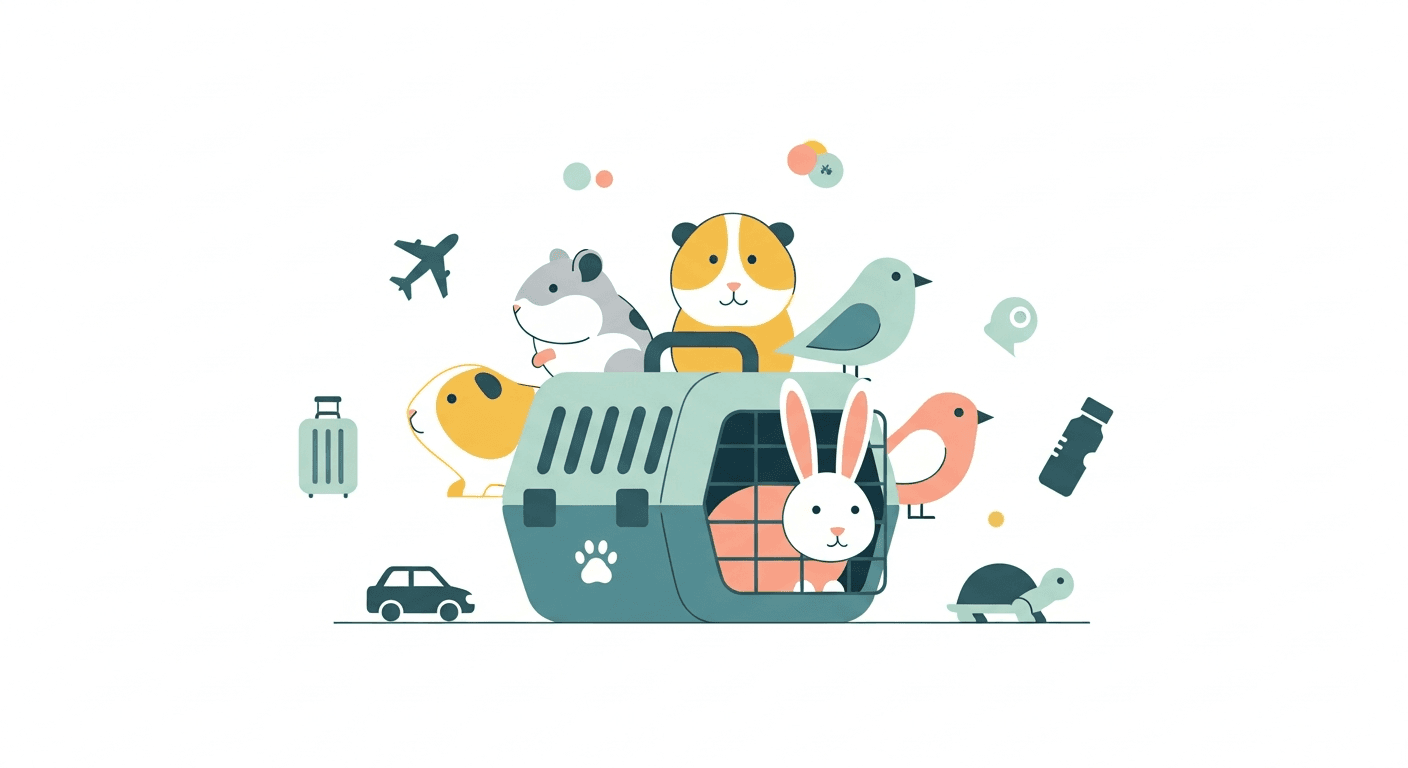
The Challenge of Traveling with Small Pets
Traveling with small pets is more complex than traveling with cats or dogs — the variety of species involved, their different environmental needs, their vulnerability to temperature extremes, and the patchwork of airline and transport regulations make planning essential. Whether you are taking your budgie to a new home, driving across country with your ferret, or flying with a reptile, this guide covers the critical considerations for keeping your small pet safe during travel.
Before You Travel: Preparation Checklist
- Vet check: A pre-travel veterinary visit confirms your pet is healthy enough for travel and produces the health certificate that may be required by airlines, borders, or destination states. Do this 7–10 days before travel (most health certificates are only valid for 10 days for international travel).
- Research destination regulations: Some states and countries prohibit certain exotic species entirely. See the exotic pet laws guide for a framework.
- Carrier acclimatization: Begin leaving the travel carrier open in your pet's space 1–2 weeks before travel so they explore and become familiar with it. This dramatically reduces travel stress.
- Temporary ID: Attach a temporary travel ID to the carrier with your contact information, destination contact, and veterinarian phone number.
- Emergency kit: Carrier, food, water, litter or substrate, a small thermometer, and your vet's contact number. Use TailRounds AI Triage from your phone if any health concerns arise during travel.
By Car: The Safest Option for Most Small Pets
- Temperature is the primary concern: Never leave a small pet in a parked car. Temperatures inside a parked car can reach lethal levels in minutes. Birds and rodents are especially temperature-sensitive.
- Secure the carrier: Use a seatbelt or cargo area to prevent the carrier from sliding or tipping during turns and braking.
- Minimize handling during stops: Small pets can escape during rest stops in a fraction of a second. Keep carriers securely fastened whenever the car door is open.
- Water: Offer water at each stop. For rodents and rabbits, use a dropper or syringe to offer water during long trips since water bottles do not work well in moving vehicles.
- For reptiles: Maintain appropriate temperature using a heated bag or insulated container with a heat pack. Monitor with a thermometer — thermal gradients are important.
By Air: Know the Rules Before You Book
Airline policies on small pets vary enormously and change frequently. Always confirm directly with the airline before booking — do not rely on online forums or outdated information.
- In-cabin vs cargo: Many airlines allow small cats and dogs in cabin but do not allow birds, reptiles, or rodents in the cabin at all. These animals must travel as cargo — a riskier option due to temperature and pressure variation.
- Documentation: Health certificate from an accredited vet dated within 10 days (international) or 30 days (domestic). CITES documentation if applicable. Destination country health requirements.
- Carrier requirements: IATA-approved carriers for cargo transport have specific requirements for ventilation, strength, and water access. Airlines each specify their own acceptable in-cabin carrier dimensions.
- Temperature embargoes: Many airlines implement cargo embargoes in extreme heat or cold that can affect live animal shipment — check seasonal restrictions for your route.
Reducing Travel Stress
- Cover the carrier with a light cloth to reduce visual stimulation (especially for birds)
- Maintain familiar smells — a small piece of bedding from the home enclosure in the travel carrier
- Avoid feeding a full meal 2–4 hours before travel (reduces motion sickness risk)
- Talk to your pet calmly if they seem distressed — familiar voices are reassuring
- For very anxious animals, discuss anti-anxiety medication options with your vet before travel — some species tolerate mild sedation well; others (birds especially) do not
Log your pet's behavior and condition during and after travel in the TailRounds Daily Log. If your pet seems unwell after travel, use TailRounds AI Triage for guidance. Book a post-travel vet check if your pet does not return to normal within 24–48 hours. Find an exotic vet near your destination before you arrive, just in case.
Continue Reading
 🐇 Small Pets
When Does a Small Pet Need a Vet? Signs You Shouldn't Ignore
How to know when a small animal — bird, rodent, reptile, fish, or invertebrate — needs veterinary care, and how to find an exotic-experienced vet near you.
 🐇 Small Pets
Budgerigar (Budgie) Care: The Complete Owner's Guide
Everything you need to know to keep a budgie healthy — diet, cage setup, social needs, common illnesses, and when to see an avian vet.
 🐇 Small Pets
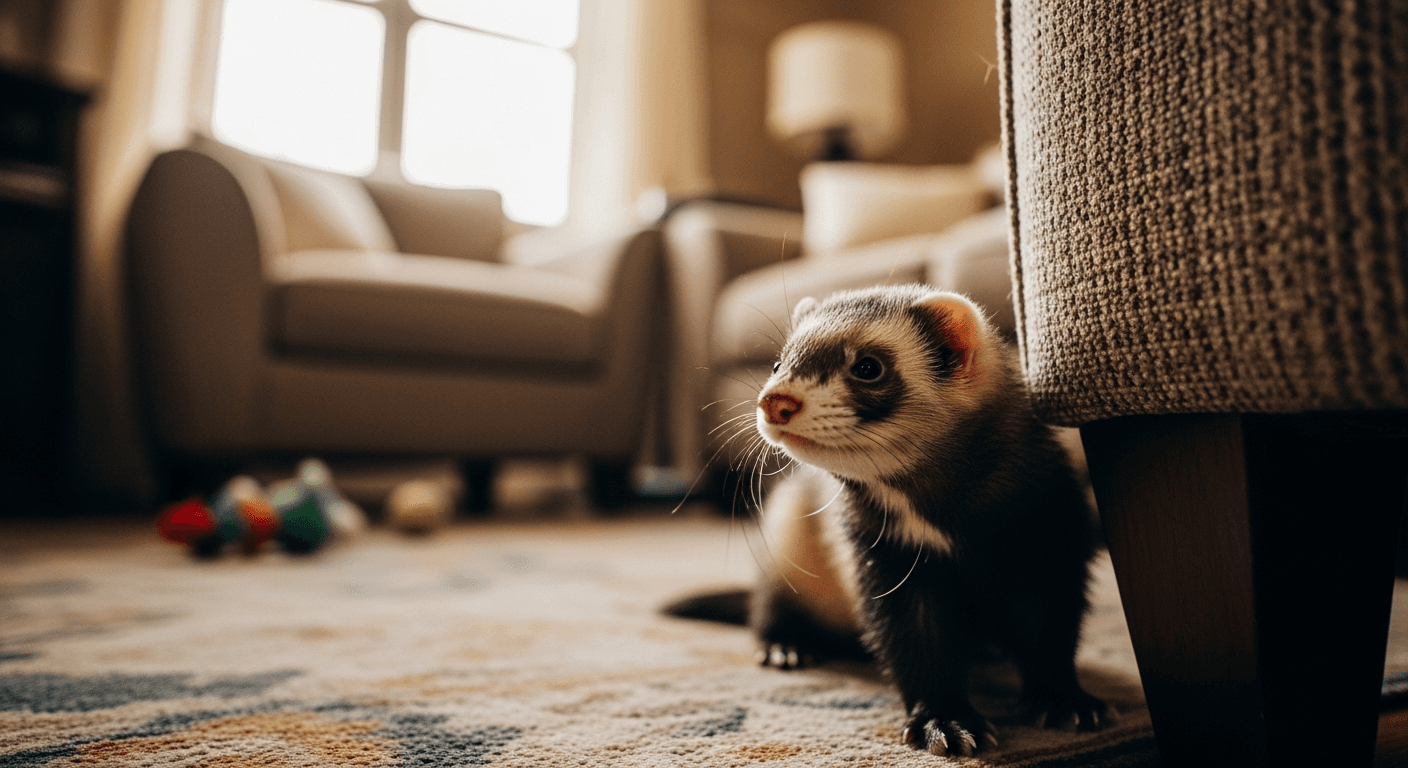
Ferret Care Guide: Everything First-Time Ferret Owners Need to Know
How to care for a ferret — housing, diet, health care, handling, and the common diseases that every ferret owner should know about.
 🐇 Small Pets
Exotic Pet Ownership Laws: What's Legal and What Isn't
An overview of exotic pet laws in the US, UK, EU, and Australia — which animals require permits, which are banned outright, and how to stay legally compliant.