
Why Lifespan Matters Before You Buy
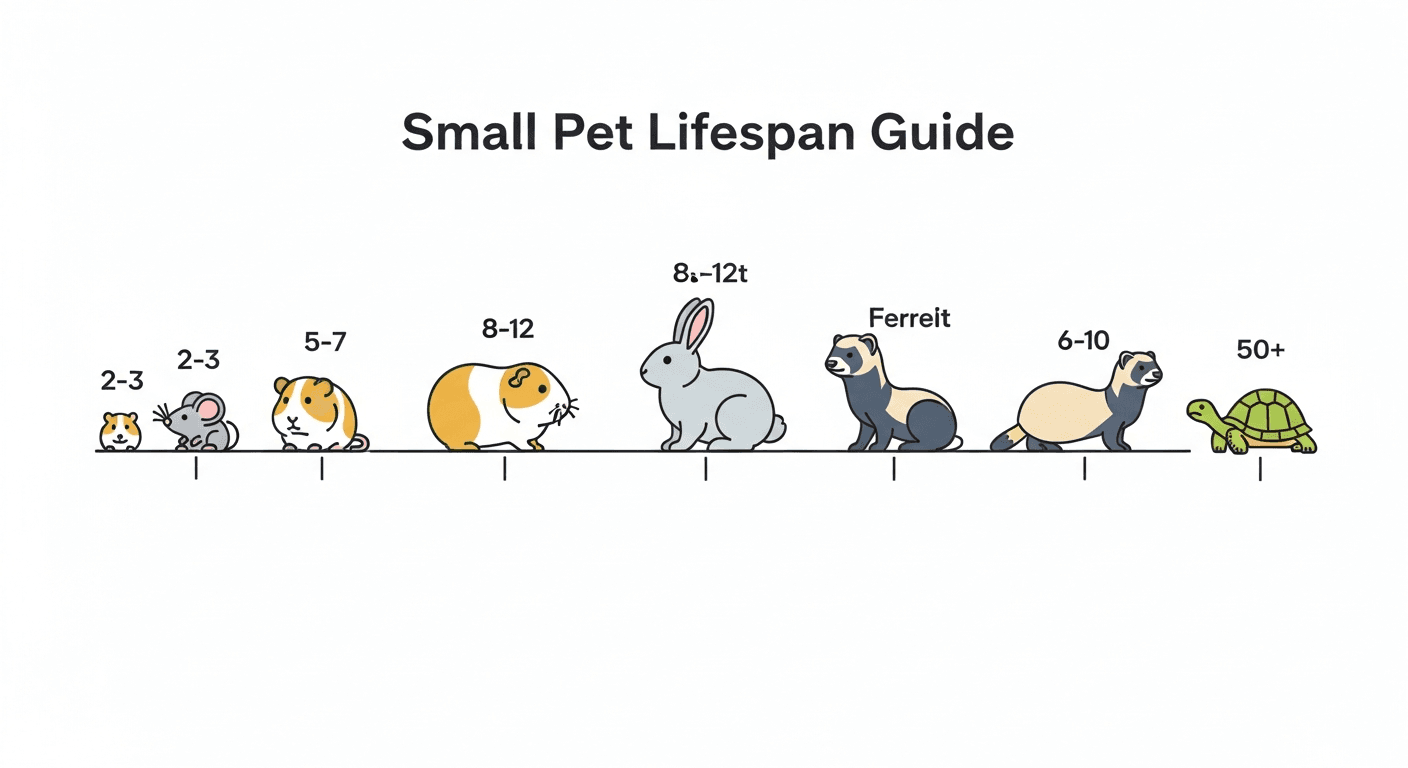
One of the most important questions to ask before acquiring any pet is: "How long will this animal live, and am I prepared for that commitment?" The answers in the small pet world range from 18 months for a short-lived hamster species to 80+ years for a large tortoise. Understanding lifespan allows you to make informed decisions, plan for end-of-life care costs, and set realistic expectations about the relationship — including loss.
Small Pet Lifespans: Species by Species
Small Rodents
- Dwarf hamster (Campbell's, Winter White, Roborovski): 1.5–2 years. Short-lived but intensely active and fascinating to observe.
- Syrian hamster: 2–3 years. Solitary, nocturnal, the most common hamster species.
- Mouse: 1.5–2.5 years. Short lives but manageable in same-sex groups.
- Gerbil (Mongolian): 3–5 years. Social, active during the day, good for observation.
- Rat: 2–3.5 years. Short but deeply bonded — many owners describe losing a rat as comparable to losing a dog.
Medium Small Mammals
- Guinea pig: 4–8 years. Social, vocal, and hardy with proper care. They benefit hugely from being kept in pairs.
- Rabbit: 8–12 years (house rabbit). Neutered, indoor rabbits are the longest-living lagomorph pets. Outdoor hutch rabbits typically live shorter lives due to stress and predator-related health issues.
- Ferret: 6–10 years. Highly interactive, often requiring significant veterinary care in later years (adrenal disease, insulinoma).
- Chinchilla: 10–15 years (sometimes 20). Long-lived, delicate, and temperature-sensitive.
- Hedgehog: 4–6 years. Short but rewarding. Significant cancer risk after year 2–3.
- Sugar glider: 10–15 years. Long-lived social animals requiring colony housing and specialized diet.
Birds
- Canary: 10–15 years
- Budgerigar (budgie): 8–12 years (to 15+ with excellent care)
- Cockatiel: 15–25 years
- Lovebird: 10–15 years
- African grey parrot: 40–60 years. A generational commitment.
- Macaw: 50–80 years. Will likely outlive their owner.
Reptiles and Amphibians
- Leopard gecko: 10–20 years
- Bearded dragon: 10–15 years
- Ball python: 20–30 years
- Corn snake: 15–20 years
- Red-eared slider turtle: 20–30 years
- Russian tortoise: 40–50 years
- Hermann's tortoise: 50–80 years
- Axolotl: 10–15 years in captivity
Fish
- Betta fish: 3–5 years (often shorter due to poor conditions at purchase)
- Goldfish: 10–15 years (single-tailed), some reach 20+ years
- Guppy: 1–3 years
- Koi: 20–35 years, some records beyond 50 years
Planning for the Full Lifespan
Once you know your pet's expected lifespan, plan for every life stage:
- Young animals: Vaccination (if applicable), neutering or spaying, parasite prevention, and establishing a relationship with an exotic vet
- Prime years: Annual wellness exams, weight monitoring, enrichment and exercise
- Senior animals: More frequent vet checks (bi-annually), pain management assessment, diet adjustments, mobility accommodations
- End of life: Quality of life assessment tools, euthanasia discussion with your vet when appropriate, grief resources
Track your pet's health across their entire lifespan in the TailRounds Daily Log. Book an annual wellness appointment for your small pet and find an exotic-experienced vet near you. Use TailRounds AI Triage when you have health concerns at any life stage.
Continue Reading
 🐇 Small Pets
When Does a Small Pet Need a Vet? Signs You Shouldn't Ignore
How to know when a small animal — bird, rodent, reptile, fish, or invertebrate — needs veterinary care, and how to find an exotic-experienced vet near you.
 🐇 Small Pets
Budgerigar (Budgie) Care: The Complete Owner's Guide
Everything you need to know to keep a budgie healthy — diet, cage setup, social needs, common illnesses, and when to see an avian vet.
 🐇 Small Pets
Goldfish Care and Health: What Most Owners Get Wrong
The truth about goldfish care — tank size, water quality, filtration, diet, and the most common diseases that cut these long-lived fish short unnecessarily.
 🐇 Small Pets
Exotic Pet Ownership Laws: What's Legal and What Isn't
An overview of exotic pet laws in the US, UK, EU, and Australia — which animals require permits, which are banned outright, and how to stay legally compliant.