
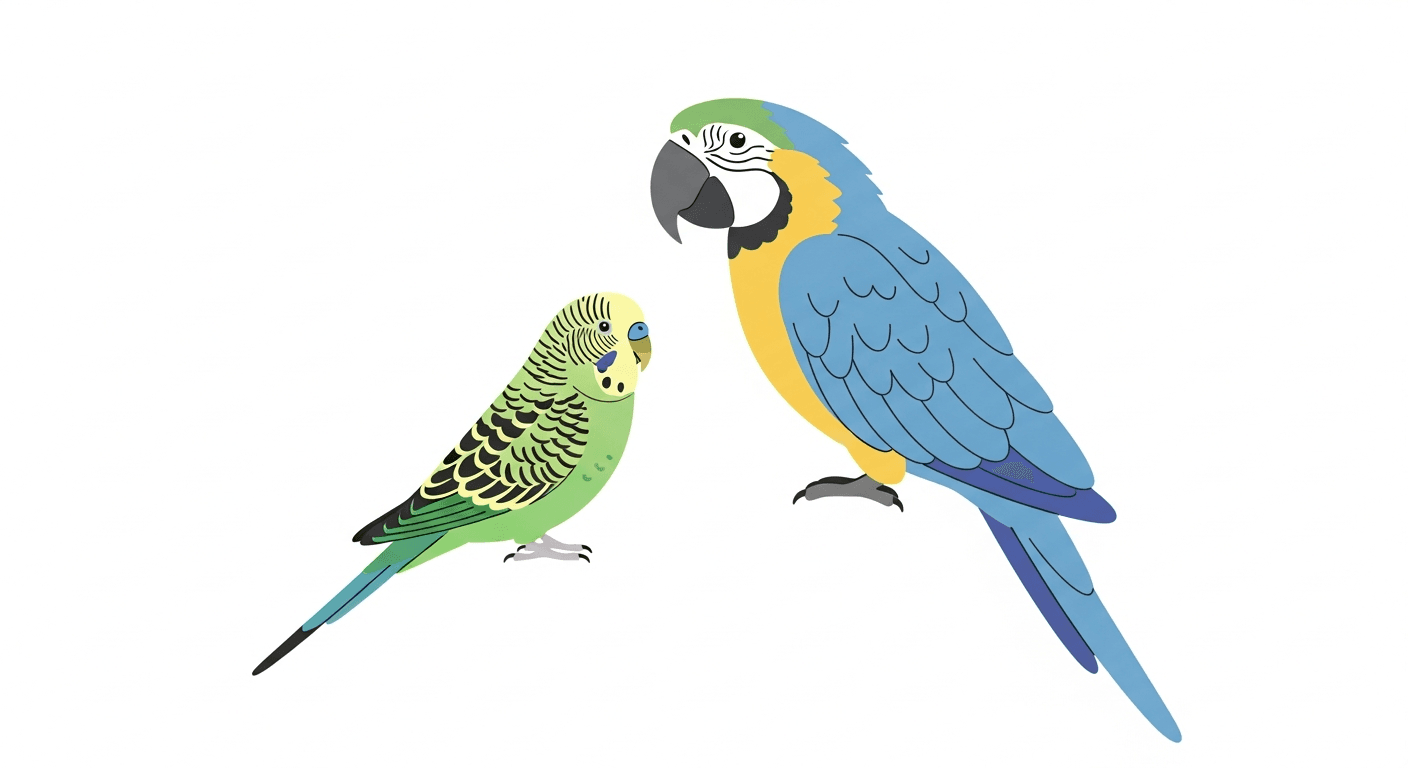
All Parakeets Are Parrots — But Not All Parrots Are Parakeets
The terminology can be confusing. "Parrot" is a broad category encompassing over 350 species in the order Psittaciformes. "Parakeet" generally refers to smaller, long-tailed parrot species — budgerigars (budgies) are the most common parakeet, but the term also applies to monk parakeets, ring-necked parakeets, Alexandrine parakeets, and others. When people say "I want a parrot," they usually mean a medium to large species like a conure, African grey, Amazon, cockatoo, or macaw. This guide compares these categories to help you choose wisely.
Small Parakeets (Budgies, Parrotlets, Lovebirds)
- Lifespan: 8–15 years (budgies typically 10–12)
- Noise level: Moderate. Budgies chirp and chatter but rarely scream. Suitable for apartments.
- Space required: Modest. A well-sized cage and a few hours of free-flight time daily.
- Talking ability: Male budgies are among the best talkers in the bird world relative to size — large vocabularies are possible. Parrotlets and lovebirds talk less.
- Initial cost: Low ($20–$80 for the bird). Quality cages, vet care, and food add up.
- Time commitment: Daily interaction and out-of-cage time — 1–2 hours. Not a full-time commitment.
- Ideal for: First-time bird owners, families with older children, apartment dwellers, owners who want an interactive companion without overwhelming commitment.
Large Parrots (African Greys, Amazons, Cockatoos, Macaws)
- Lifespan: 40–80 years. An African grey is a generational commitment. Macaws can outlive their owners.
- Noise level: High. Cockatoos and macaws are among the loudest animals on earth. Not suitable for apartments.
- Space required: Large. Cage costs alone can be $500–$3,000. These birds need a dedicated room for free flight.
- Talking ability: African greys are the most sophisticated talkers — some develop hundreds of words and use them contextually. Amazons and some macaws also talk well.
- Initial cost: $500–$5,000+ for the bird. Lifetime veterinary costs can be substantial.
- Time commitment: 4–8+ hours of interaction daily. Parrots that are not sufficiently stimulated develop severe behavioral problems (screaming, feather destruction, aggression).
- Ideal for: Experienced bird owners who have done years of research, live in appropriate housing, have time for serious daily interaction, and understand the lifetime commitment.
Medium-Sized Parrots: The Middle Ground
Cockatiels, conures, and caiques occupy the middle ground — more personality and interaction than budgies, significantly less overwhelming commitment than large parrots. Cockatiels (lifespan 15–25 years, moderate noise) are often recommended as the "step up" from budgies. Green-cheeked conures (15–20 years, moderate noise, playful personality) are another popular intermediate choice.
Making the Right Choice
Be honest with yourself about your lifestyle: How many hours per day are you actually home? Do you rent or own (many landlords don't allow large parrots)? Can you afford annual avian veterinary care? Will you still have this bird in 20, 40, or 60 years? Whatever bird you choose, find an avian-experienced vet before acquiring the bird, not after. Use the TailRounds clinic finder to locate avian vets in your area. Book an initial consultation with an avian vet before purchasing — they can give you species-specific advice. Track your bird's daily health in the TailRounds Daily Log, and use TailRounds AI Triage when you have health concerns.
Continue Reading
 🐇 Small Pets
Budgerigar (Budgie) Care: The Complete Owner's Guide
Everything you need to know to keep a budgie healthy — diet, cage setup, social needs, common illnesses, and when to see an avian vet.
 🐇 Small Pets
Cockatiel Care Guide: Housing, Diet, Health, and Bonding
A comprehensive guide to keeping cockatiels as pets — what they eat, how much space they need, common health issues, and tips for taming and bonding.
 🐇 Small Pets
When Does a Small Pet Need a Vet? Signs You Shouldn't Ignore
How to know when a small animal — bird, rodent, reptile, fish, or invertebrate — needs veterinary care, and how to find an exotic-experienced vet near you.
 🐇 Small Pets
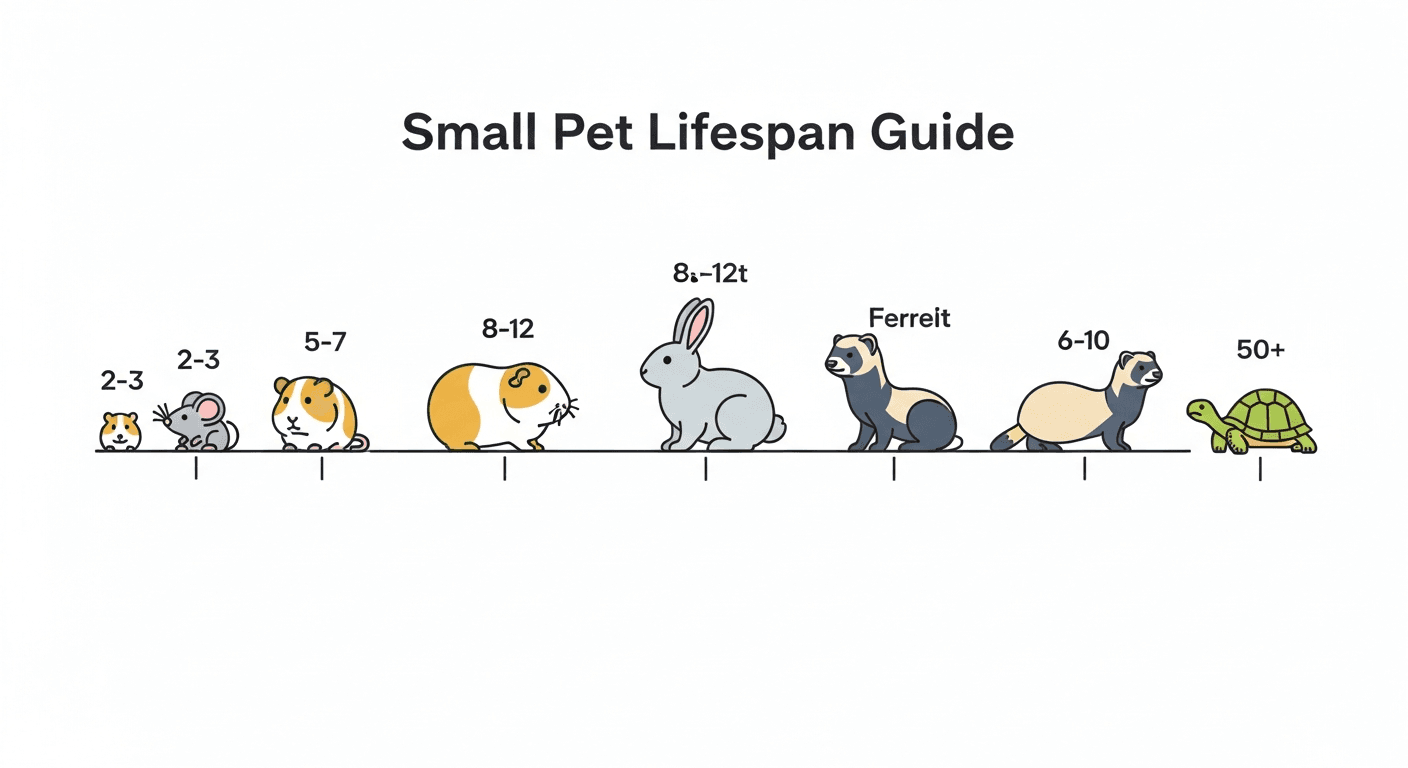
Small Pet Lifespans: What to Expect and How to Plan for It
A realistic guide to the lifespan of popular small pets — from hamsters to tortoises — and how to provide the best care at each life stage.