
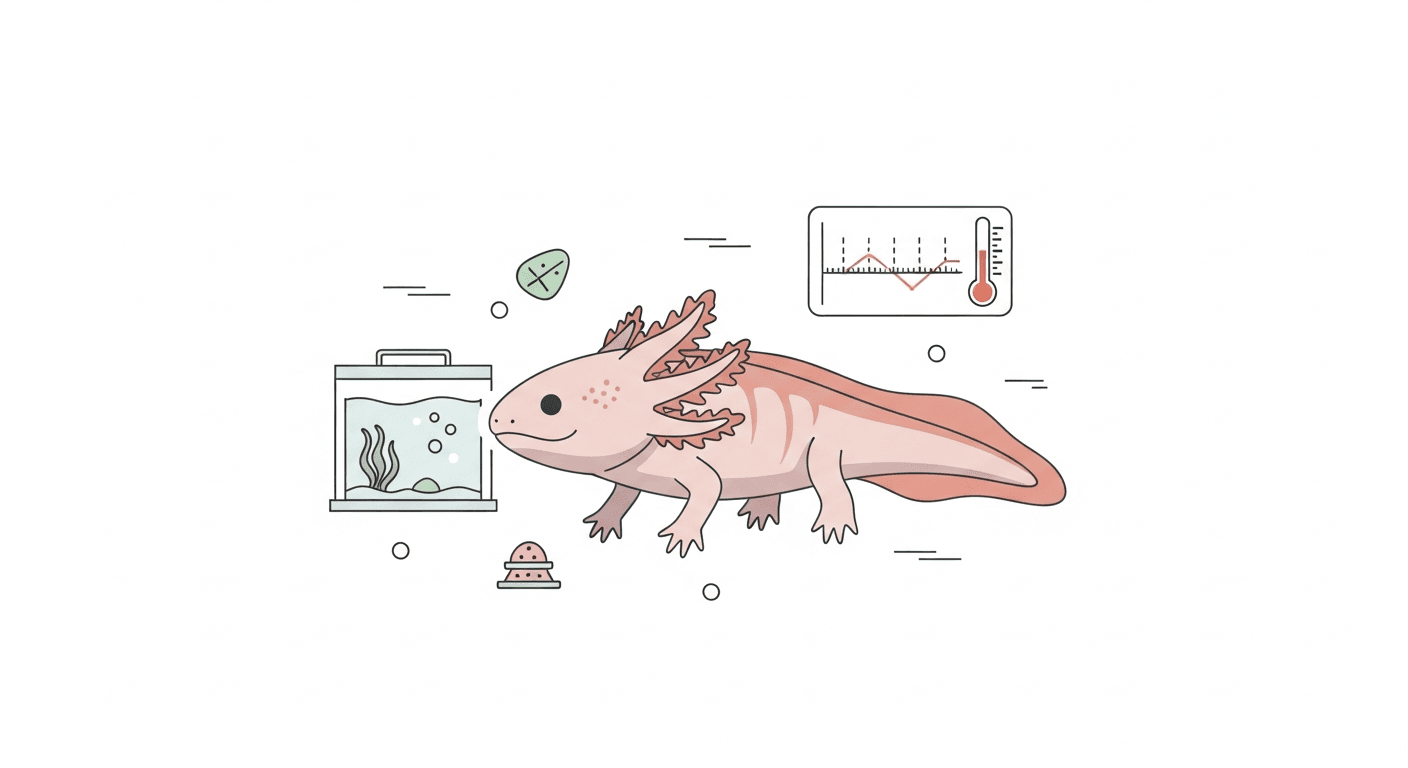
What Is an Axolotl?
The axolotl (Ambystoma mexicanum) is a critically endangered Mexican salamander that retains its larval features throughout its entire life — a phenomenon called neoteny. In the wild, found only in the lake complex of Xochimilco near Mexico City, axolotls are now functionally extinct in their natural habitat. The millions of axolotls kept as pets worldwide exist entirely as a captive-bred population descended from a small group brought to France in 1864.
Axolotls are fascinating to observe, respond to their owners' presence, and can live 10–15 years in captivity. They are hardy when their specific water parameter requirements are met — but those requirements are narrow and non-negotiable.
Tank Setup: Cold Water Is Non-Negotiable
Temperature is the single most critical factor in axolotl care — and the most commonly violated requirement:
- Temperature range: 60–68°F (15–20°C). This is much cooler than most tropical fish tanks. Above 72°F (22°C) causes chronic stress. Above 75°F (24°C) is lethal over days to weeks. Axolotls cannot be kept with tropical fish.
- Cooling options: In warm climates, a chiller unit (aquarium chiller) may be necessary. Room air conditioning, keeping the tank away from heat sources, and floating ice packs can provide temporary cooling, but consistent temperature control requires a chiller in summer.
- Tank size: Minimum 20 gallons for one axolotl. 40 gallons for two. These are active animals that need swim space.
- Substrate: Fine sand (1–2mm grain size) or bare bottom. No gravel — axolotls ingest gravel while feeding, causing fatal intestinal impaction. This is the second most common cause of axolotl death after temperature stress.
- Filtration: A canister filter with very gentle output (axolotls dislike strong currents). Cycle the tank before adding an axolotl — 4–6 weeks.
- Lighting: Minimal. Axolotls have no eyelids and dislike bright light. Low light or no light is preferred; provide shelters and caves.
Water Chemistry
- pH: 7.0–7.6
- Ammonia: 0 ppm
- Nitrite: 0 ppm
- Nitrate: below 20 ppm
- Hardness: moderate (GH 7–14)
- 25–30% water changes weekly
Feeding
- Young axolotls (under 6 months): live baby brine shrimp, daphnia, small bloodworms daily
- Adult axolotls: nightcrawler earthworms (excellent, nutritionally complete), high-quality sinking salmon pellets, frozen bloodworms. Feed 2–3 times per week.
- Axolotls are ambush predators — drop food in front of them rather than leaving it to pollute the water
Signs of Stress and Disease
- Gill curling forward (toward the mouth): Early stress sign, usually from high temperature or poor water quality
- Reduced gill size or pale gills: Indicates poor oxygenation or anemia
- Floating (buoyancy problems): Gas accumulation in the gut — often from swallowed substrate or bacterial infection
- Fungal infections: White fluffy growths on the body or gills. Common in water that is too warm or has poor quality. Treat with salt baths (1–2 tsp per gallon for 10–15 minutes) or antifungal medications prescribed by an aquatic vet.
- Red leg disease: Red discoloration of the limbs from bacterial infection. Antibiotic treatment required.
Log water parameters weekly and behavioral observations in the TailRounds Daily Log. Use TailRounds AI Triage for guidance. Axolotls are exotic animals — find an aquatic or exotic vet via the clinic finder or book a consultation.
Continue Reading
 🐇 Small Pets
Aquarium Setup for Beginners: The Nitrogen Cycle and First Fish
A step-by-step guide to setting up a beginner aquarium — understanding the nitrogen cycle, choosing the right tank and filter, and selecting fish that are hardy enough to thrive.
 🐇 Small Pets
Goldfish Care and Health: What Most Owners Get Wrong
The truth about goldfish care — tank size, water quality, filtration, diet, and the most common diseases that cut these long-lived fish short unnecessarily.
 🐇 Small Pets
When Does a Small Pet Need a Vet? Signs You Shouldn't Ignore
How to know when a small animal — bird, rodent, reptile, fish, or invertebrate — needs veterinary care, and how to find an exotic-experienced vet near you.
 🐇 Small Pets
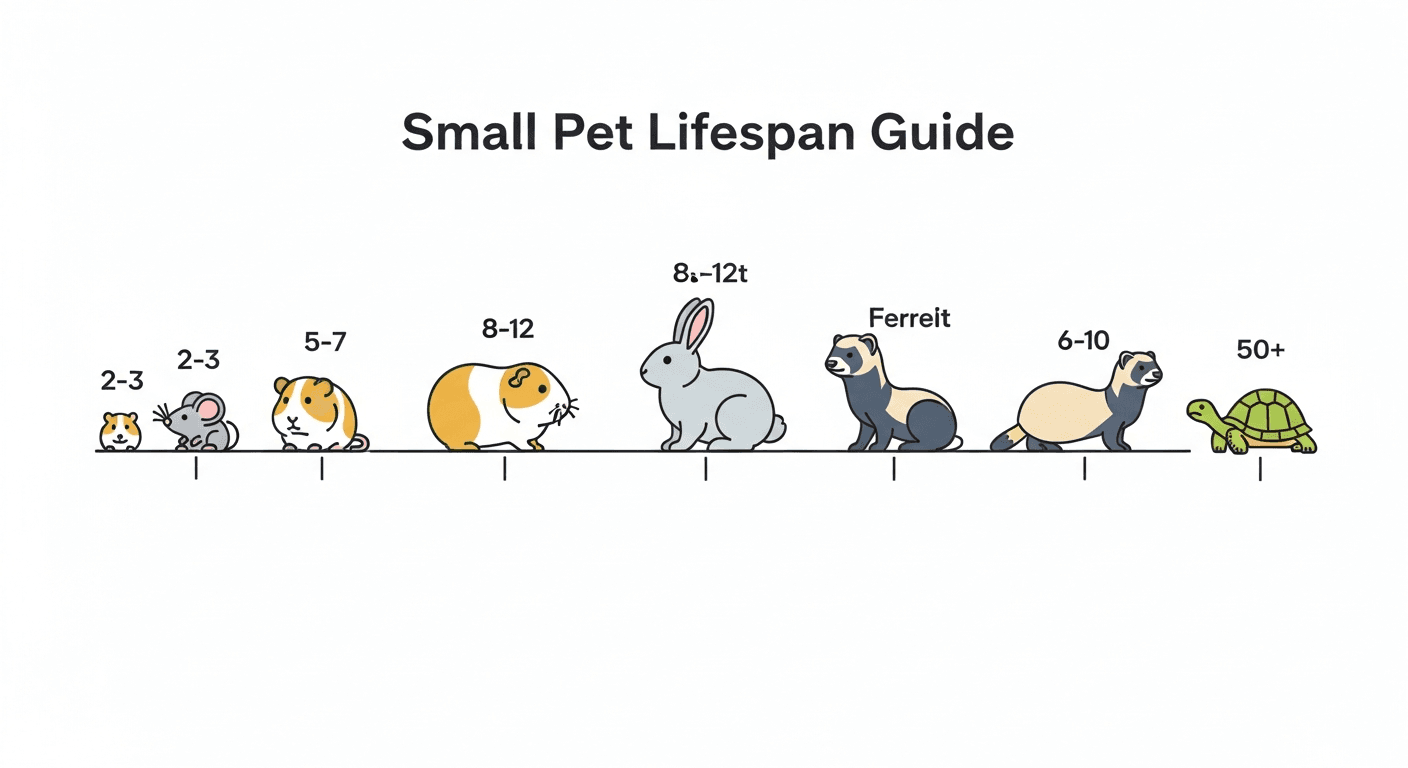
Small Pet Lifespans: What to Expect and How to Plan for It
A realistic guide to the lifespan of popular small pets — from hamsters to tortoises — and how to provide the best care at each life stage.