
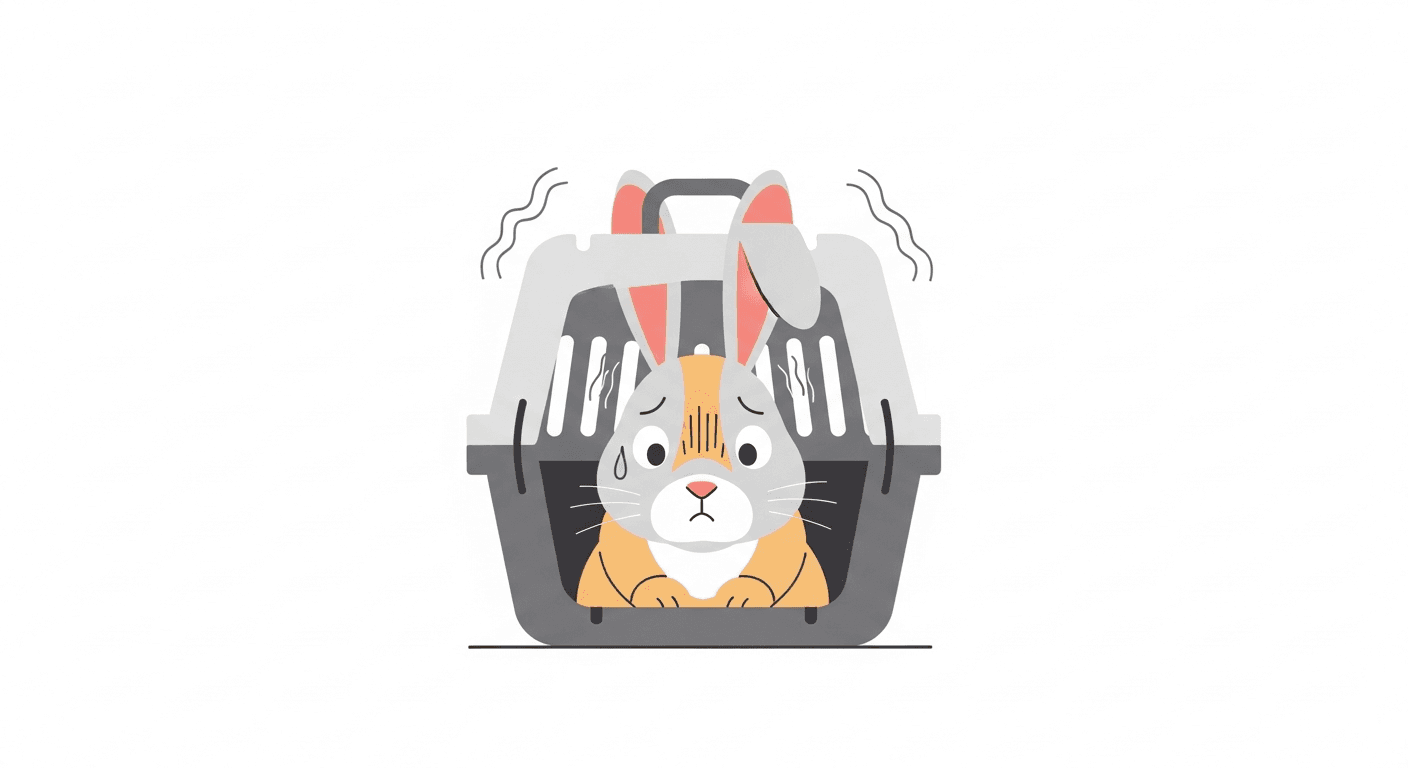
Why Is Travel So Stressful for Rabbits?
Rabbits are stress-sensitive animals — acute stress triggers a hormonal response that suppresses gut motility, directly setting up the conditions for GI stasis. The combination of an unfamiliar environment, motion, temperature changes, and separation from their territory makes travel particularly risky. Even short car trips to the vet can suppress appetite and slow gut function in sensitive rabbits. Longer trips require significant preparation and vigilance throughout.
First 3 Steps to Prepare for Travel
- Carrier familiarization before the trip: If the rabbit isn't used to its carrier, leave it accessible with familiar bedding inside for several weeks before travel. A rabbit that associates the carrier with comfort rather than fear is significantly less stressed during the trip.
- Pack hay and familiar food for the journey: Always provide hay during travel — even in the carrier. Keep eating consistent. The smell of familiar food is reassuring and keeps the gut moving. Never restrict food before rabbit travel (this is the opposite of what to do before surgery, which also involves fasting only as directed by the vet).
- Maintain a stable temperature in the vehicle: Keep the car between 15–22°C. Rabbits overheat rapidly in hot cars and become hypothermic in cold vehicles. Never leave a rabbit in a parked car in warm weather.
When to See the Vet After Travel
- Rabbit hasn't eaten hay in 6+ hours after arriving at the destination
- No droppings within 4 hours of arriving
- Rabbit seems distressed, hunched, or in apparent pain
Follow-Up Care Checklist
- Monitor eating and droppings closely for 24 hours after any travel
- Allow the rabbit to re-establish its territory and routine immediately upon arrival
- Keep the environment quiet for the first 12 hours after a stressful trip
Track Travel and Recovery with TailRounds
Log travel dates, duration, and the rabbit's eating and dropping behavior for 24 hours after travel in the TailRounds Daily Log.
Book a Vet Appointment
If your rabbit stops eating or producing droppings after travel, don't wait — book at Happy Paws for a stasis evaluation immediately.
Summary for Your Clinic Visit
Tell your vet when travel occurred, the duration, current eating and dropping status, and any other symptoms observed since the trip.
Continue Reading
 🐇 Rabbit Health
GI Stasis in Rabbits: What Every Owner Must Know
GI stasis kills rabbits within 24–48 hours if untreated. Learn to recognize the early signs, what causes it, and how treatment works.
 🐇 Rabbit Health
Rabbit Not Eating: Why It's Always Serious
Rabbits that stop eating for even a few hours can develop life-threatening GI stasis. Learn to recognize early warning signs and when to act.
 🐇 Rabbit Health
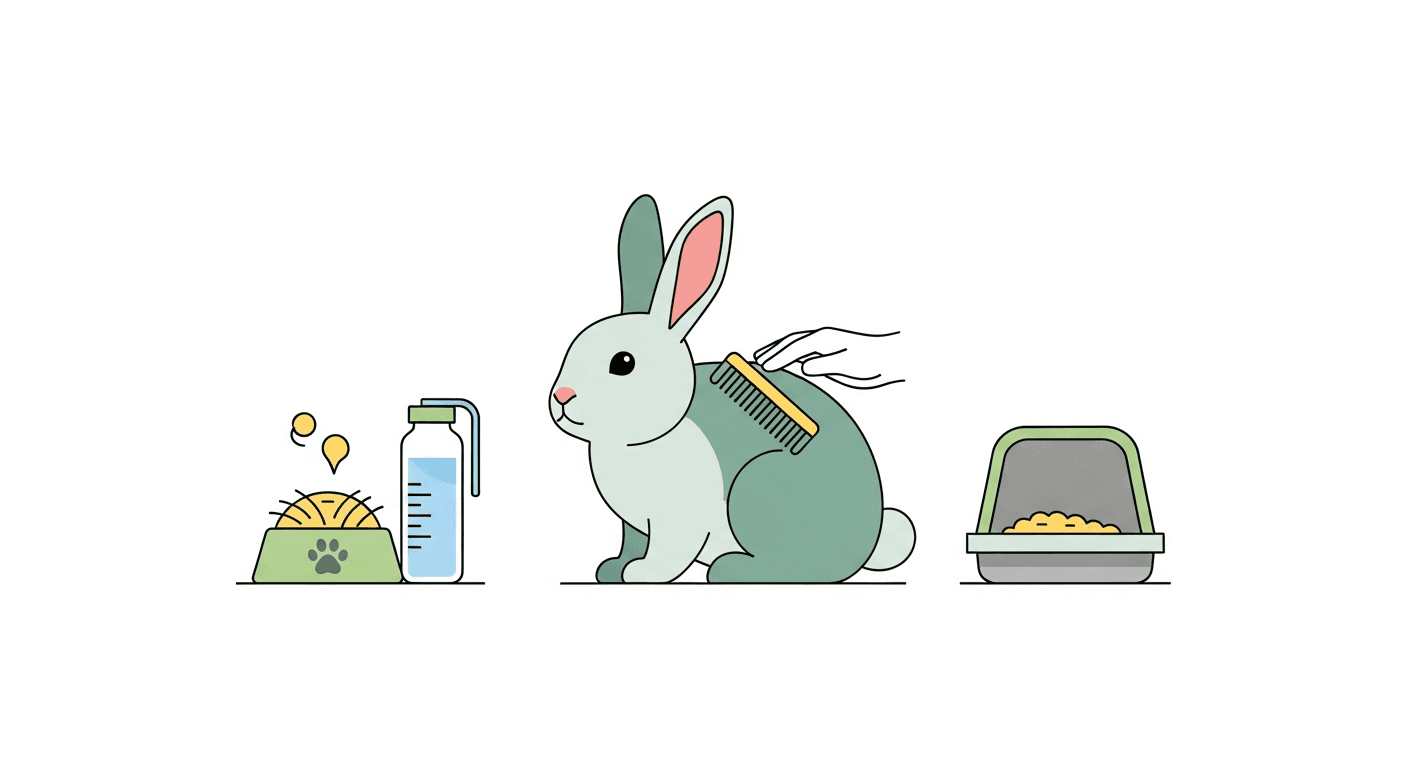
Daily Rabbit Care Routine: A Complete Health Checklist
A healthy rabbit requires daily observation and specific care tasks. This routine helps you catch health problems early and keep your rabbit thriving.