Why Label Literacy Is a Superpower for Pet Owners
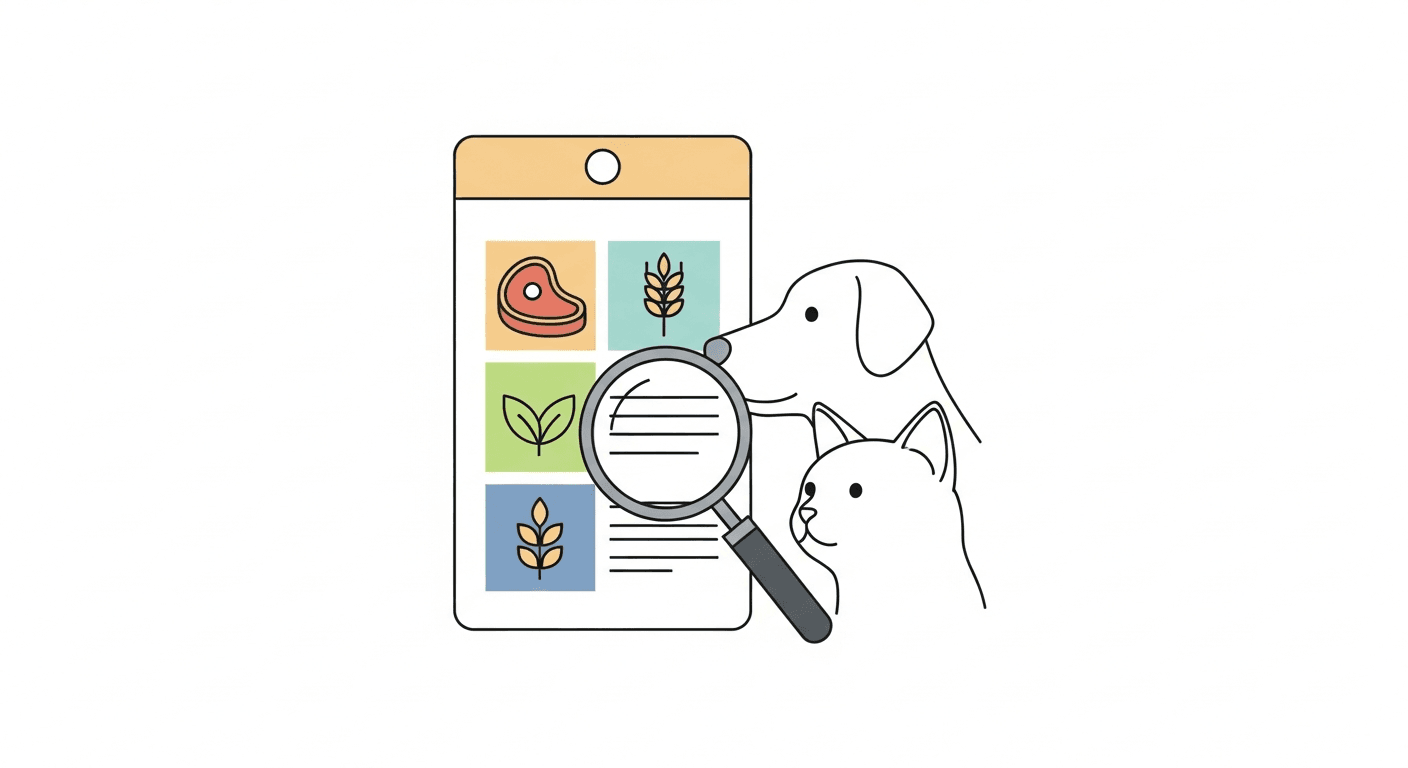
The pet food industry is a multi-billion dollar marketplace where marketing claims often say very little about actual nutritional quality. Terms like "natural," "premium," "holistic," and "human grade" have specific regulatory definitions — or in some cases, no regulated definition at all. Understanding how to read a pet food label transforms you from a passive buyer swayed by packaging into an informed consumer making decisions based on actual nutritional content.
This guide decodes every section of a pet food label so you can confidently evaluate any food — from budget kibble to ultra-premium raw patties. Use this knowledge alongside the TailRounds Daily Log to track how different foods affect your pet's health, and Book a vet appointment at Happy Paws for professional nutritional advice.
Section 1: The AAFCO Nutritional Adequacy Statement
This is the single most important line on any pet food label. The Association of American Feed Control Officials (AAFCO) sets the minimum nutrient profiles that pet foods must meet to be considered complete and balanced. Find the statement — it's usually on the back or side panel — and look for one of two phrases:
- "[Product name] is formulated to meet the nutritional levels established by AAFCO nutrient profiles for [life stage]." This means the food was laboratory-tested against AAFCO profiles. It doesn't mean feeding trials were conducted.
- "Animal feeding tests using AAFCO procedures substantiate that [product] provides complete and balanced nutrition for [life stage]." This means actual animals were fed the food and monitored — a higher standard.
Life stage matters:
- "For growth" — appropriate for puppies/kittens
- "For maintenance" — appropriate for adult pets
- "For all life stages" — appropriate for all ages, including puppies/kittens (meets growth requirements)
- "For complementary feeding only" or "For intermittent or supplemental use only" — NOT nutritionally complete. These foods cannot serve as a sole diet.
Section 2: The Ingredient List — What It Really Tells You
Ingredients are listed in descending order by pre-cooking weight. This means:
- Chicken appearing first means there was more raw chicken (by weight) than any other single ingredient before cooking
- But chicken is ~70% water — after the extrusion process, chicken may represent much less of the finished product by dry weight
- "Chicken meal" (dehydrated chicken) appears lower on the list but may contribute more protein to the final product than fresh chicken appearing first
Ingredient splitting: Manufacturers sometimes list corn as "corn," "corn flour," "corn gluten meal," and "corn starch" separately, each appearing lower on the list than if combined. If added together, corn might rank first. This is legal but misleading.
| Term | What It Means | Quality Indicator |
|---|---|---|
| Chicken / beef / salmon | Whole muscle meat of that species, includes water | Good, but check position |
| Chicken meal / beef meal | Rendered, dehydrated protein — concentrated | Good quality source if named |
| Poultry meal / meat meal | Unnamed species — could be any poultry/animal | Acceptable but less transparent |
| By-products (named: chicken by-products) | Non-muscle meat (organ, feet, head) — not inherently low quality | Acceptable; organ meat is nutritious |
| Generic by-products (meat by-products) | Unnamed species and parts | Lower transparency; avoid if possible |
| Corn syrup / sugar / molasses | Added sugars | Avoid — no nutritional benefit |
| BHA / BHT / ethoxyquin | Synthetic preservatives | Controversial; prefer natural alternatives |
| Tocopherols / rosemary extract | Natural preservatives | Preferred |
Section 3: The Guaranteed Analysis — Reading the Numbers
The guaranteed analysis panel shows minimum or maximum percentages of crude protein, crude fat, crude fiber, and moisture. These are as-fed (including moisture), which makes direct comparison between wet and dry food impossible without converting to dry matter basis.
Dry matter conversion:
- Subtract moisture% from 100% to get the dry matter %
- Divide the nutrient% by the dry matter% and multiply by 100
- Example: Wet food with 78% moisture and 10% protein. DM% = 22%. Protein on DM basis = (10/22) × 100 = 45.5%
Only dry matter comparisons reveal the true nutritional differences between wet and dry foods.
Section 4: Marketing Claims — What They Do and Don't Mean
- "Natural": AAFCO-regulated. Means no artificial colors, flavors, or preservatives. Does not mean organic, humanely raised, or nutritionally superior.
- "Organic": If claimed, must meet USDA NOP organic standards. Verified with certification.
- "Human grade": Not regulated by AAFCO. Means nothing legally in most jurisdictions unless substantiated. Ignore it as a quality claim.
- "Holistic": No legal definition for pet food. Pure marketing.
- "Premium" / "Ultra-premium": No legal definition. Marketing only.
- "Grain-free": Means no cereal grains. Does not mean low-carbohydrate — legumes and potatoes replace grains and may be higher glycemic.
- "Limited ingredient": Generally means fewer protein and carbohydrate sources. Useful for allergy management, but not defined with specific maximum numbers by AAFCO.
The most useful quality indicators are not marketing terms but: AAFCO feeding trial certification, named meat protein first or second, manufacturing company conducting its own nutritional research, and WSAVA (World Small Animal Veterinary Association) transparency standards compliance. Find a Clinic near you for professional food recommendations, and explore more nutrition topics in our TailRounds Daily Log to track how your pet responds to any dietary change.
Continue Reading
 🥩 Pet Nutrition
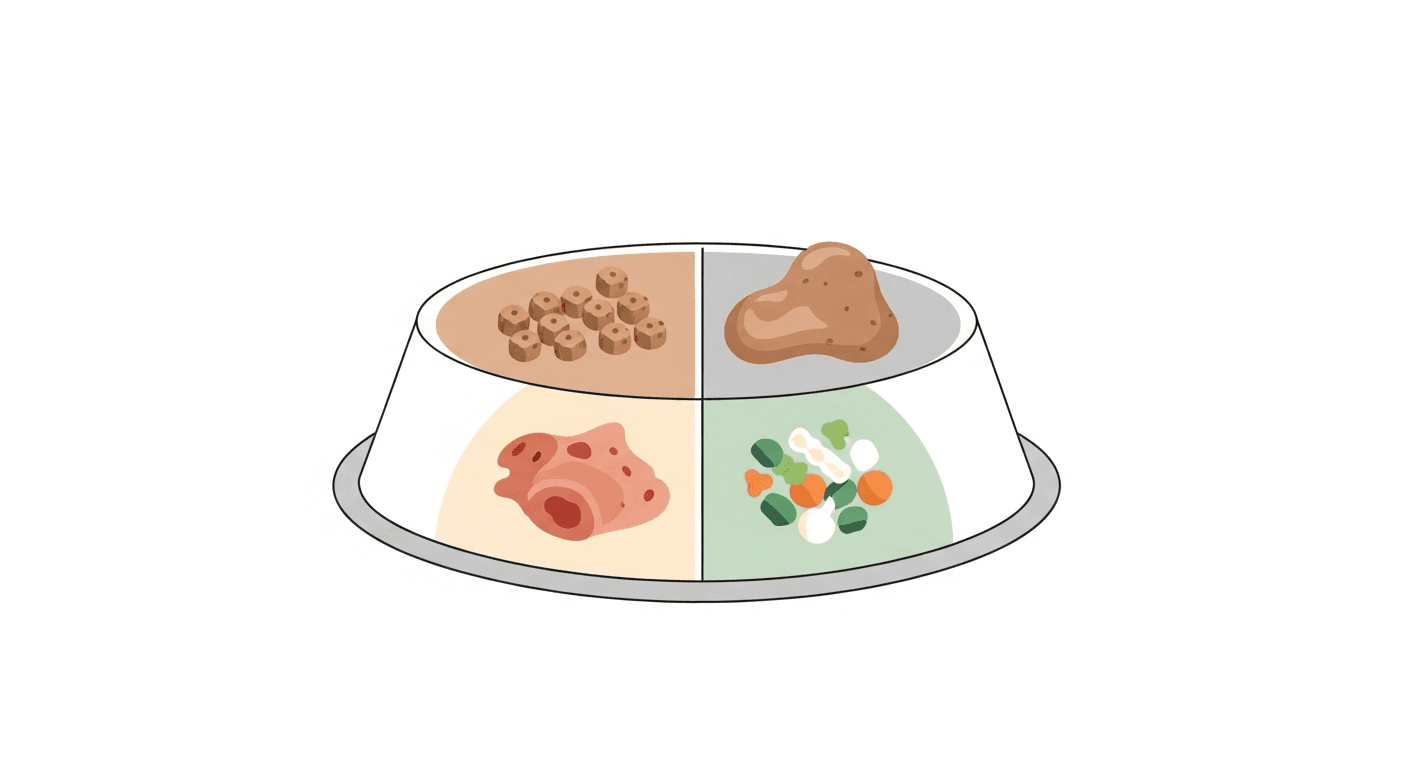
Dry vs Wet vs Raw Dog Food: A Complete Comparison Guide
Compare dry kibble, wet canned food, and raw dog food across nutrition, cost, convenience, and health outcomes to find the best option for your dog.
 🥩 Pet Nutrition
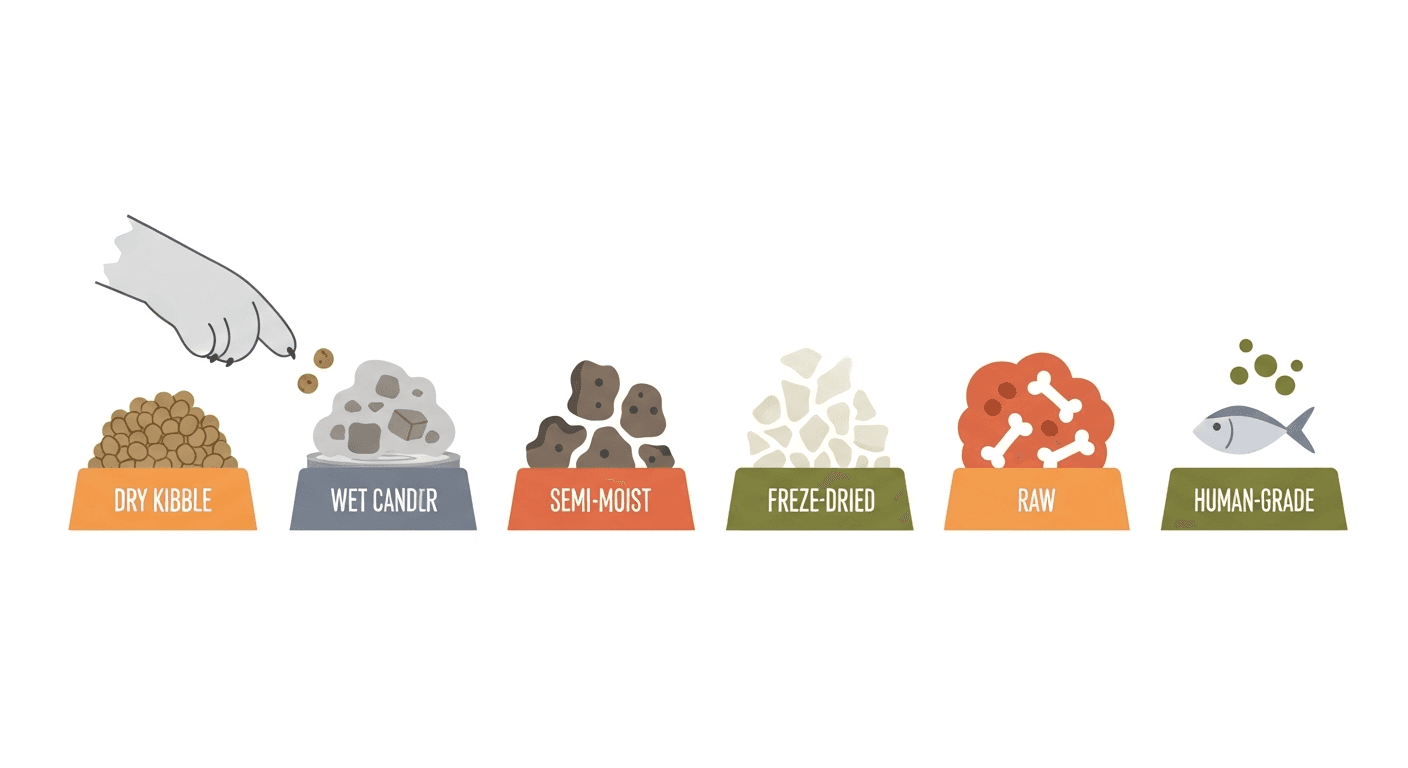
Dry vs Wet vs Raw Cat Food: What's Best for Your Cat?
Explore the differences between dry, wet, and raw cat food formats. Learn which diet suits your cat's health needs, hydration, and life stage.
 🥩 Pet Nutrition
Food Allergies in Dogs: Elimination Diet Guide and Best Foods
Learn how to identify food allergies in dogs using an elimination diet, interpret allergy symptoms, and find the right hypoallergenic food for lasting relief.
 🥩 Pet Nutrition
Grain-Free Diets for Dogs: Benefits, Risks, and the DCM Controversy
Should you feed your dog a grain-free diet? Explore the evidence on grain-free dog food, the FDA's DCM investigation, and what science actually says.